
Maison Albert Bichot: the Contemporary Face of Classical Burgundy
Author: Iryna Diachenkova
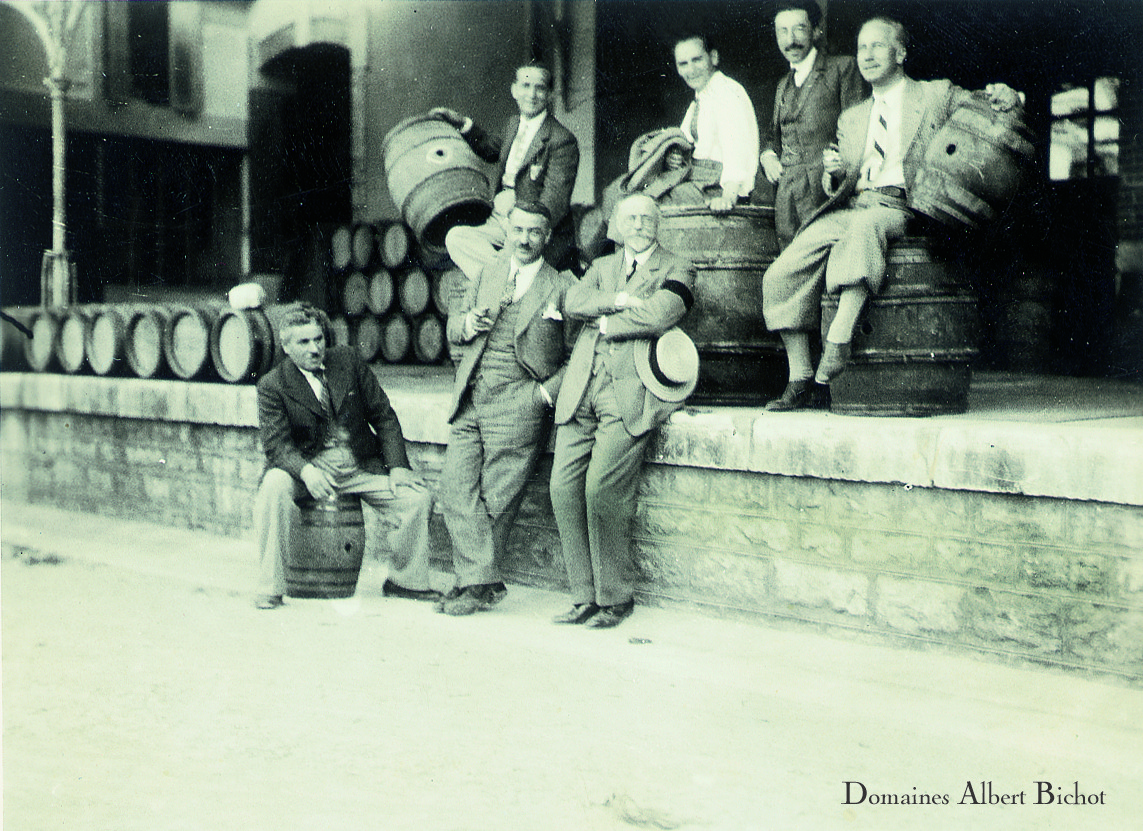
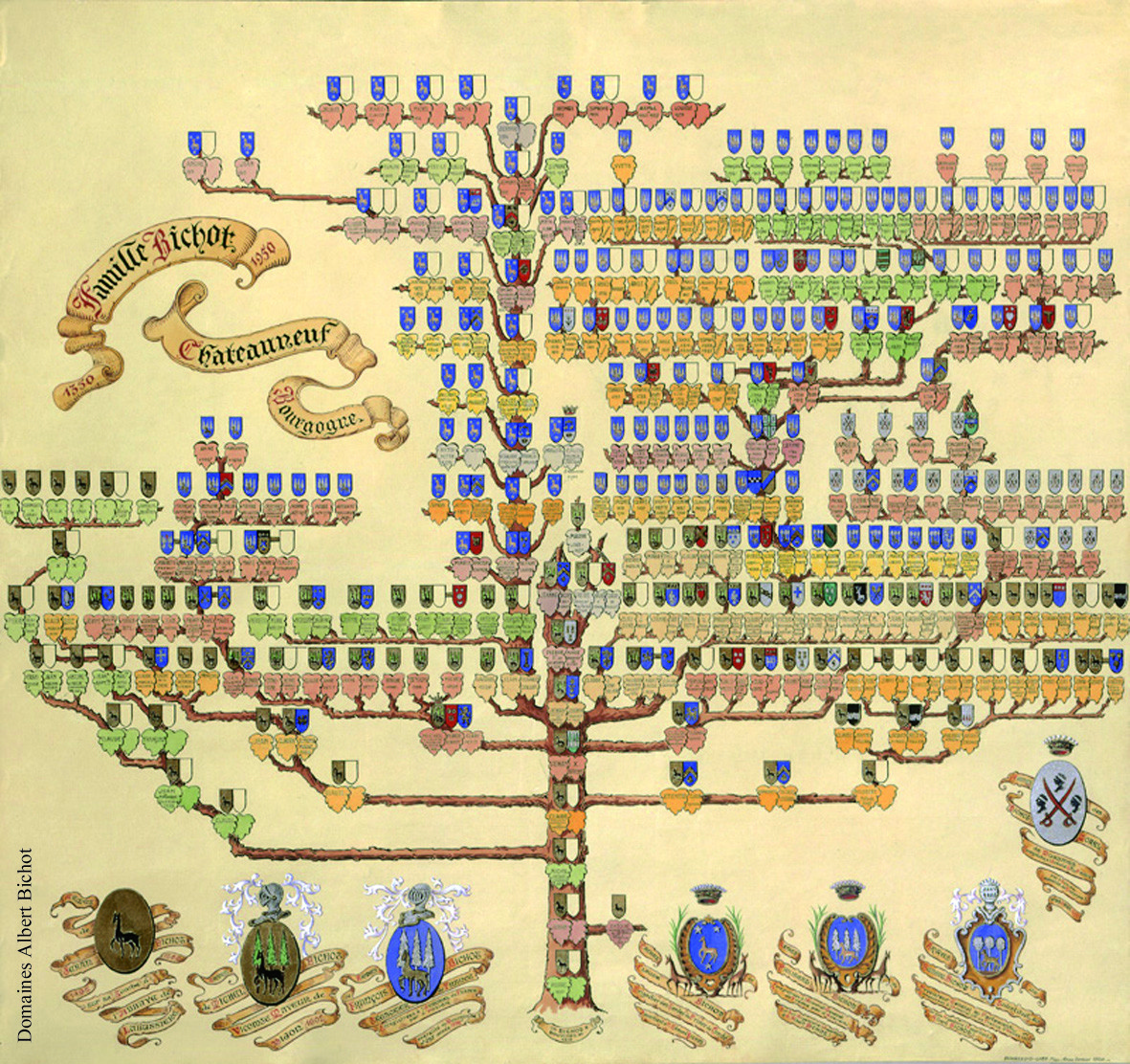
It is difficult to find a Burgundian producer that embodies the spirit of the region more precisely than Maison Albert Bichot. Founded in 1831, this family enterprise is now led by the sixth generation, and owns 106 hectares of vineyards surrounding six historic estates in Burgundy’s most prestigious appellations.
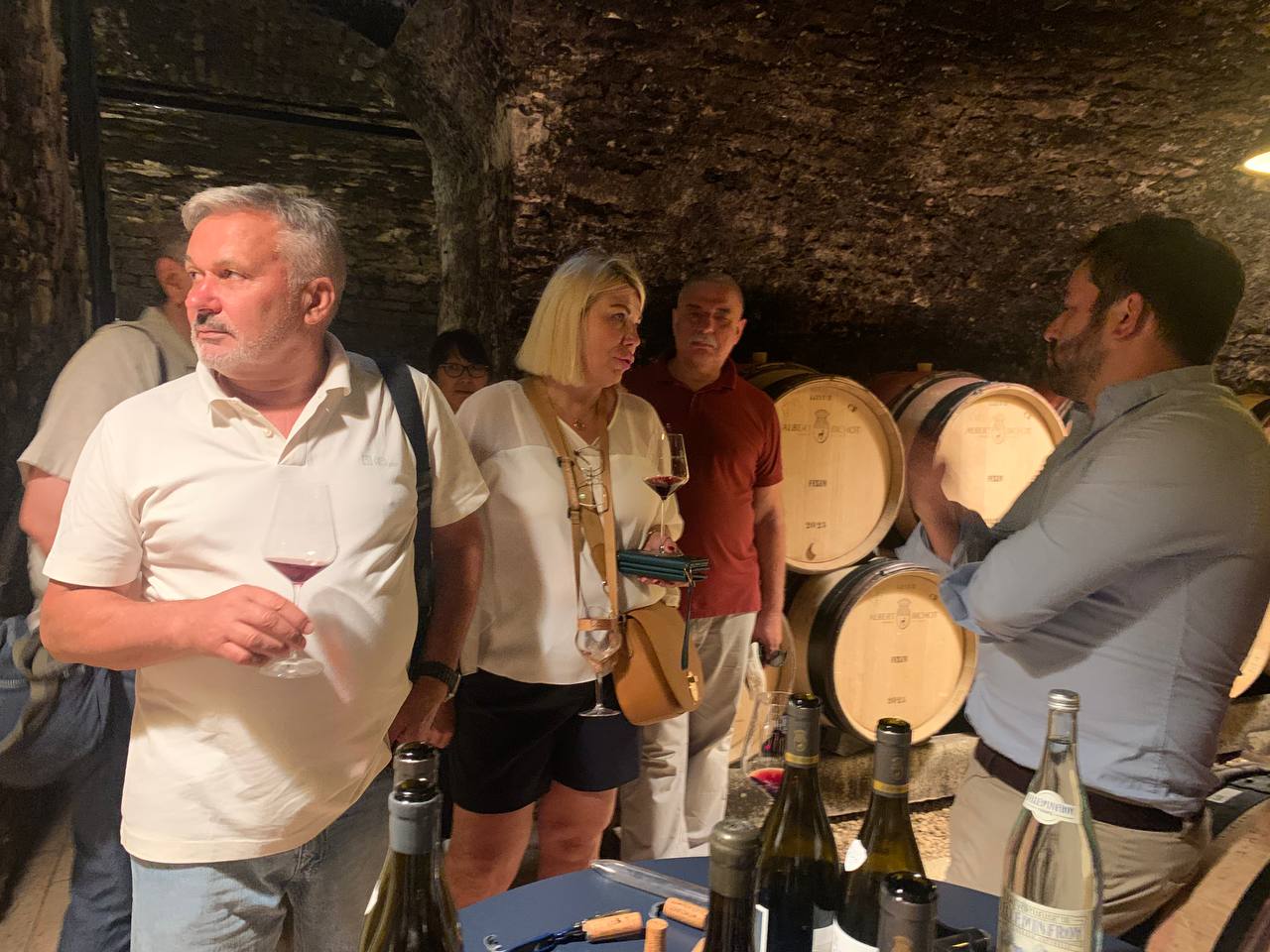
Today, the Albert Bichot family crafts wines that have made the name one of the most recognisable in Burgundy. When shaping our travel route through the region – a group that included not only journalists but also winemakers, restaurateurs and advanced winelovers from Ukraine – visiting the Albert Bichot domaines was simply inevitable. In fact, we visited two.
We are deeply grateful to the esteemed Richard Bampfield MW, judge of the Wine Travel Awards and a sincere friend of Ukraine, for facilitating our visits to these distinguished estates.
From négociant to one of Burgundy’s most influential producers
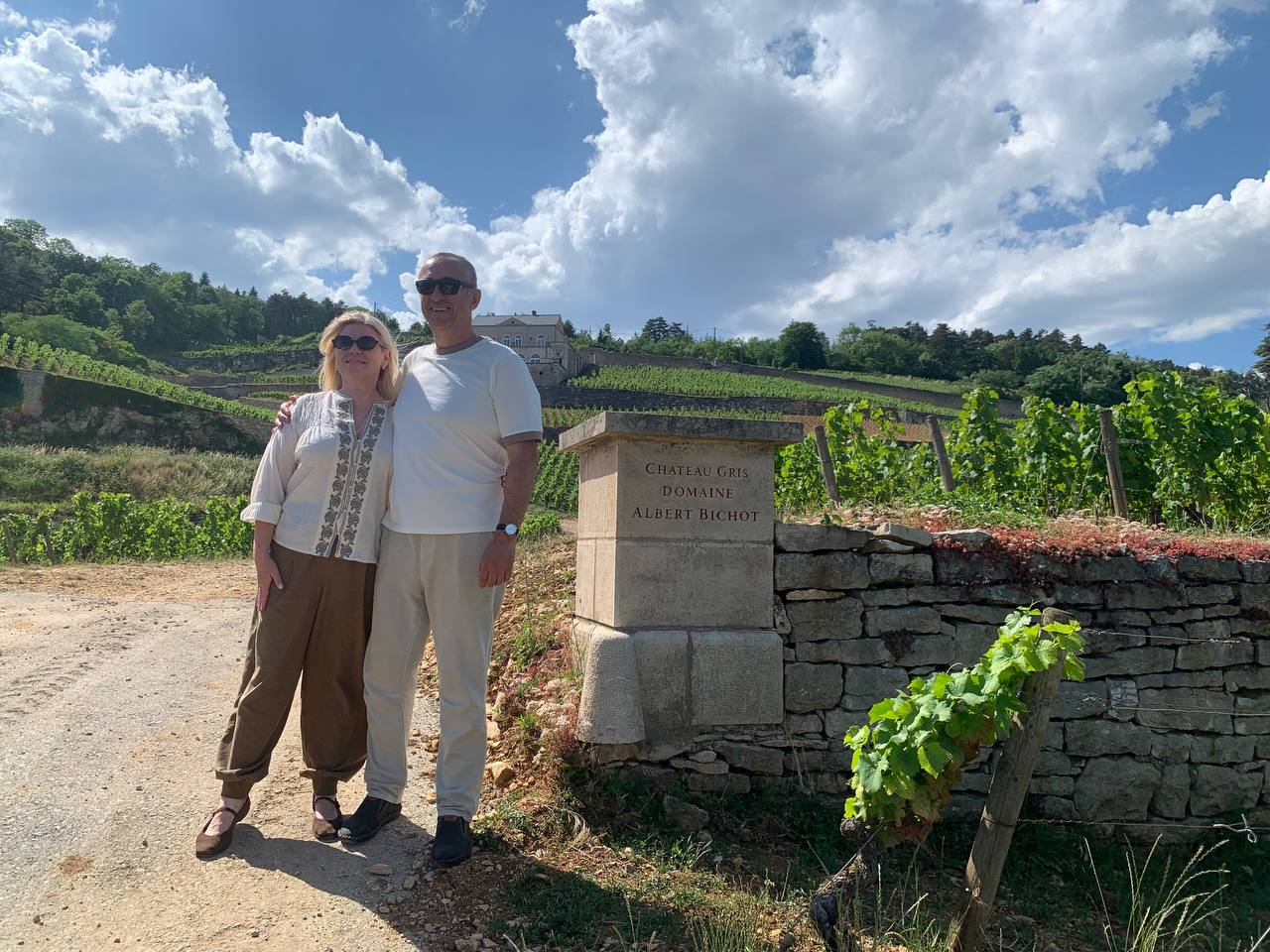
Maison Albert Bichot began as a négociant and still defines itself as a négociant‑vinificateur‑éleveur. The family has lived in Burgundy since 1350 and maintains a profound connection with the region – including its most emblematic wine event, the Hospices de Beaune auction. As noted earlier, Domaines Albert Bichot unites six historic estates stretching from Chablis to Beaujolais: Domaine Long‑Depaquit (Chablis), Domaine du Clos Frantin (Nuits‑Saint‑Georges), Château‑Gris (Nuits‑Saint‑Georges), Domaine du Pavillon (Pommard), Domaine Adélie (Mercurey), and Domaine de Rochegrès (Moulin‑à‑Vent, Beaujolais).
Organic viticulture and deep respect for terroir
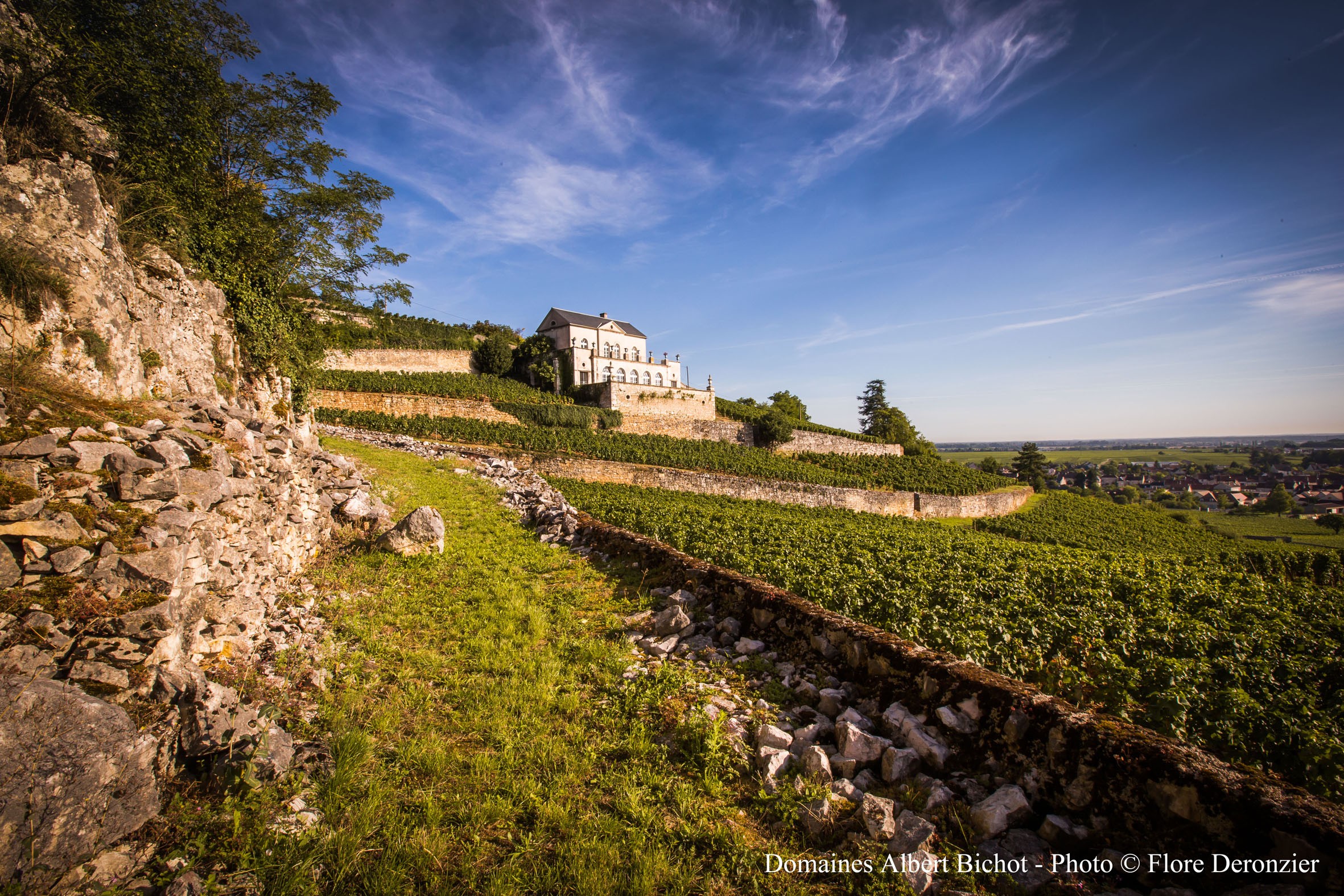
Maison Albert Bichot is currently led by Albéric Bichot, who joined the family business in the early 1990s and became president in 1996. Since then, the company has significantly expanded its vineyard holdings, invested in modern facilities and embarked on a large‑scale transition to organic viticulture.
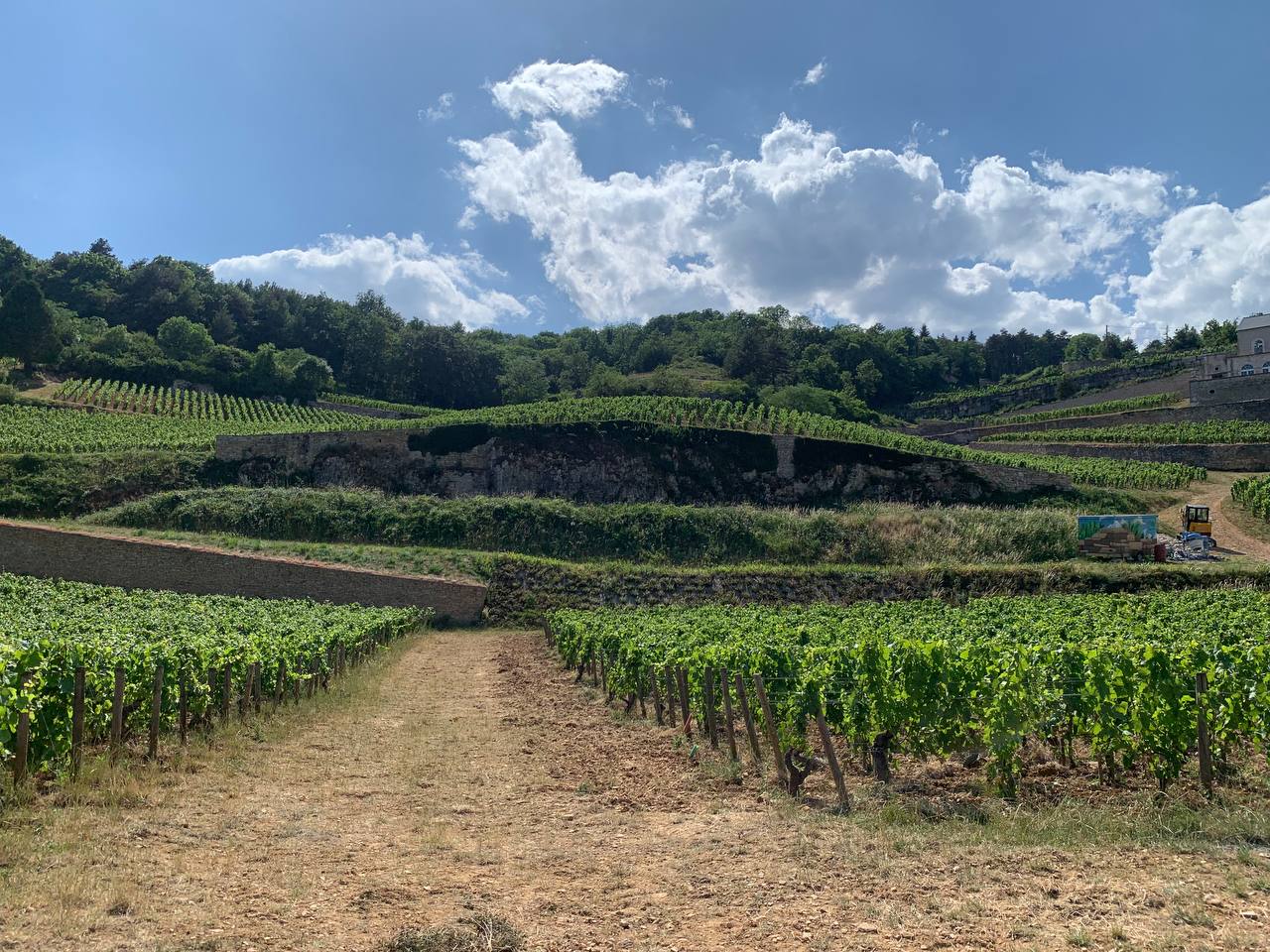
The philosophy is clear: wine quality begins in the vineyard. Sustainable and organic practices are applied, with natural fertilisers and strict control not only over estate vineyards but also over partner growers’ plots (although wines from purchased grapes are not certified organic). Manual work is widely used, soils are treated with care, and on certain parcels sheep graze in winter to support natural soil health and biodiversity. Combined with ecological packaging, these efforts reduce the environmental impact of the company’s activities.
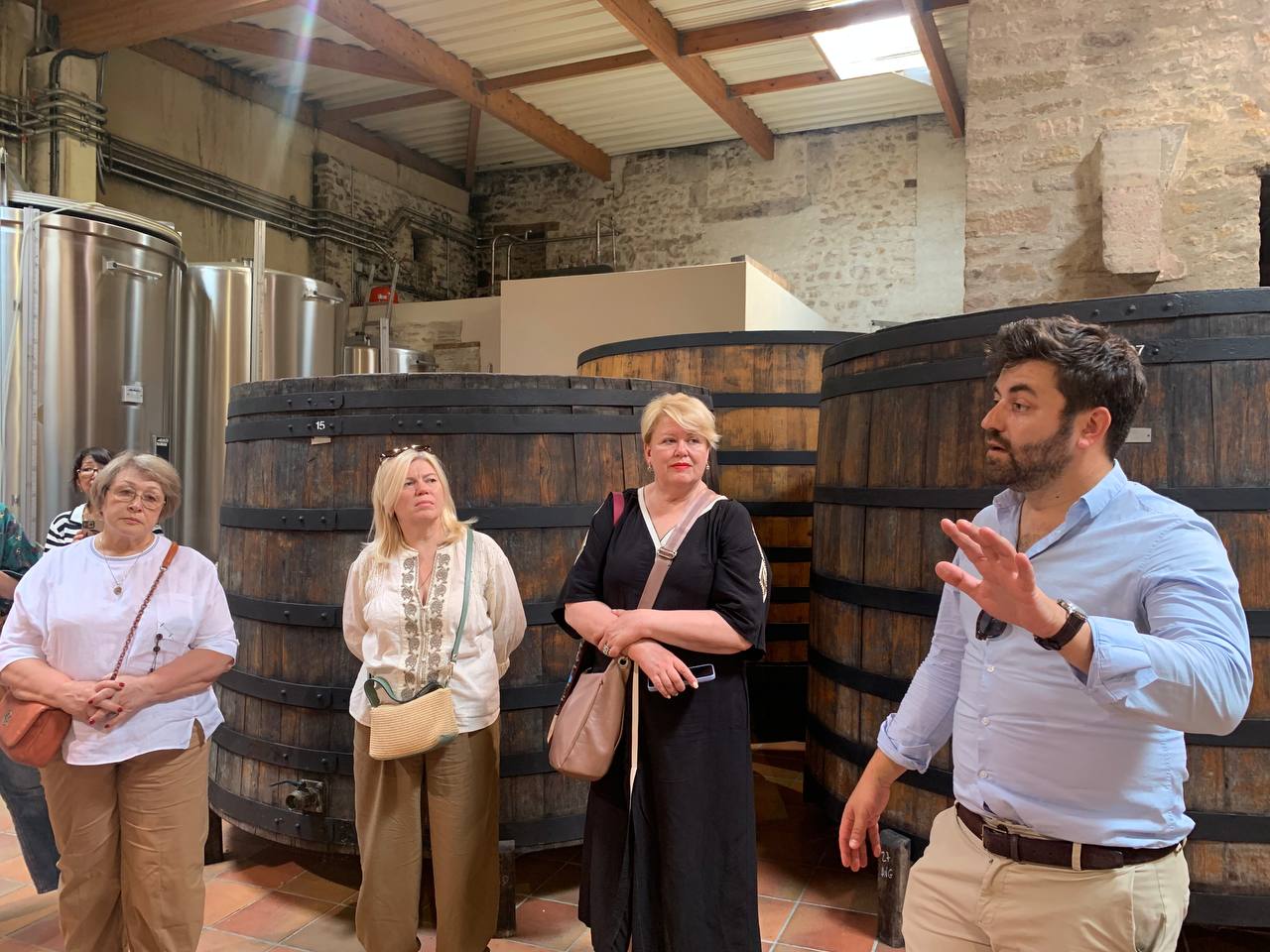
This gentle, low‑intervention approach continues in the cellar. Each domaine has its own winemaking team and modern equipment, working with maximum respect for terroir. No cultured yeasts are added – only indigenous yeasts from the vineyard. Gravity flow replaces mechanical pumping to preserve purity and aromatics. Ageing lasts 12–18 months in oak barrels from various coopers and with different toast levels, ensuring the subtle, harmonious oak integration that characterises Albert Bichot wines.
A leading buyer at the Hospices de Beaune auction
It is no exaggeration to say that Albert Bichot has become an integral part of the legendary Hospices de Beaune auction – not only through historical ties and charitable tradition, but also thanks to its exceptional wines. The company has participated since 1876, supporting the Hospices when it functioned as a hospital and later contributing to other charitable projects.
Albert Bichot has repeatedly made landmark purchases, including the celebrated Pièce des Présidents, acquired on behalf of the House’s clients. All proceeds from this unique barrel go to medical, social and charitable causes. The Pièce des Présidents – the auction’s most expensive lot, often reaching tens or hundreds of thousands of euros – is promoted with the help of celebrities from film, art and sport. In 2020, for example, a barrel of Clos de la Roche Grand Cru was purchased for €660,000.
Over the past 30 years, Albert Bichot has been the auction’s leading buyer, acquiring around 25% of all lots for clients worldwide. Some particularly coveted barrels are purchased for the House itself – for ageing and later release. Participation in the Hospices de Beaune has become a distinct business direction. In 2009, Albert Bichot revolutionised access to the auction by launching www.hospices-beaune.com, enabling wine lovers around the world to bid online, from a single bottle to an entire barrel.
Maison Albert Bichot is Burgundy’s most influential company and the largest buyer at the auction – a testament to its weight in the region’s wine history.
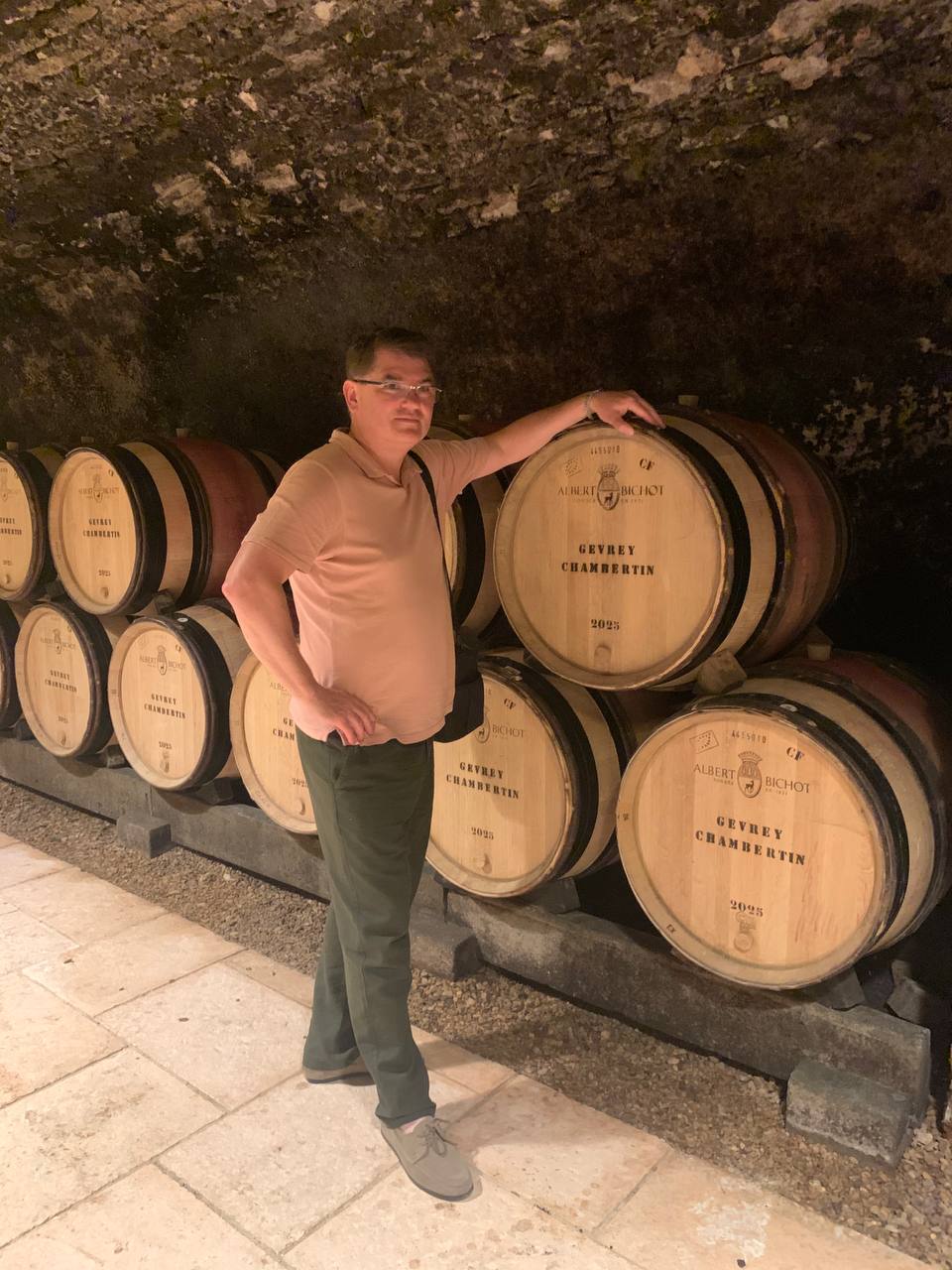
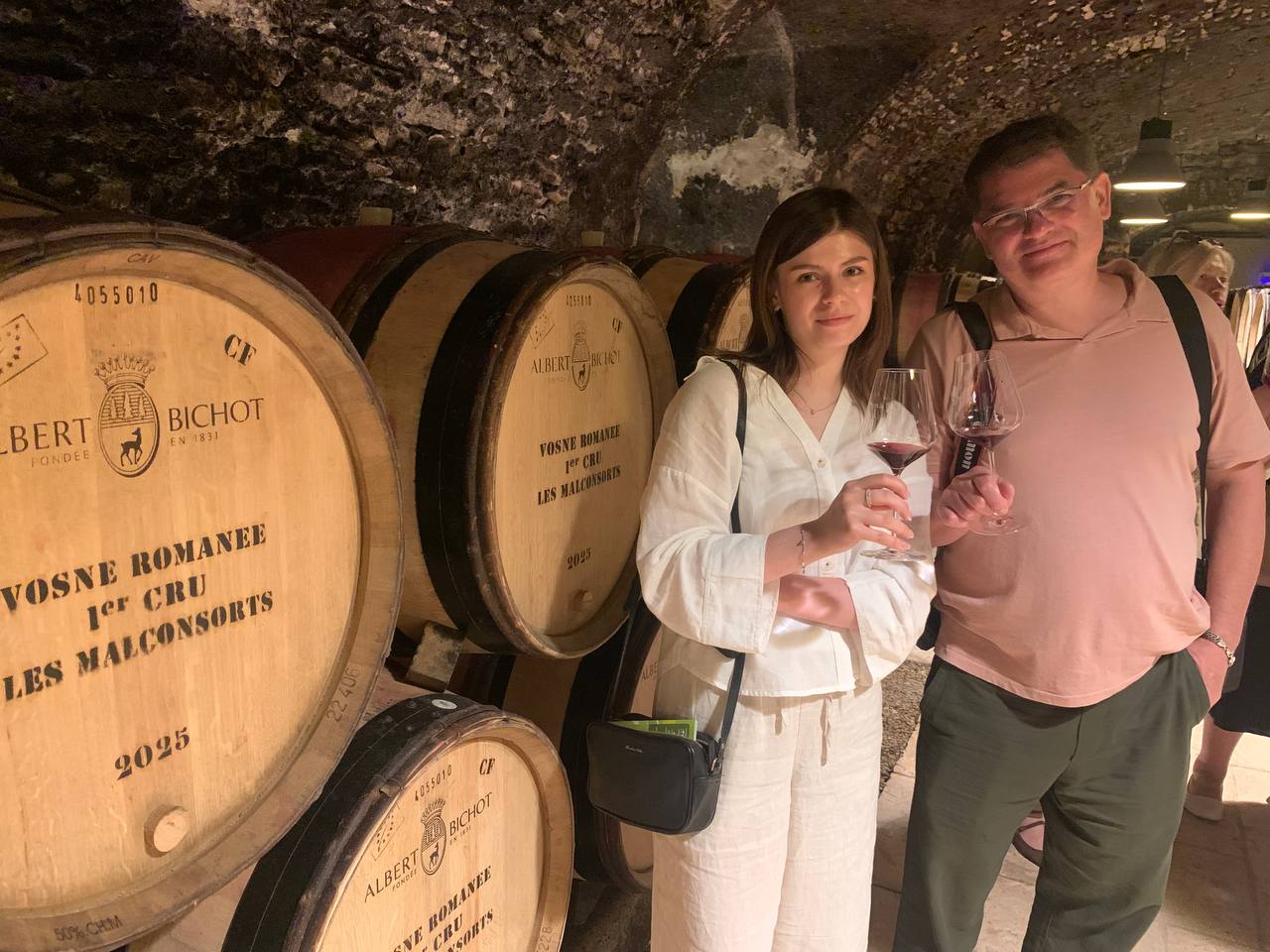
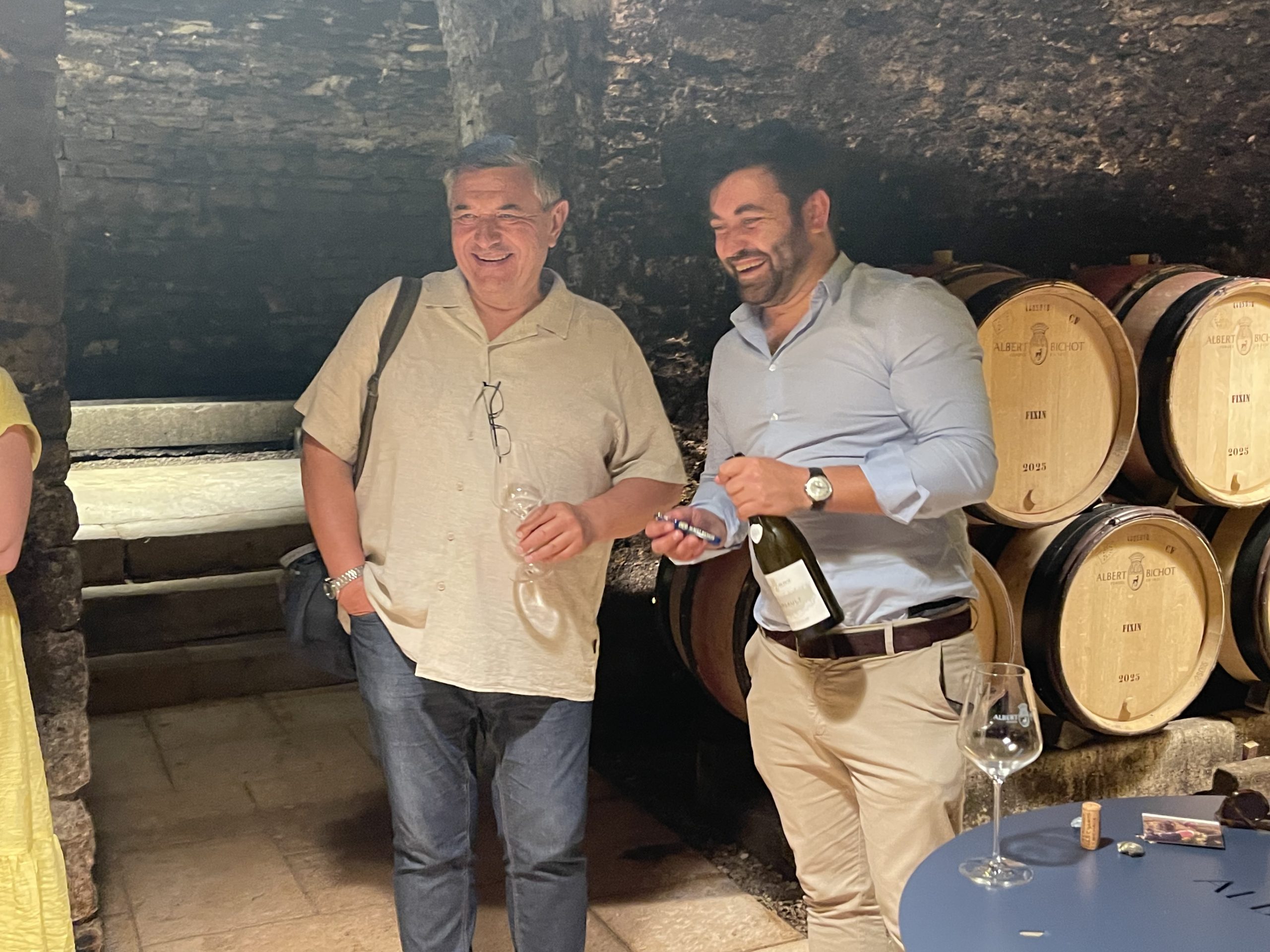
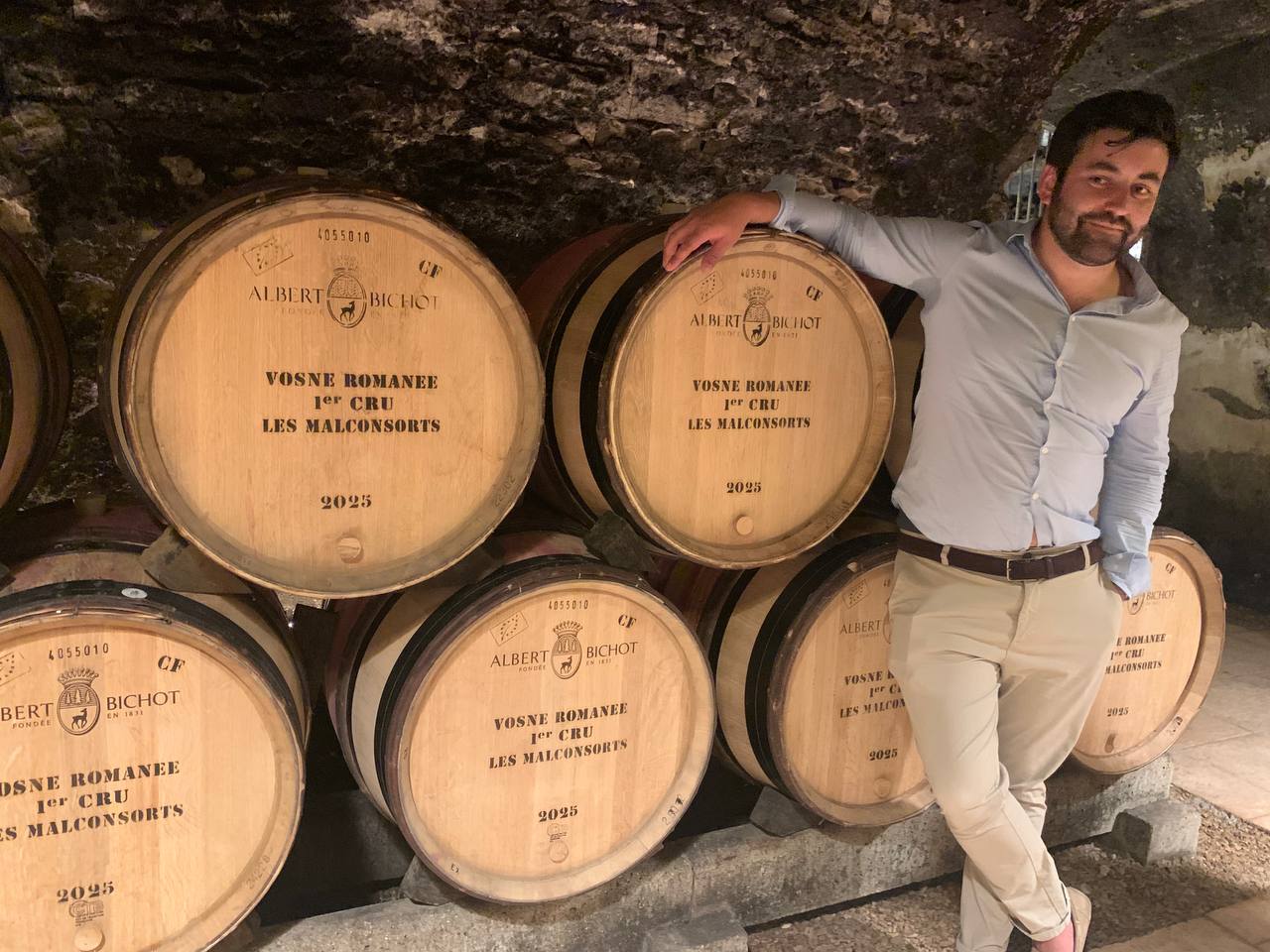
The Drinks+ and Wine Travel Awards journalists had the privilege of visiting two Albert Bichot estates, where our delegation was warmly welcomed and hosted by Denis Anjuere, the company’s Export Manager. During the visit, our group of experts had the opportunity to taste wines from nearly all of Albert Bichot’s domains.
Domaine du Clos Frantin – tasting Côte de Nuits and Côte de Beaune
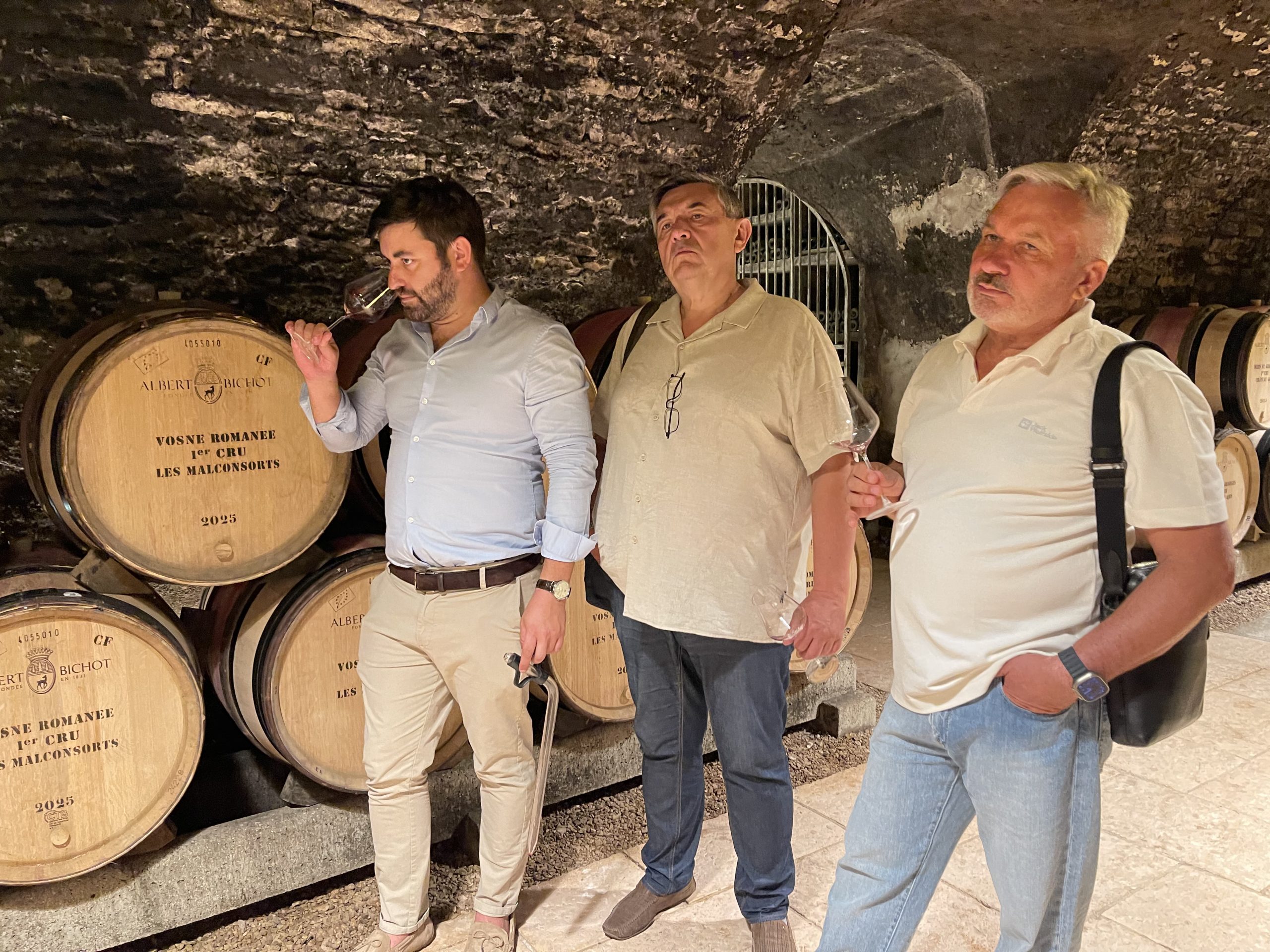
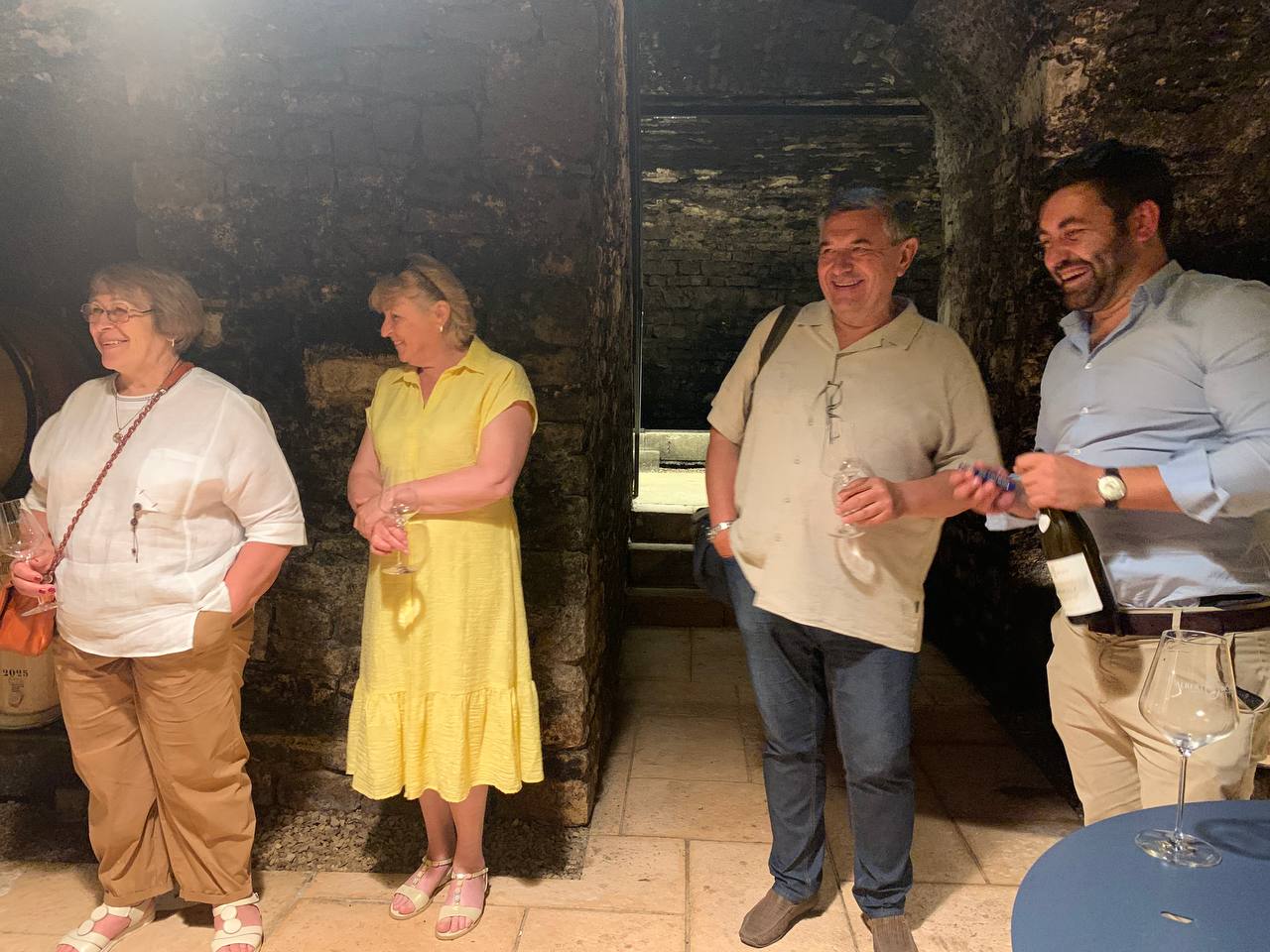
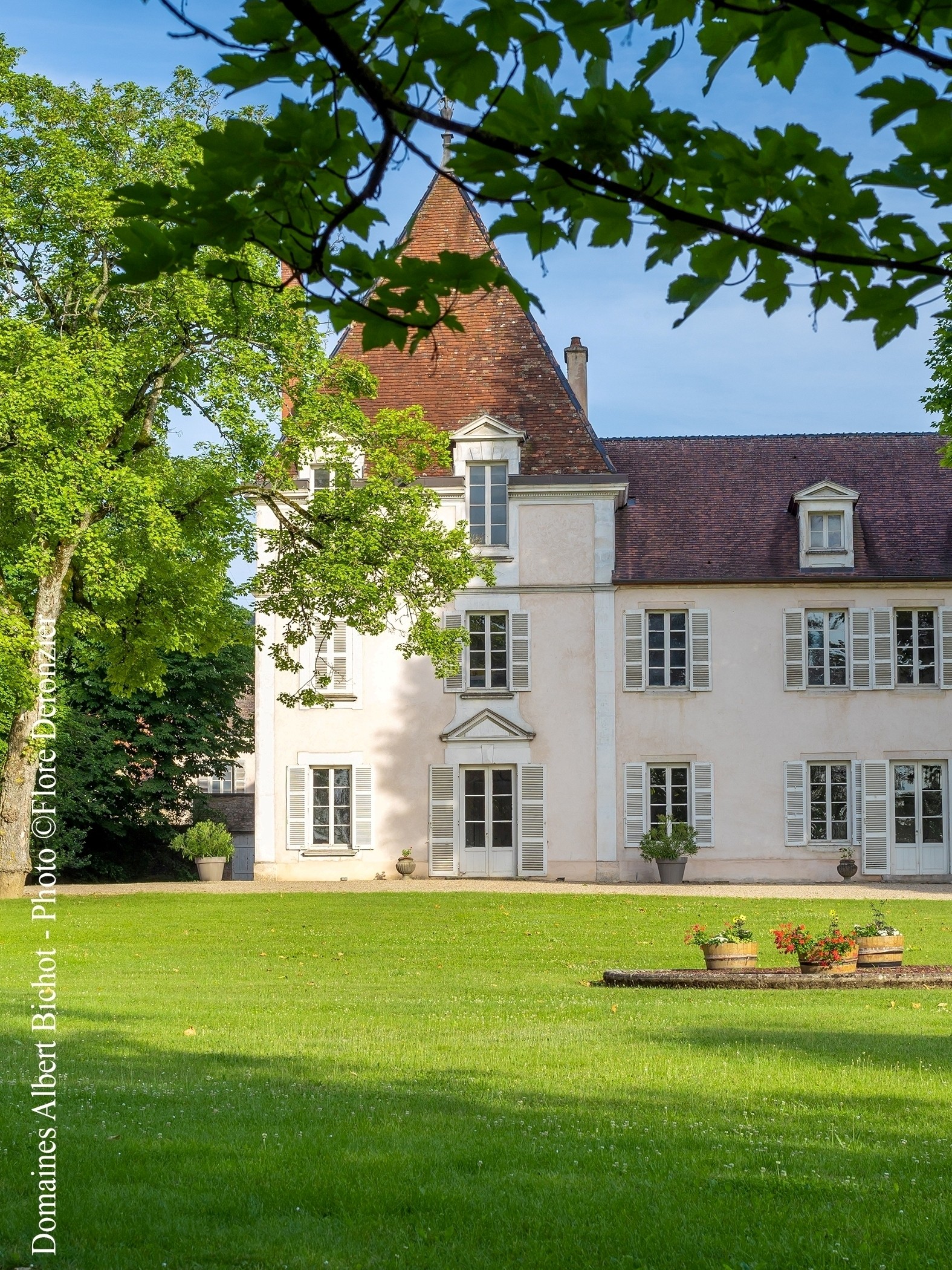
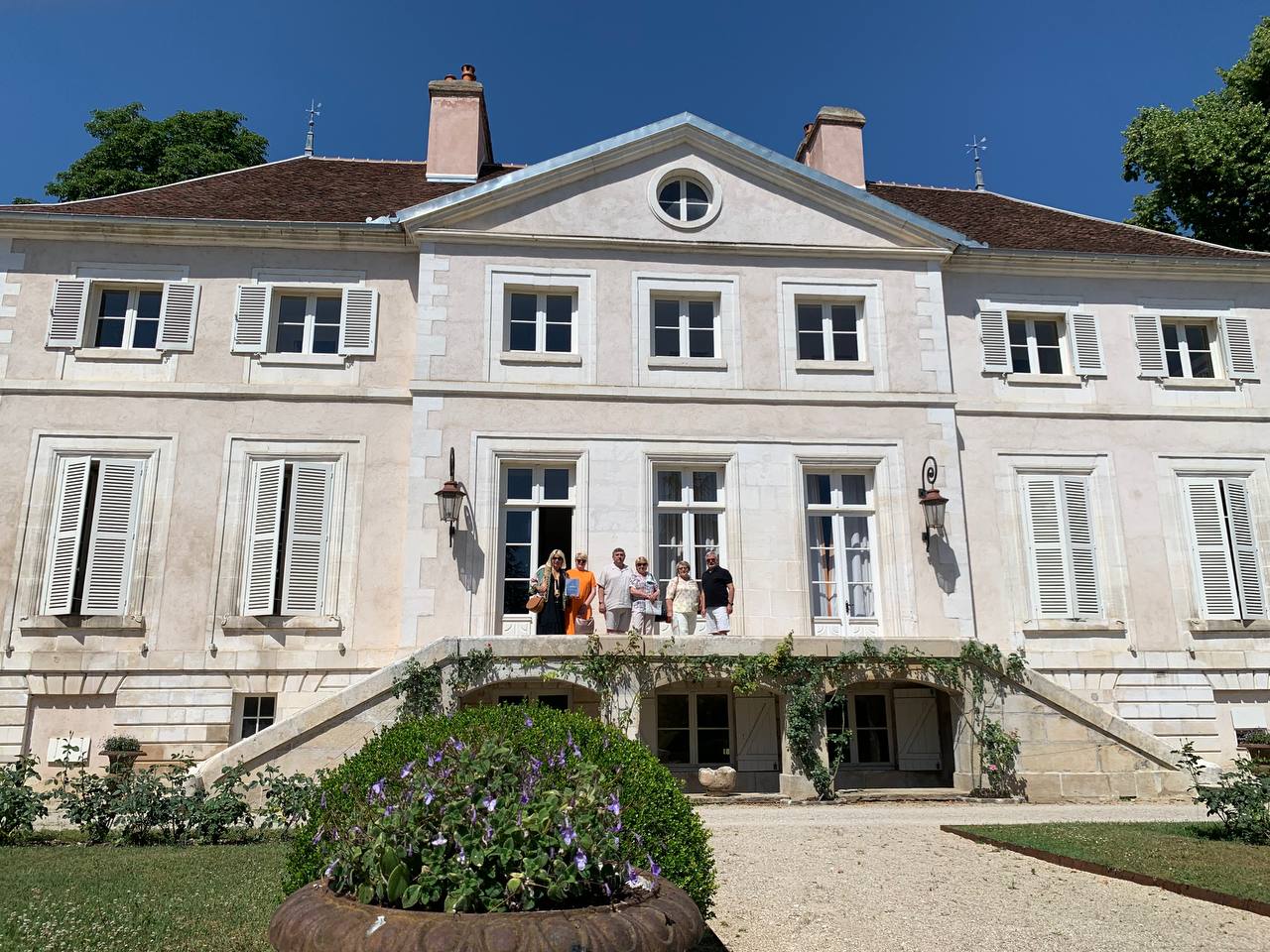
Our first visit was to Domaine du Clos Frantin, a picturesque 18th‑century estate in Nuits‑Saint‑Georges, at the heart of the Côte de Nuits. The domaine’s vineyards cover 13.2 hectares, where Pinot Noir performs superbly; 3.9 hectares are classified Premier and Grand Cru.
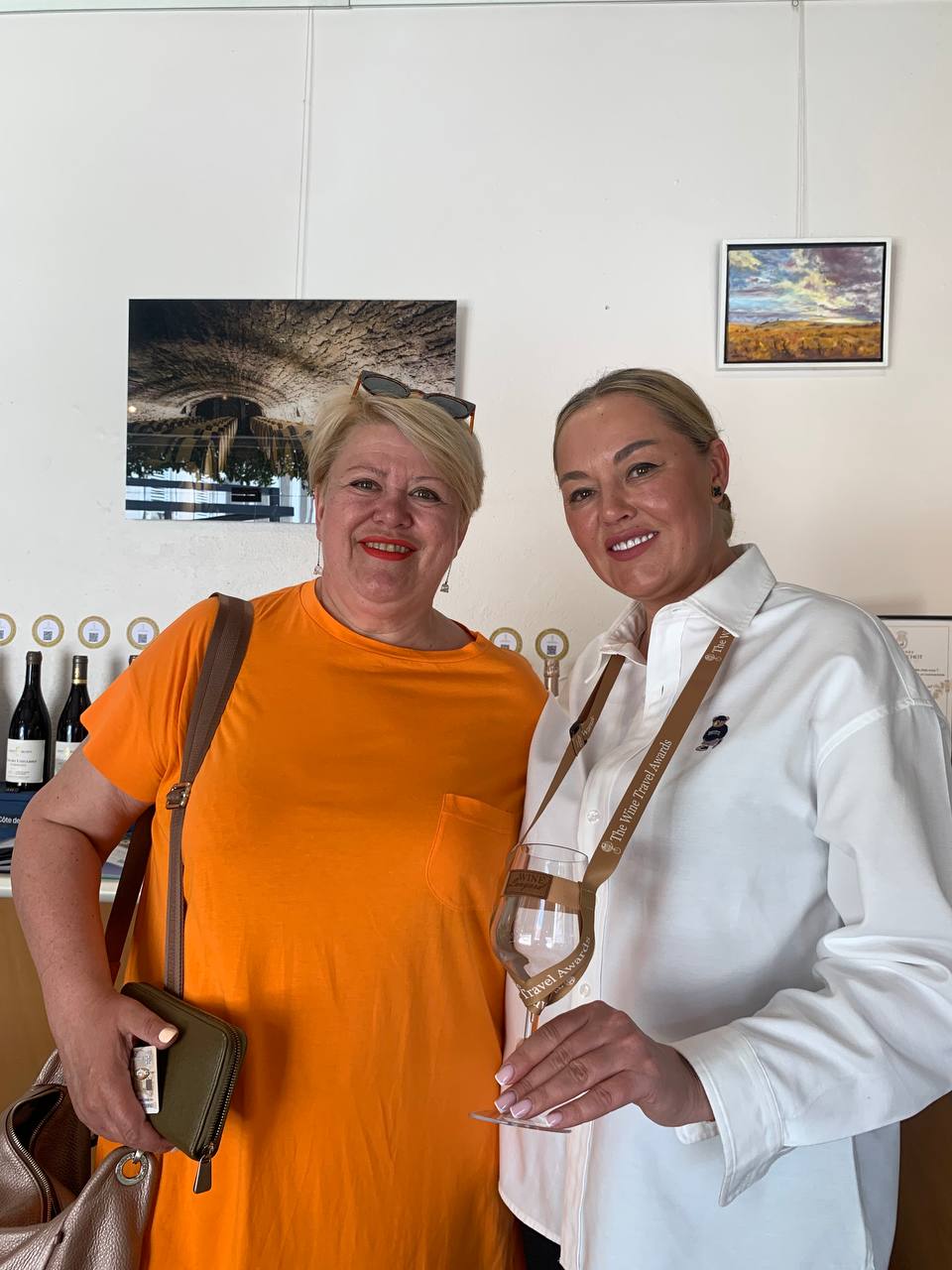
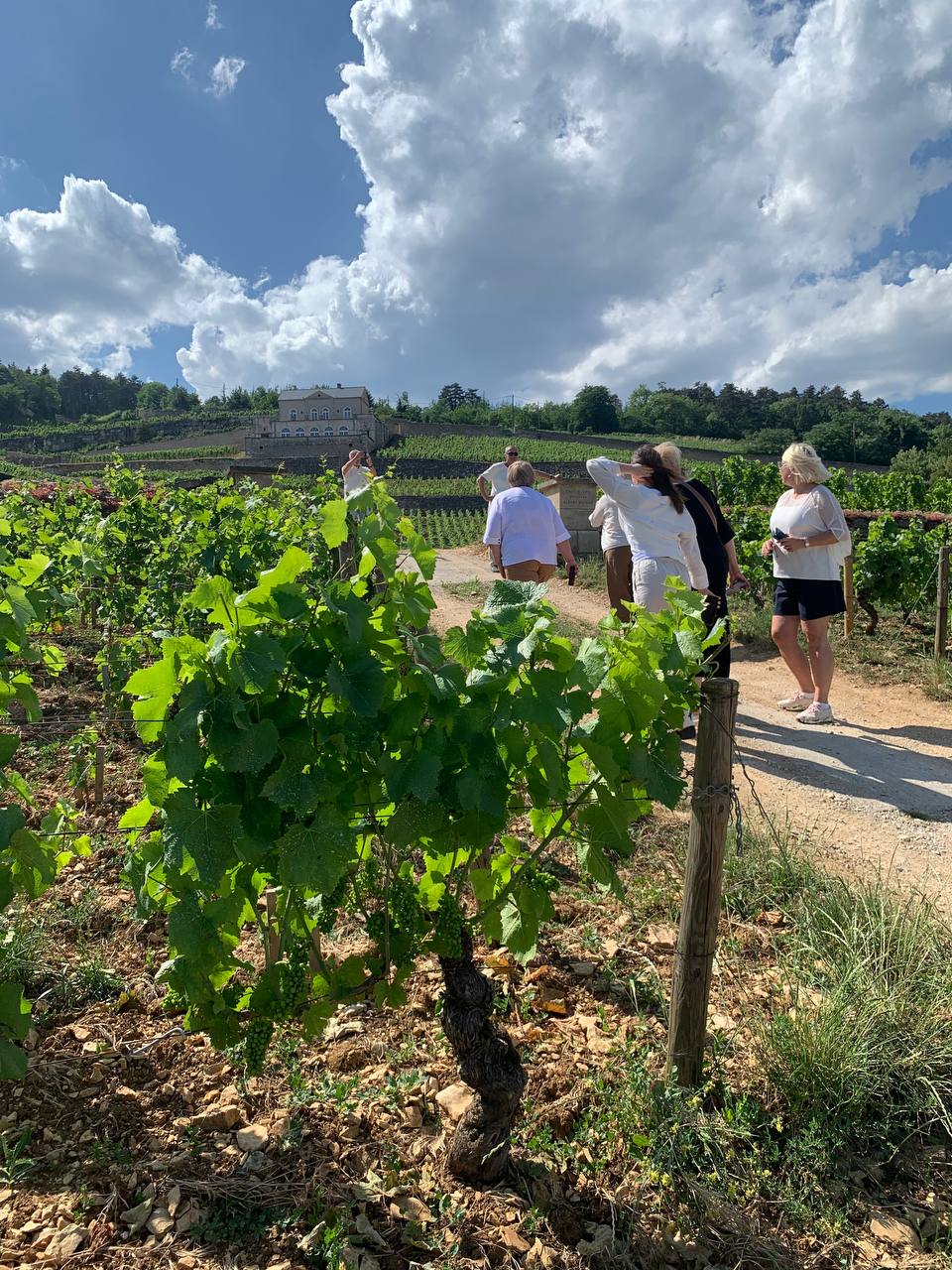
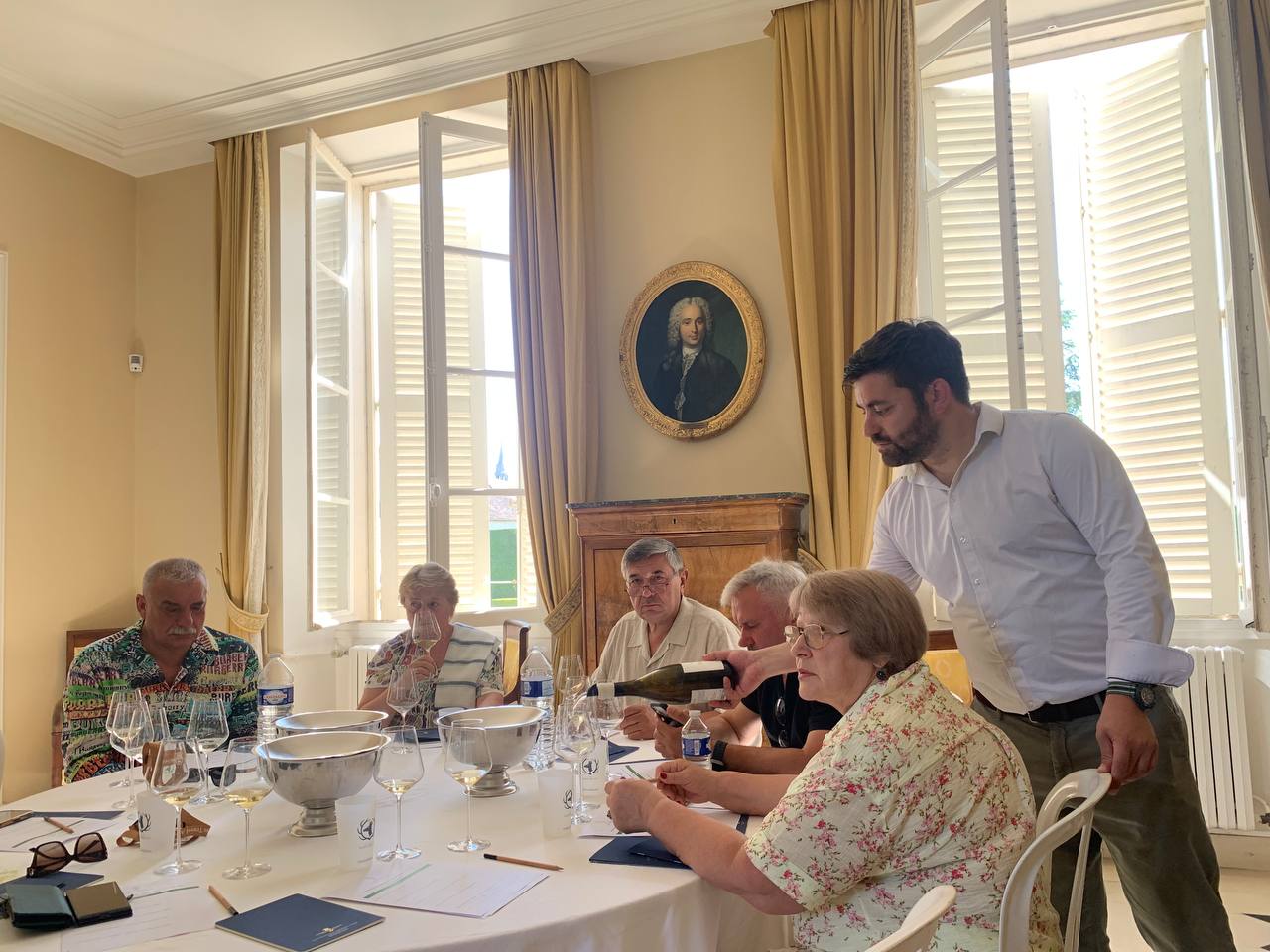
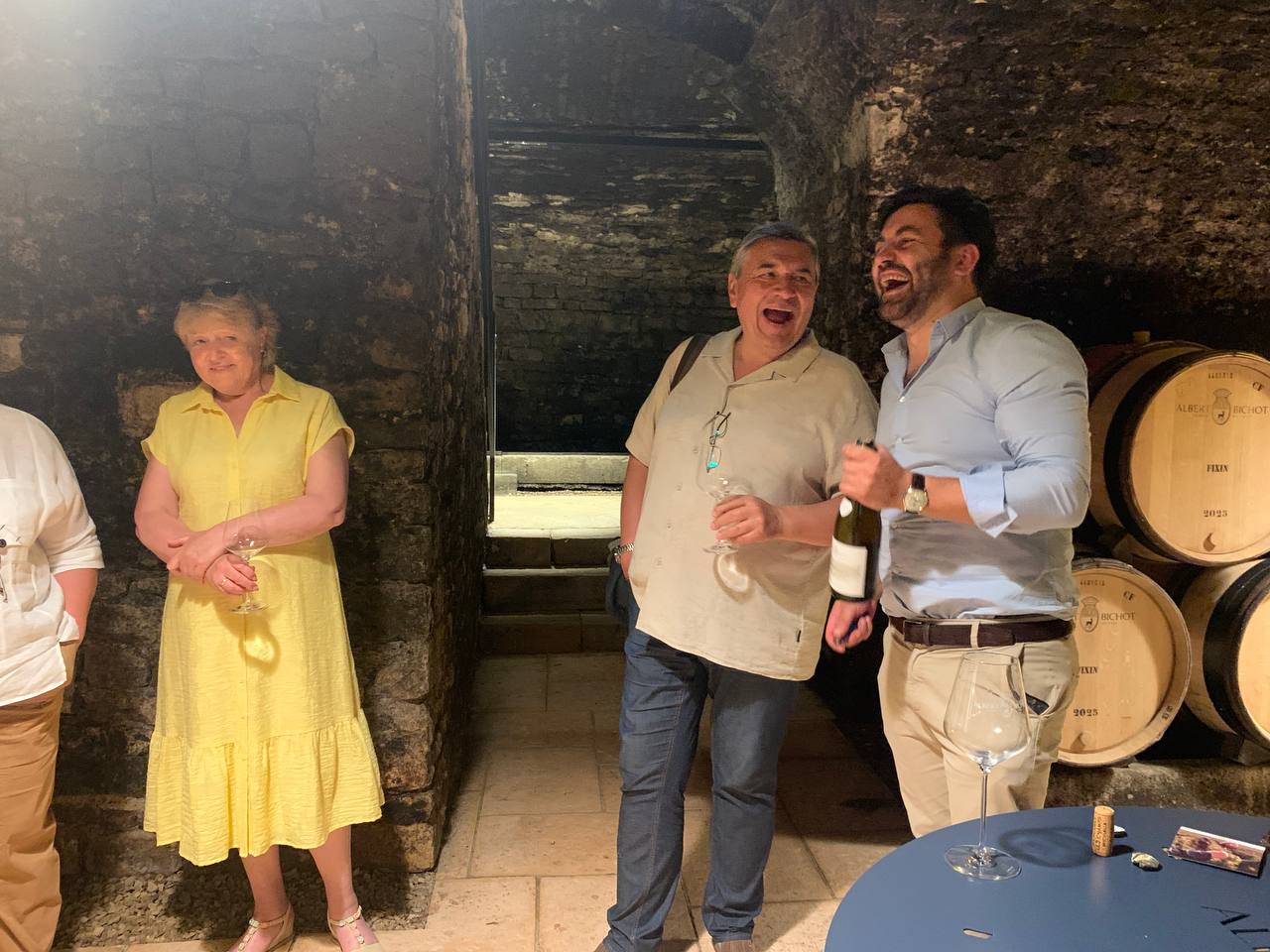
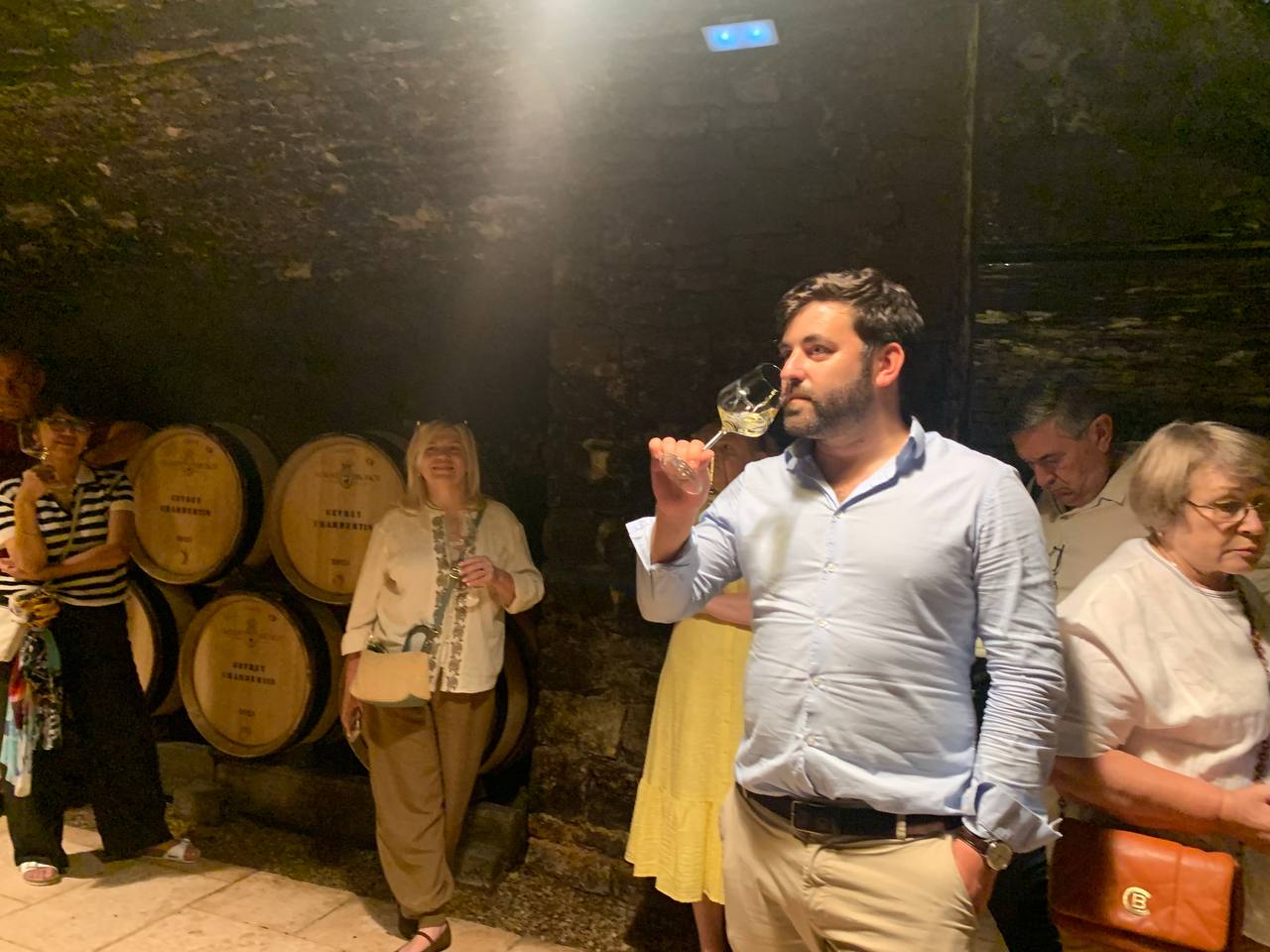
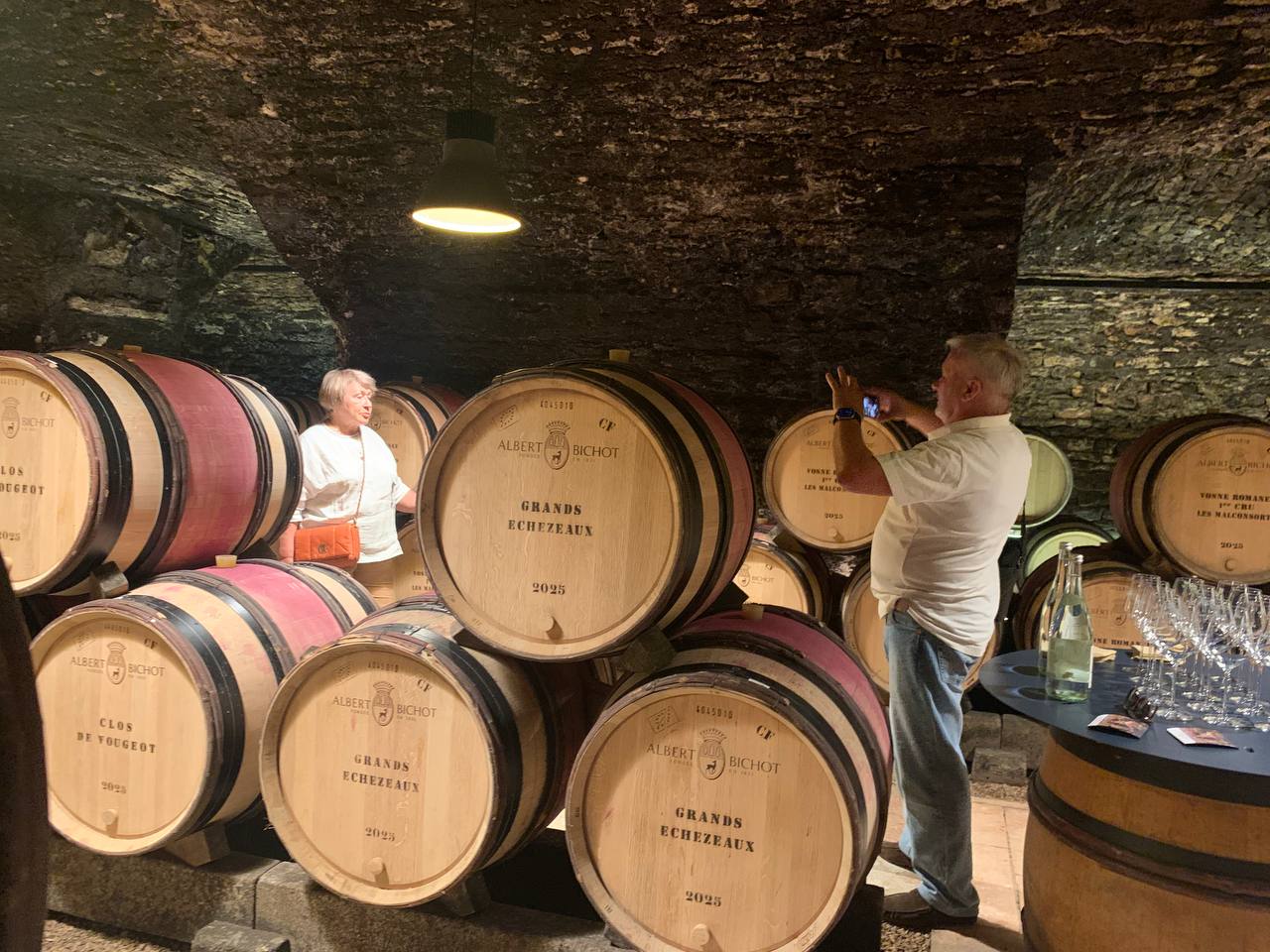
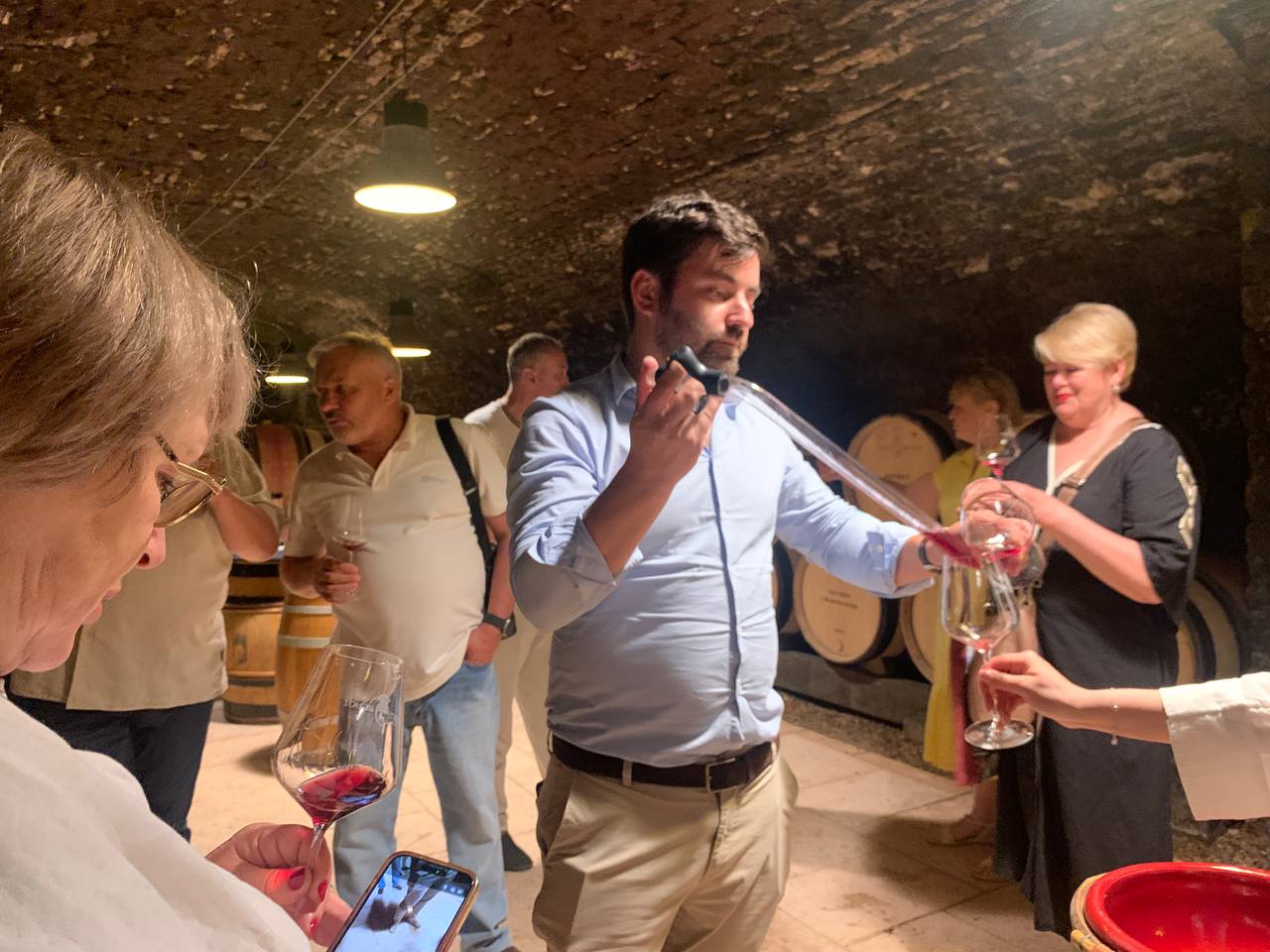
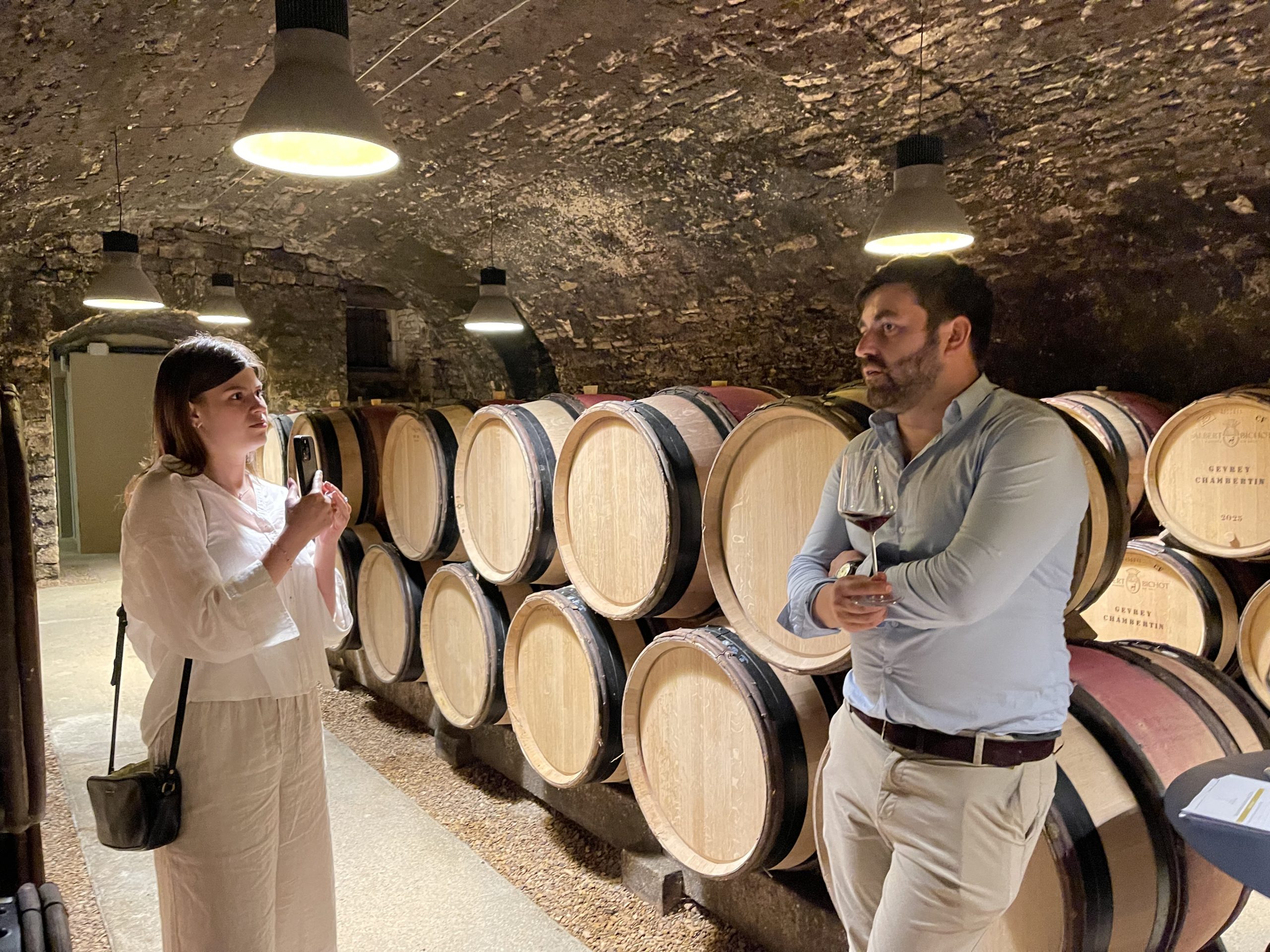
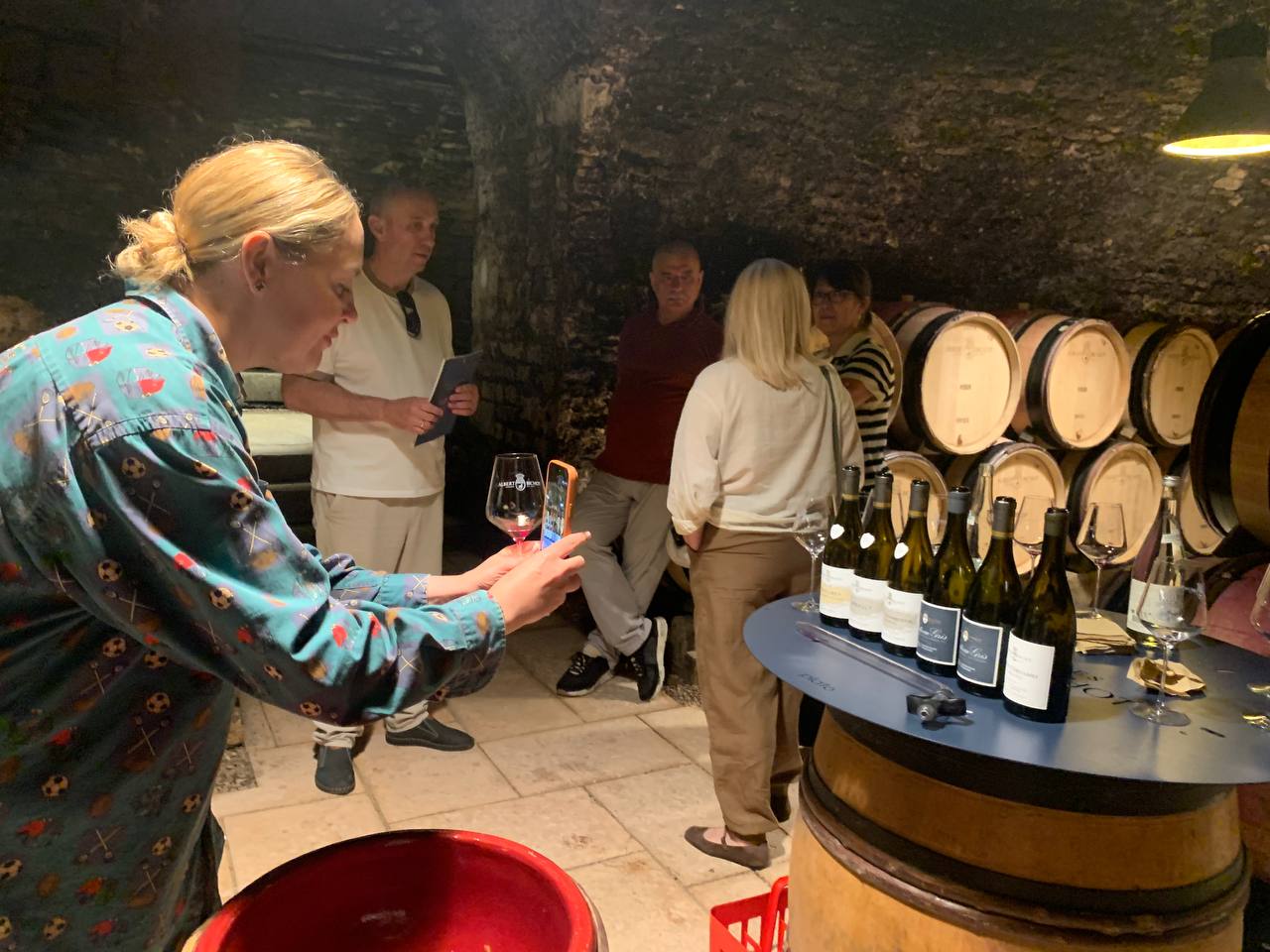
Organic certification was achieved in 2012, chemical fertilizers and herbicides have been replaced with compost and traditional plowing, and since the 2018 vintage all wines from the estate are certified organic. The cellars date back to the 16th century – the atmospheric setting where Denis Anjuere guided us through a tasting of Albert Bichot wines from both Côte de Nuits and Côte de Beaune.
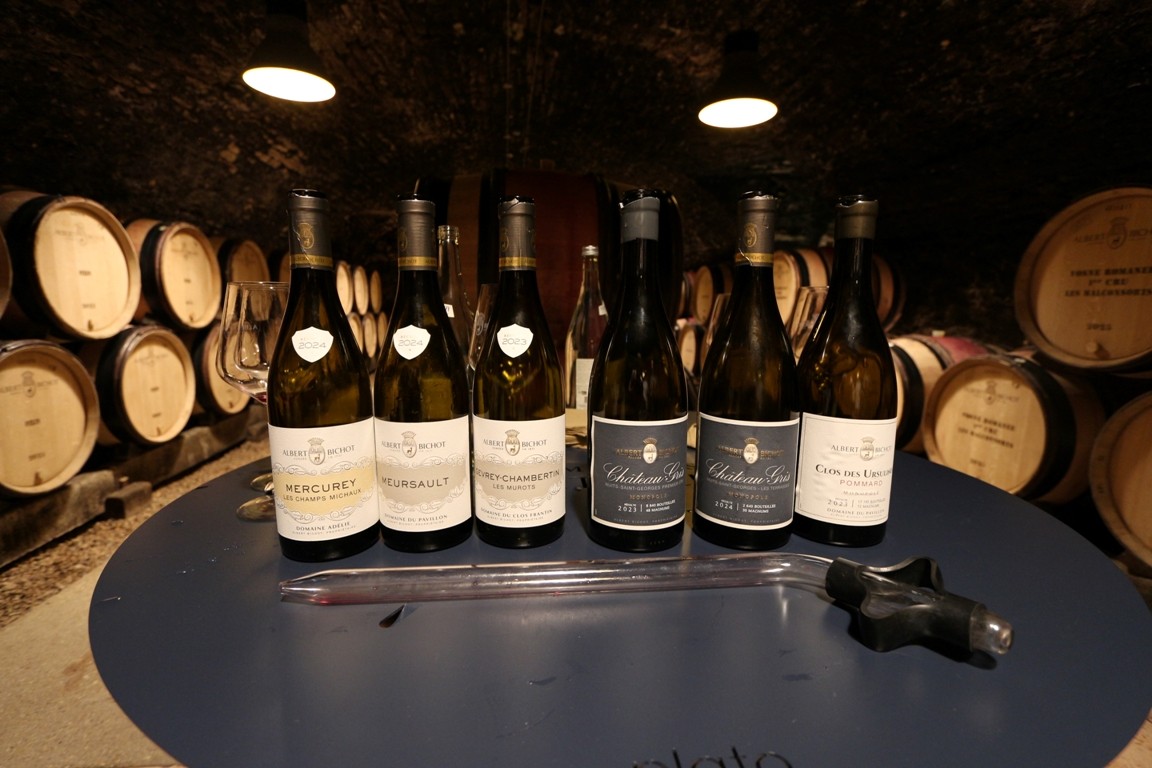
Tasting Notes
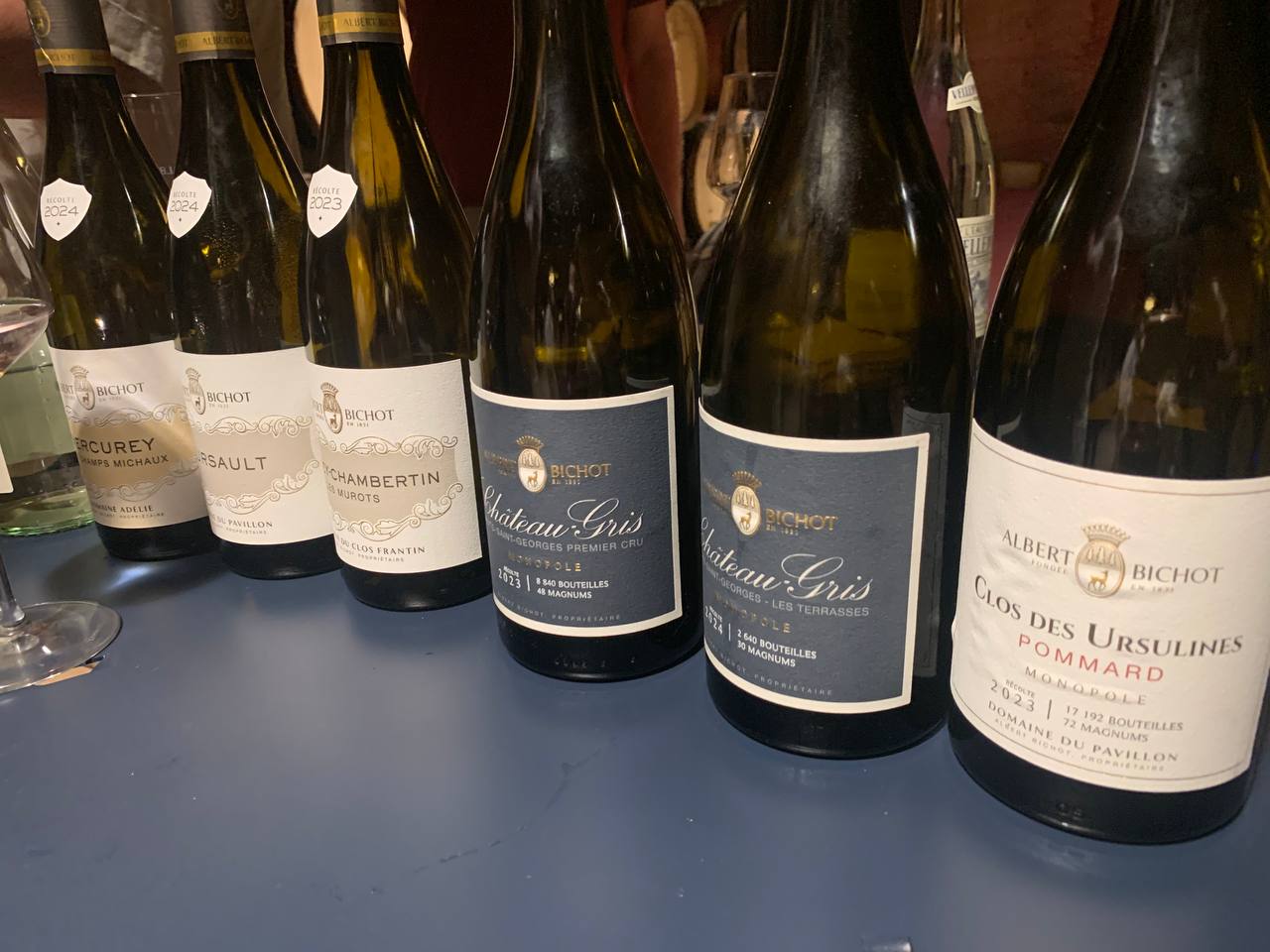
Mercurey Les Champs Michaux 2024 Domaine Adélie
A rare white wine from Mercurey, Côte Chalonnaise, grown on a parcel Les Champs Michaux with unusually high clay content and broad limestone bands. Chardonnay was planted here experimentally on 0,25 ha 65 years ago among Pinot Noir vines – with excellent results. Wine made from 20‑year‑old vines now covering 1.2 ha; hand‑harvested; fermented in oak (15–20% new); aged on fine lees in oak barrel. Mineral, rounded, with a long finish and excellent gastronomic potential.
Meursault 2024 Domaine du Pavillon
A Pinot Noir from Meursault – a village famed for its whites – sourced from a 0.33‑ha parcel less than 400 metres from Les Santenots in Volnay. So here, all the conditions are in place to produce excellent wines from 35–40-year-old Pinot Noir vines. Hand‑harvested, fermented in conical oak vats. Aromas of red berries with violet and rose; a rich, structured palate with a velvety finish.
Gevrey‑Chambertin Les Murots 2023 Domaine du Clos Frantin
Gevrey-Chambertin, a wonderful appellation in the Côte de Nuits. The Les Murots climat covers 1.5 hectares at the foot of a hillside, where calcareous clay and gravelly soils provide excellent drainage and promote the optimal ripening of Pinot Noir. The grapes are hand-harvested, fermented in conical oak vats, and aged in oak barrels for 14–16 months, with 25–35% new oak. The wine is rich in ripe fruit aromas, complemented by notes of spice, oak, and subtle animal nuances. Harmonious and well-balanced, it has a delicate velvety texture and a long, fruit-driven finish.
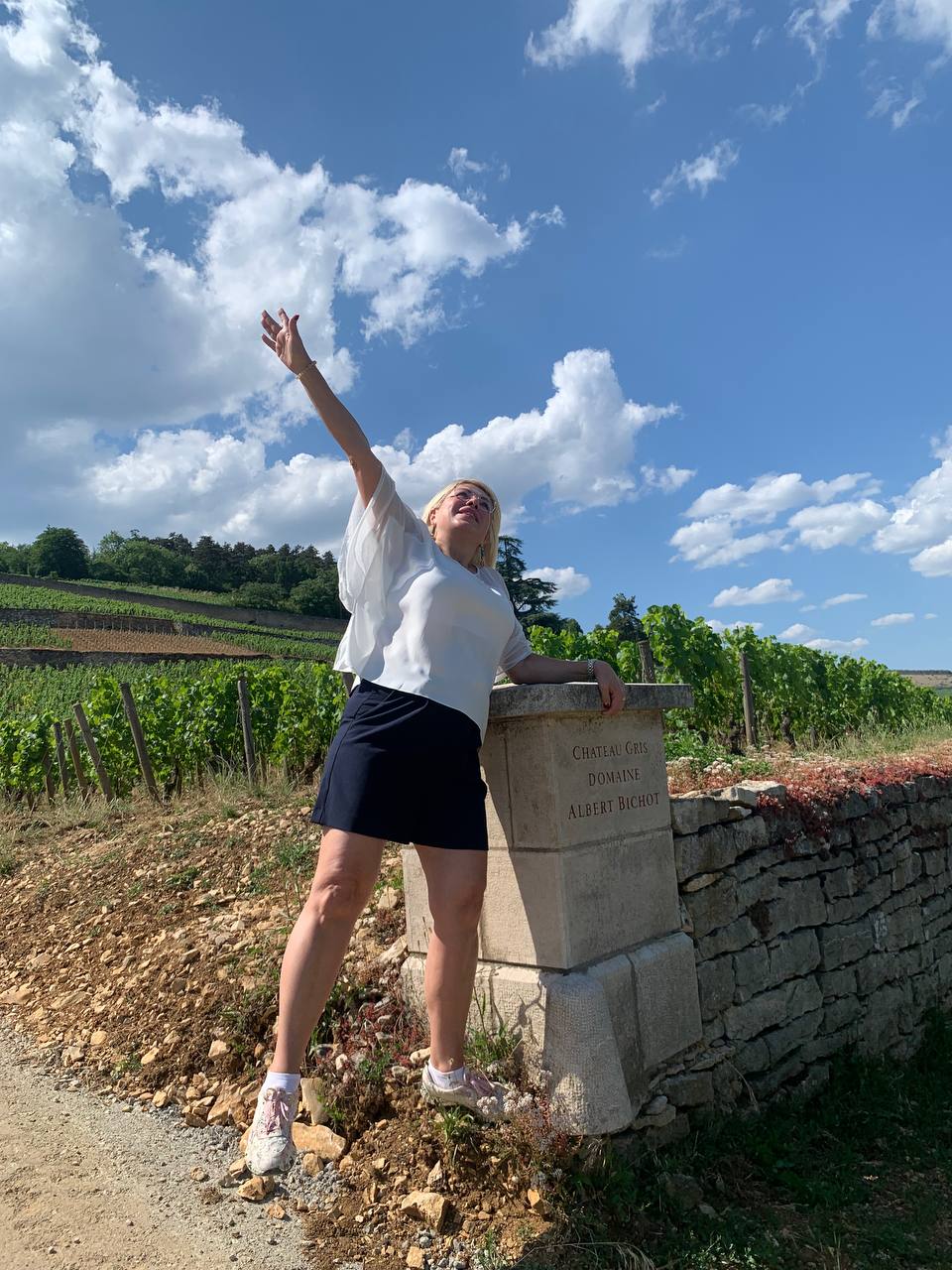
Nuits‑Saint‑Georges 1er Cru Château‑Gris Monopole 2023 Château‑Gris
Pinot Noir is grown on the lower terraces around Château-Gris, covering an area of 2.55 hectares with calcareous-clay soils. The grapes are hand-picked, fermented in conical oak vats, and aged in oak for 16–17 months, with 35–40% new oak. Aromas of red and black berries are complemented by floral notes of rose, violet, and peony, along with subtle notes of oak. Rich and fruity on the palate, with good structure and refined tannins. A long, elegant finish.
Nuits‑Saint‑Georges Les Terrasses Monopole 2024 Château‑Gris
A rare white Nuits‑Saint‑Georges – less than 4% of the village’s wines are white. Chardonnay from upper terraces (0.85 ha); hand‑harvested; fermented in oak (25–35% new); aged 14–16 months on lees. Mineral, restrained oak, long finish.
Pommard Clos des Ursulines Monopole 2023 Domaine du Pavillon
This nearly 4‑ha vineyard was once owned by Ursuline nuns. Its southern location near Volnay challenges the stereotype of Pommard as “masculine”. Limestone‑clay soils with white marl; 35–40‑year‑old vines; hand‑harvested; fermented in conical oak; aged 14–16 months (20–30% new). Red and black berries, fig, floral notes, spice and delicate oak. Powerful yet silky, almost “feminine”, with a long velvety finish.
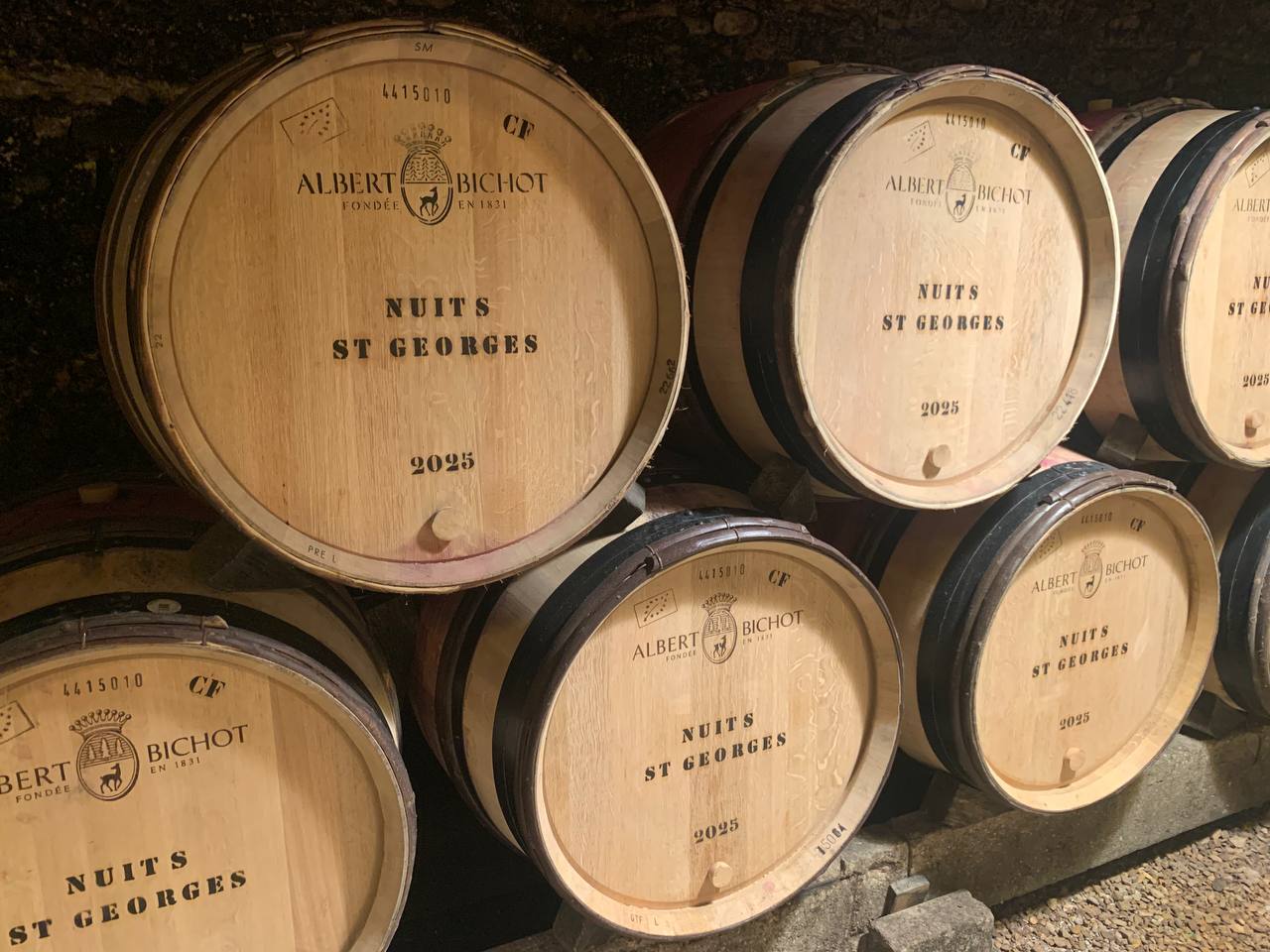
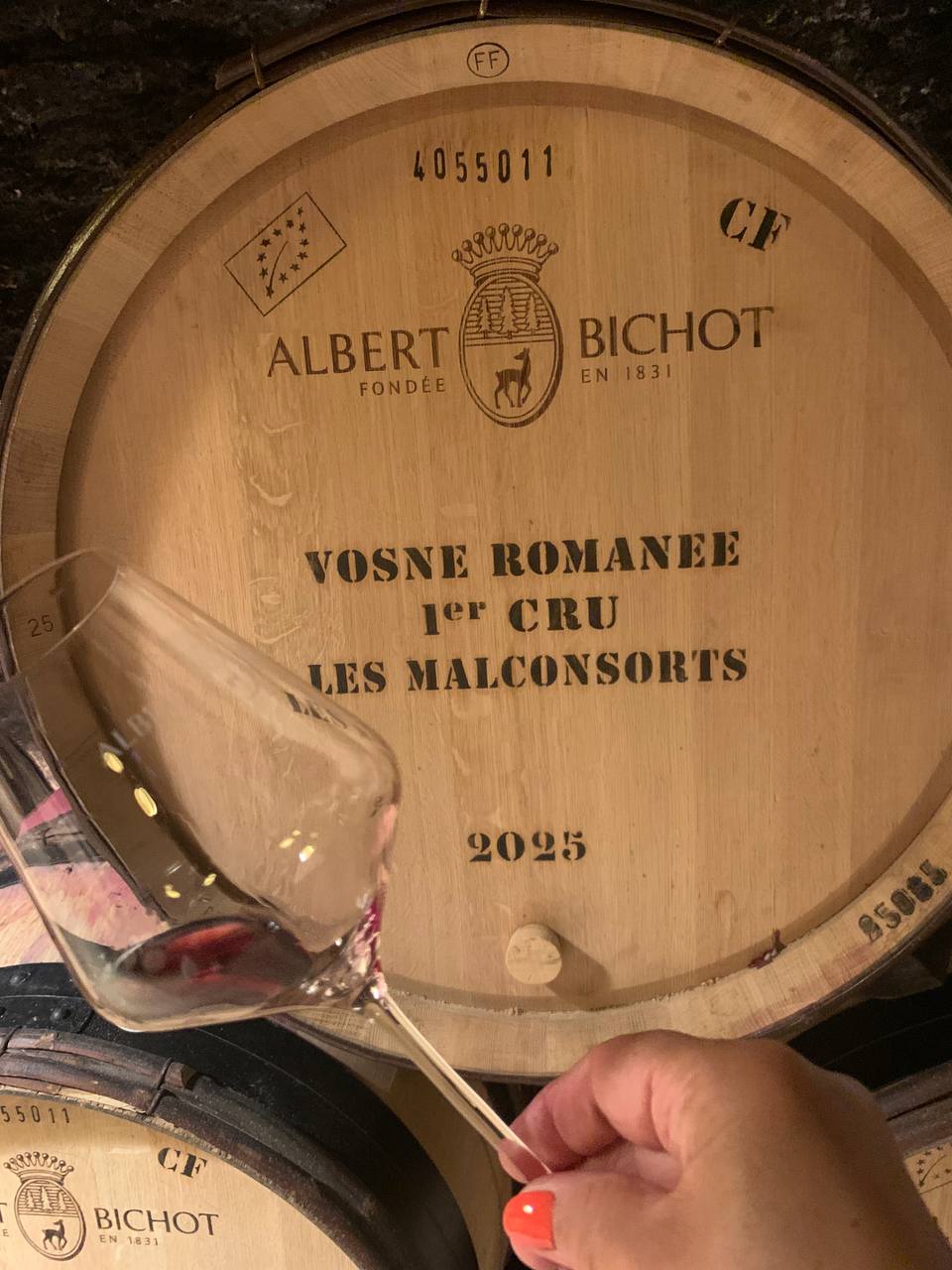
Many thanks to Denis Anjuere for the unique opportunity to taste two additional samples of the 2025 Pinot Noir and experience the nuances of aging in different barrels: a fourth-fill 2022 barrel, and a 2025 barrel.
Domaine Long‑Depaquit – exceptional Chablis
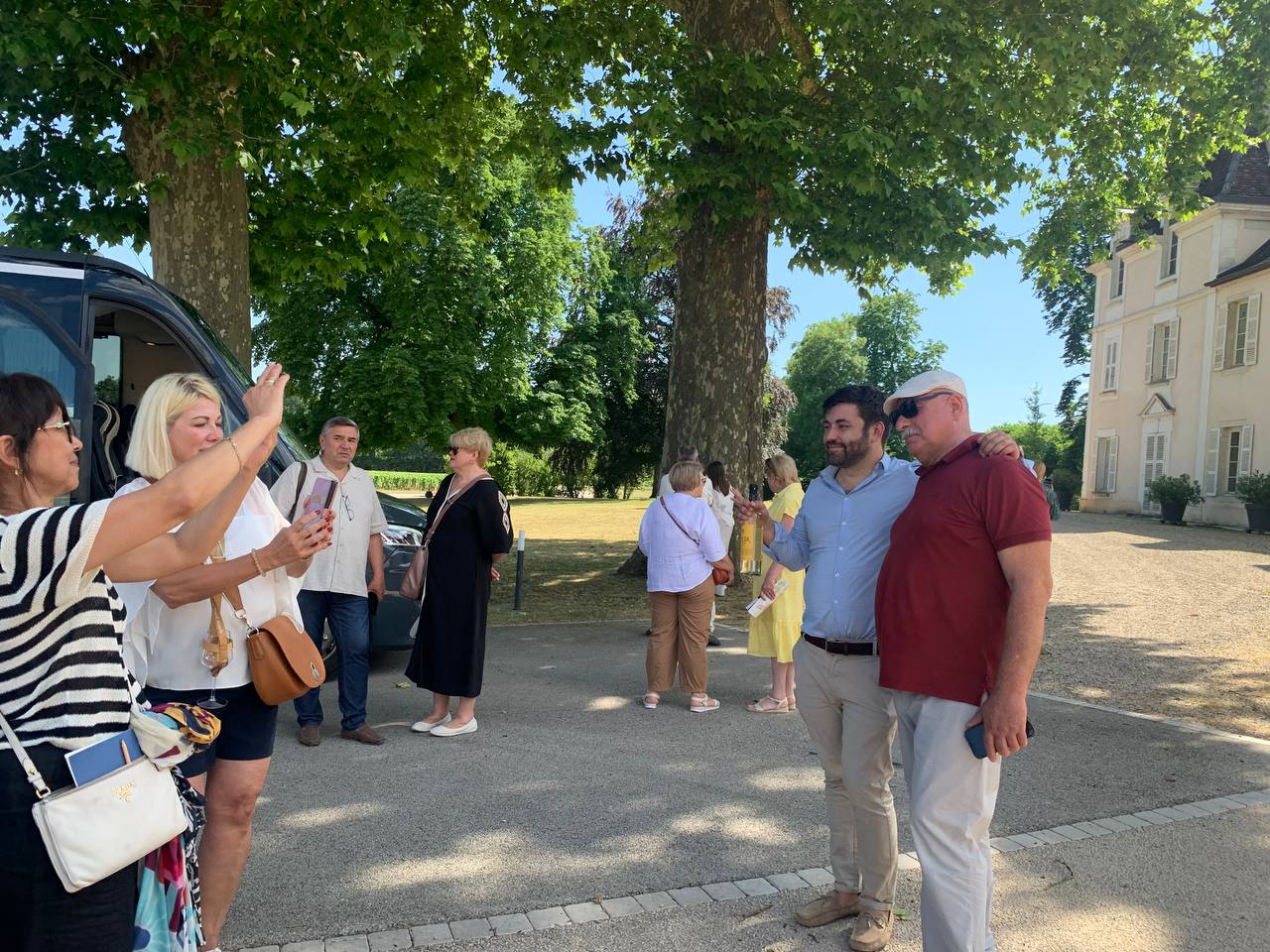
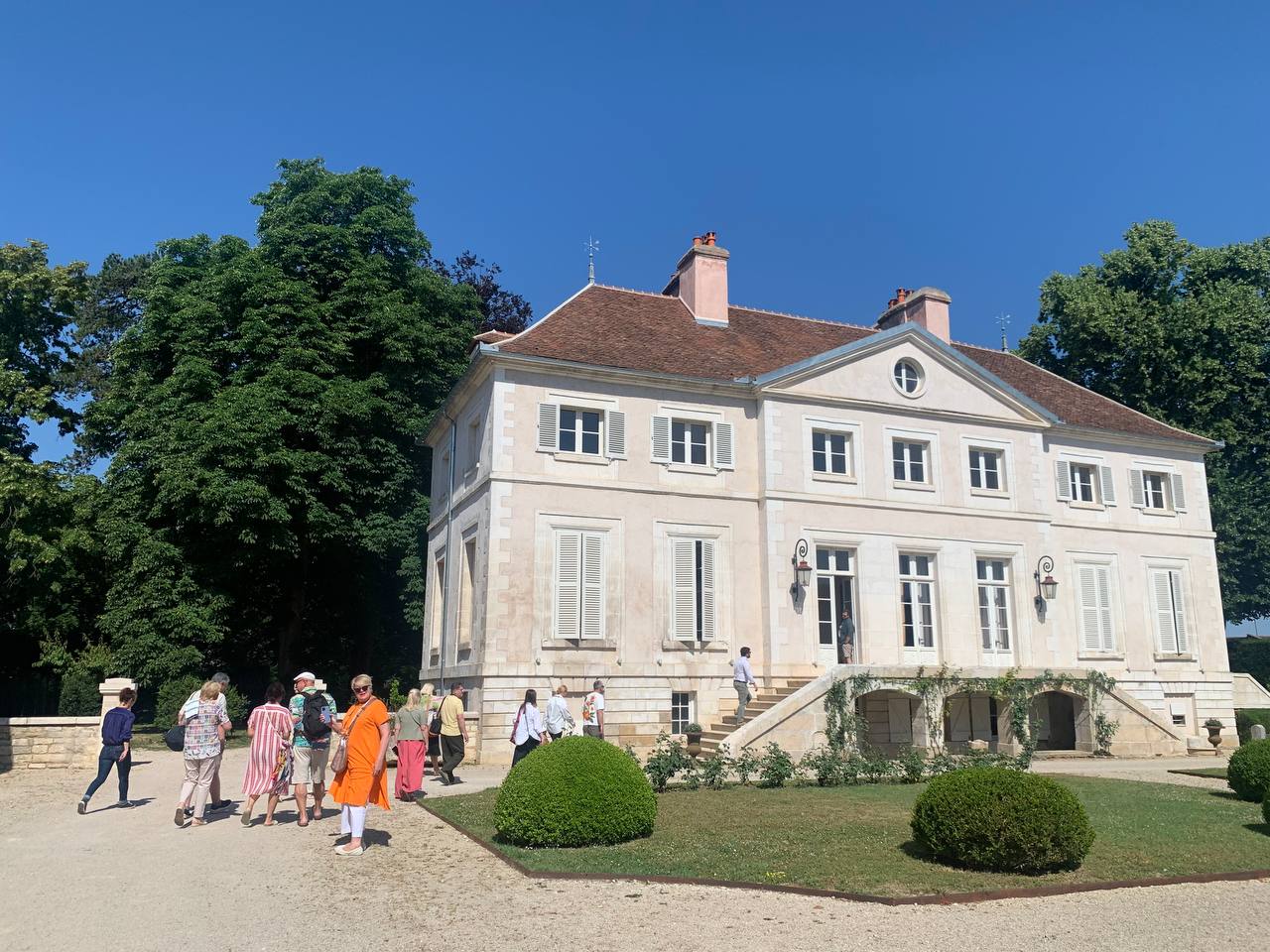
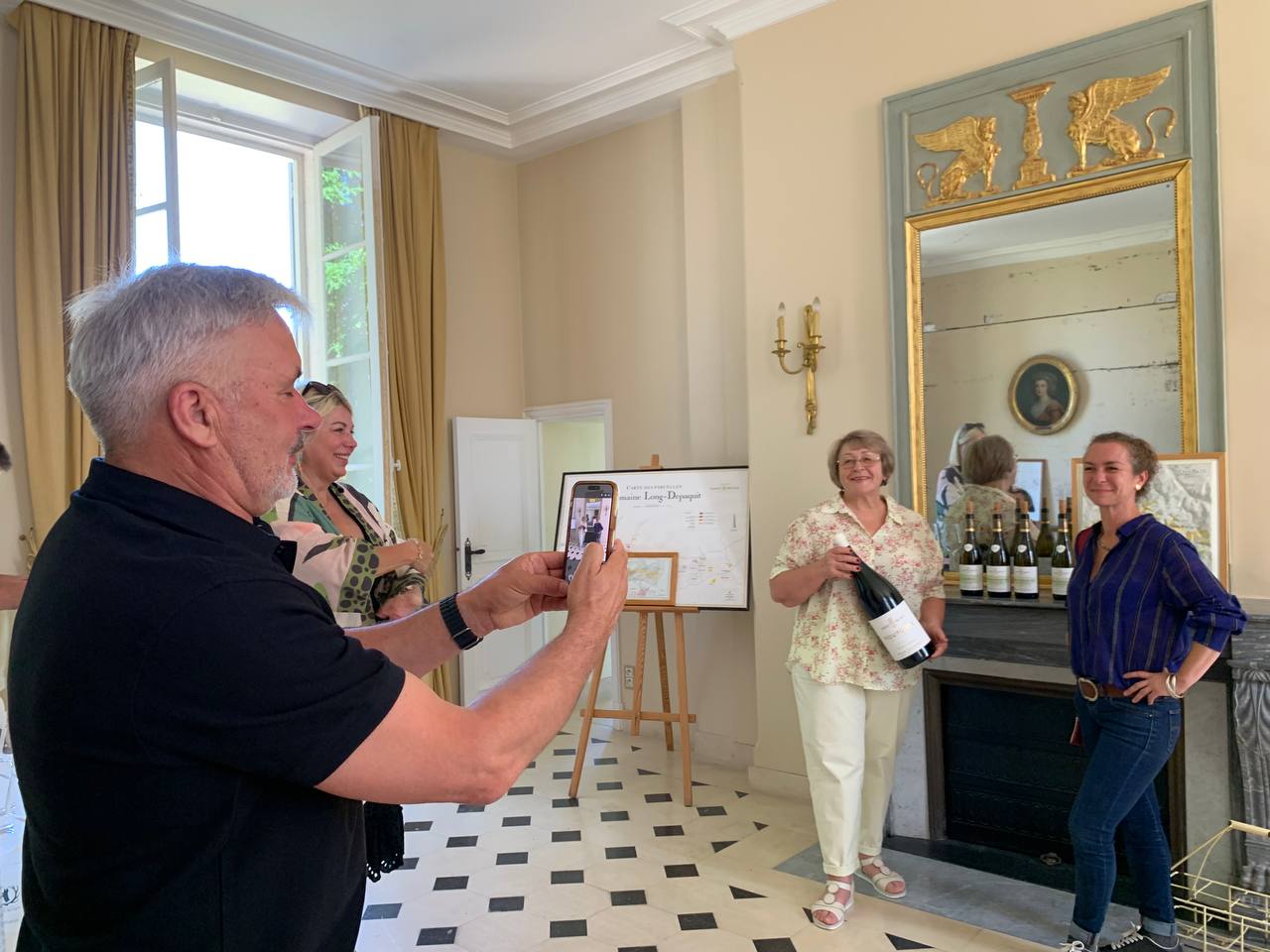
Our second visit was to the remarkable Domaine Long‑Depaquit in Chablis – a jewel of wine tourism. The estate’s history dates back to the French Revolution, when the Long‑Depaquit family acquired land confiscated from the Cistercian abbey of Pontigny. It became part of Maison Albert Bichot in 1968.
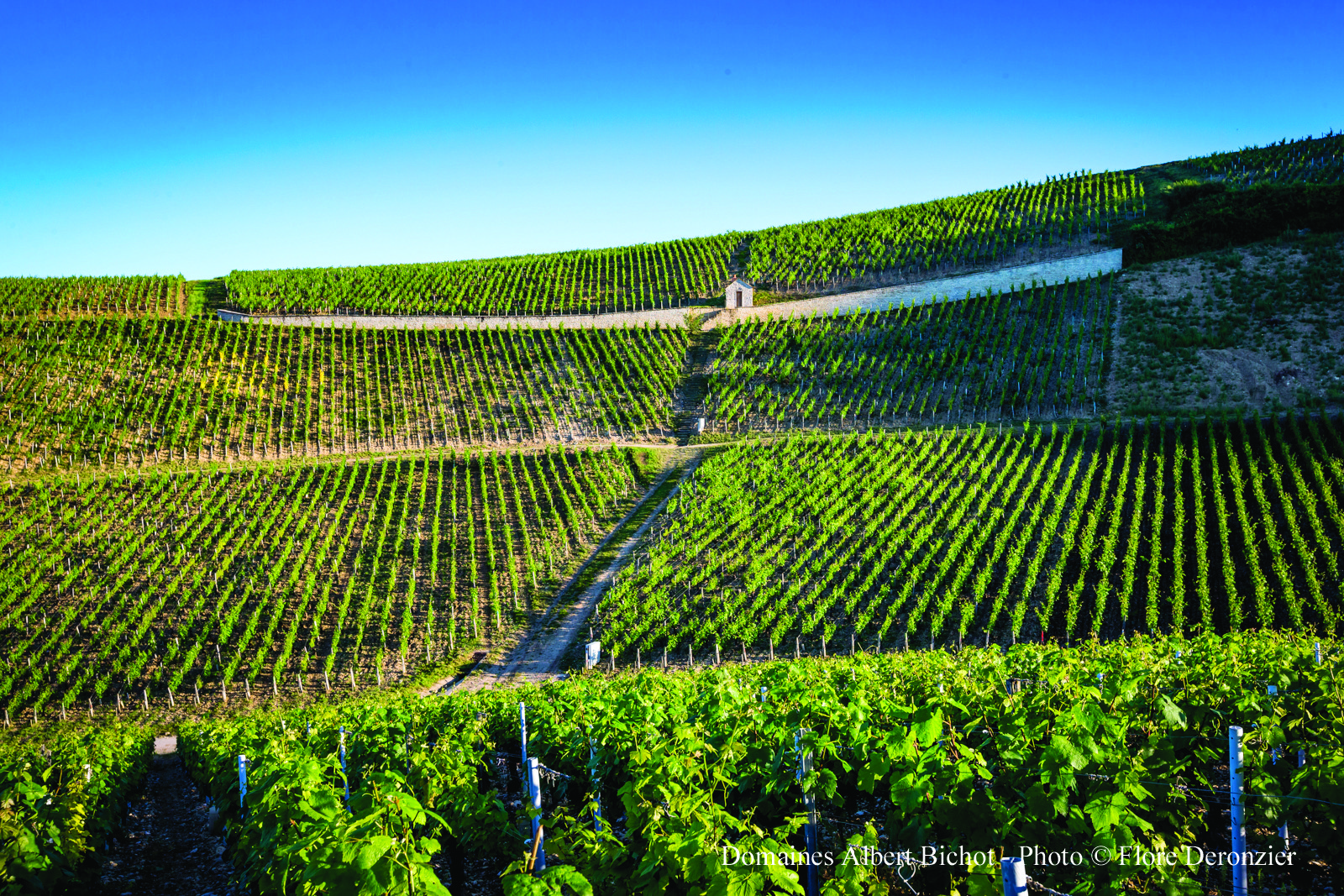
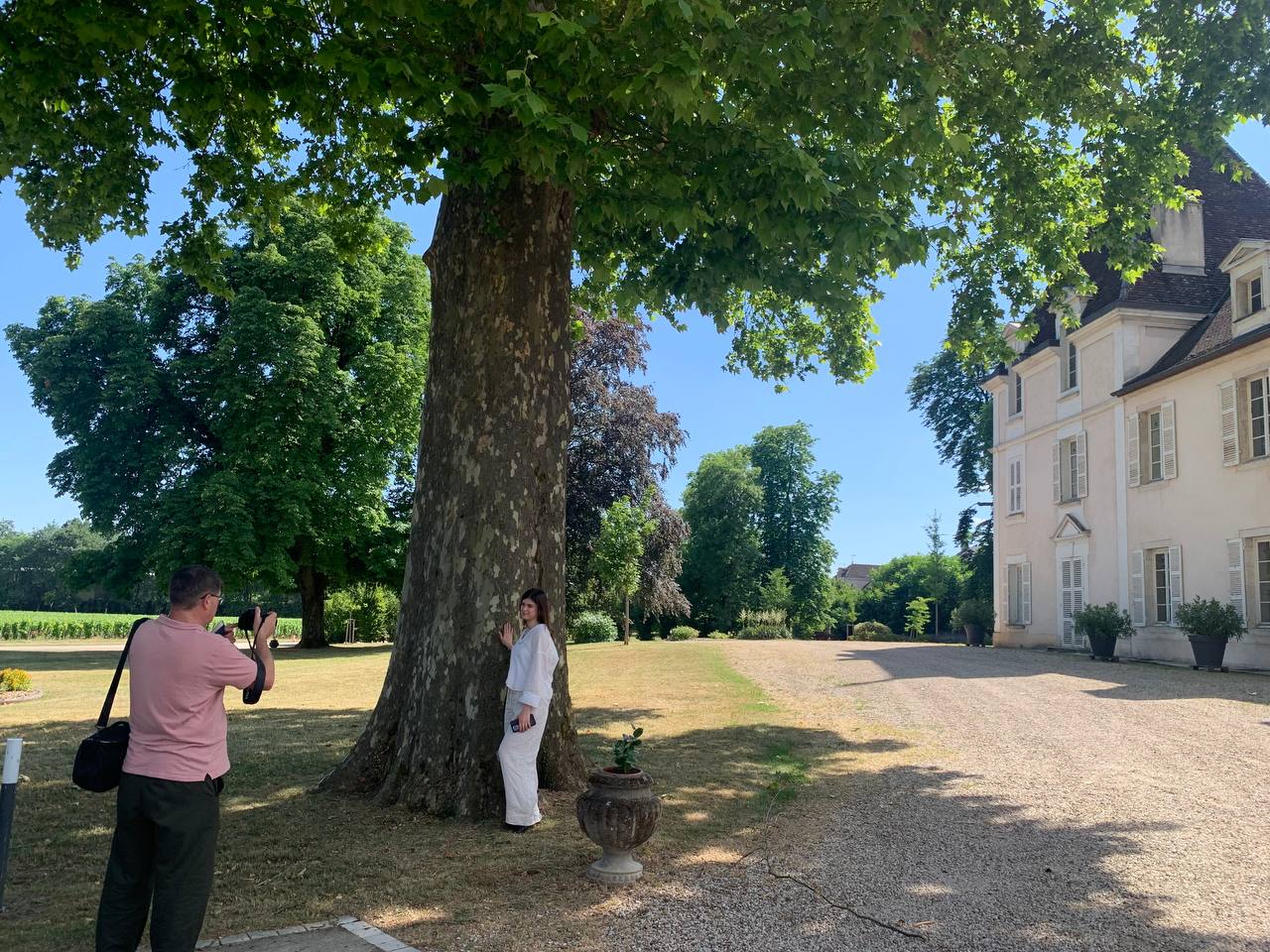
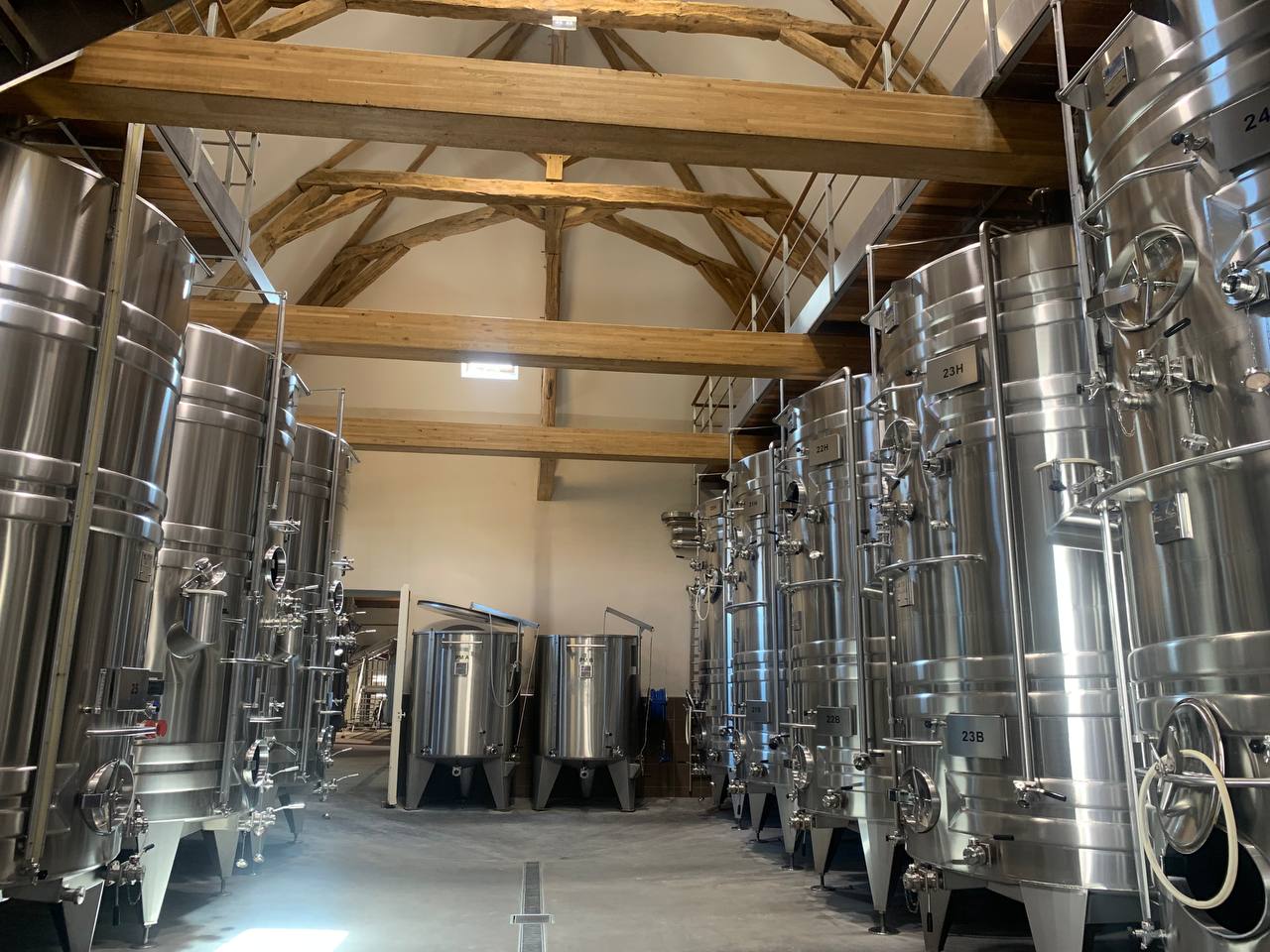
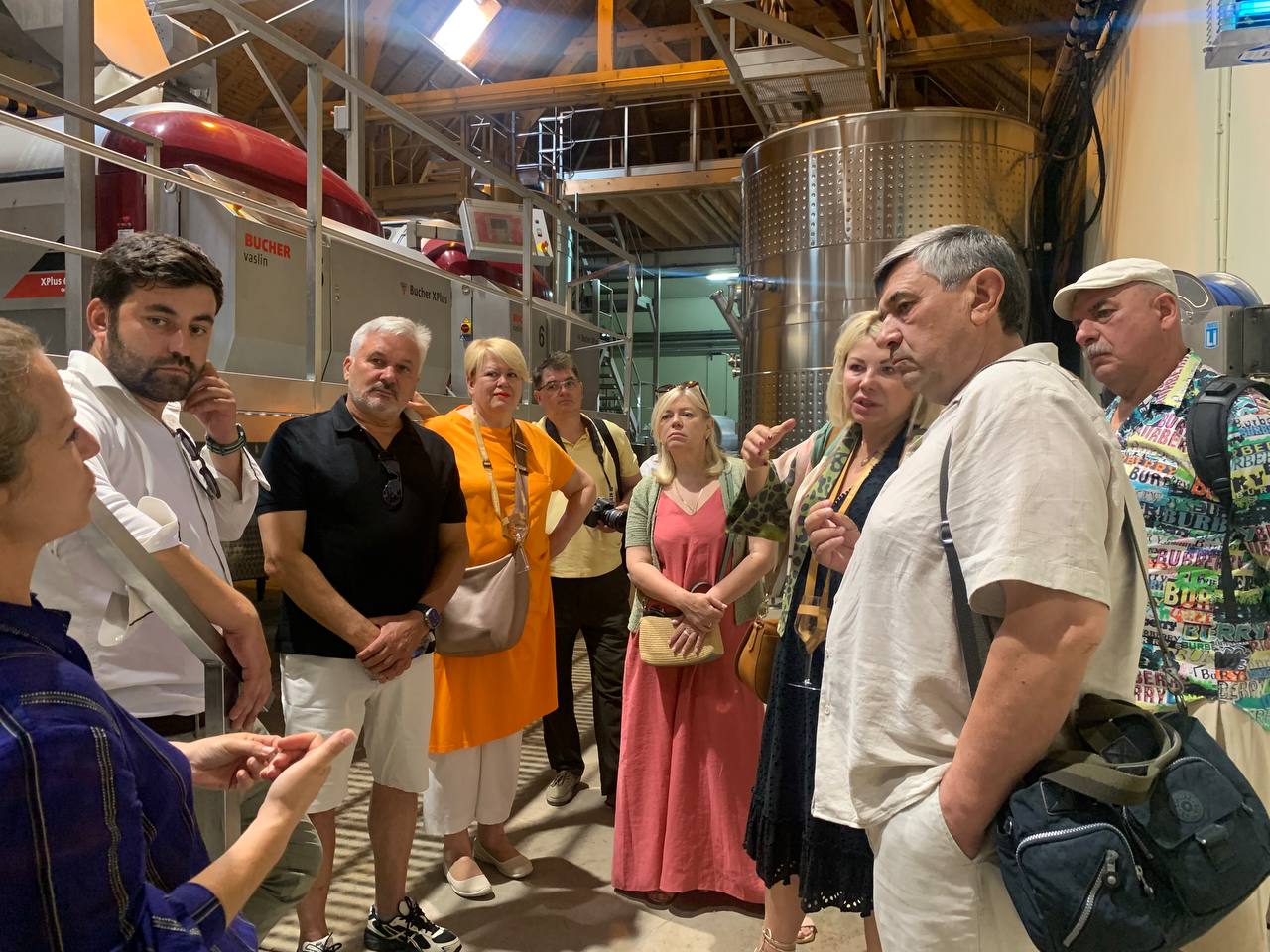
The grounds, with centuries‑old trees and rose gardens, offer a serene setting; the orangery is open year‑round. In 2014, a new eco‑friendly winery was built, which we visited with Denis and the domaine’s winemaker. Modern equipment allows even greater precision and purity.
The company’s vineyards in Chablis cover 52.1 hectares and are managed using a sustainable approach to viticulture, with yields carefully limited and intervention during the winemaking process kept to a minimum. This allows the production of authentic, mineral-driven, and elegant wines. Oak aging is used sparingly to preserve the expressiveness of each terroir.
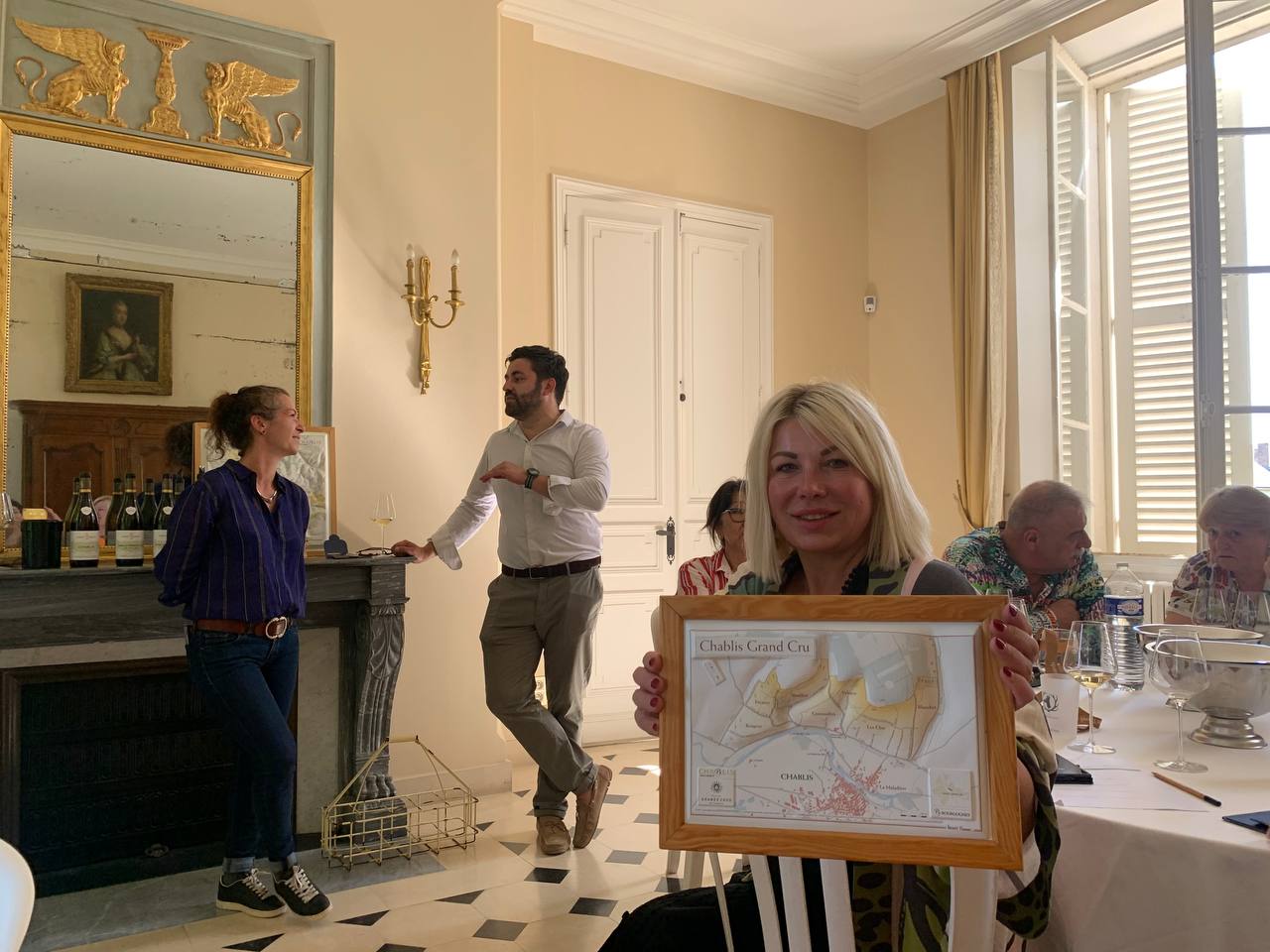
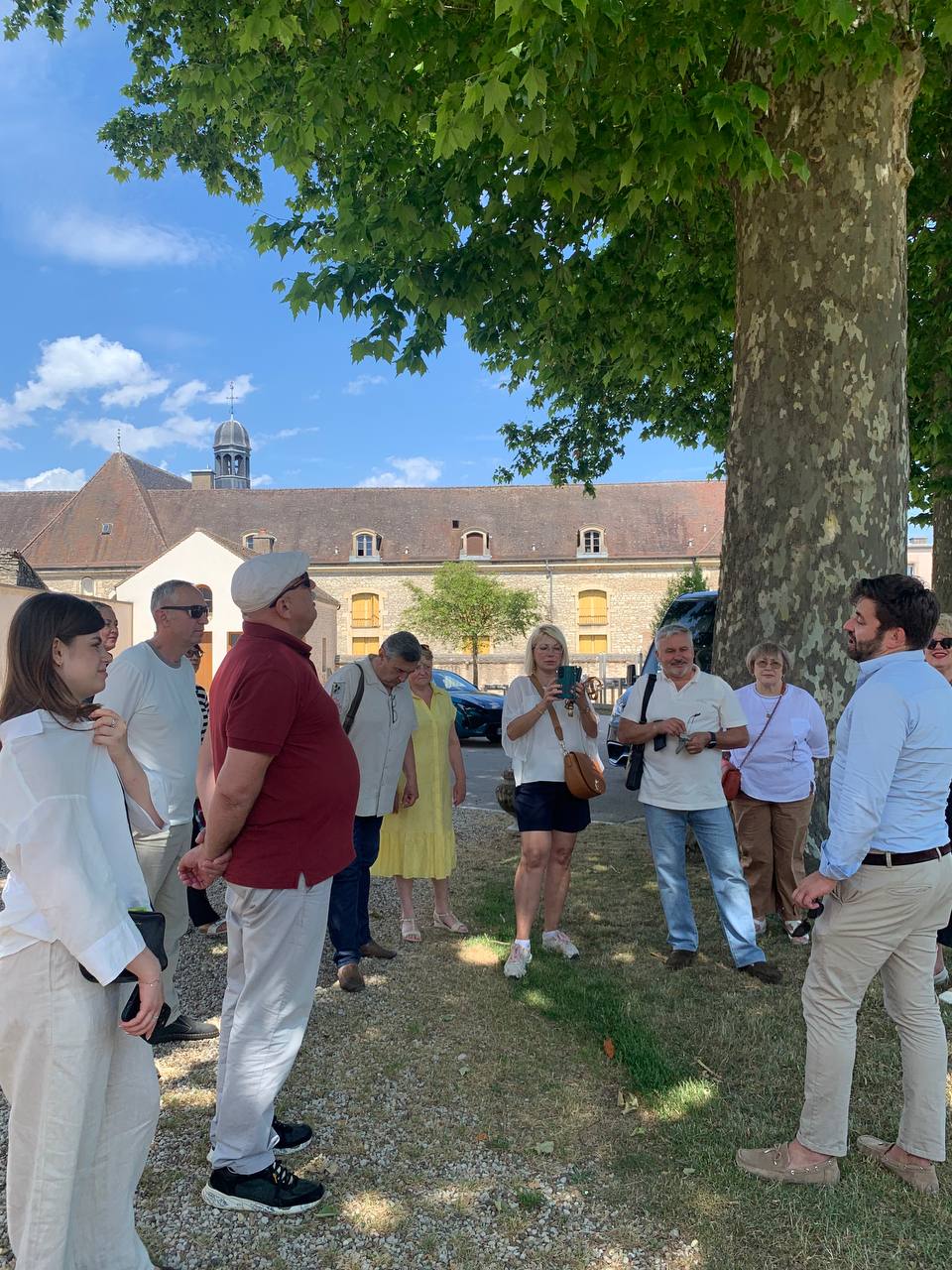
I would like to express our gratitude for the almost royal welcome our group received here, accompanied by top-level professional guidance. Denis organized a visit to the new winery and cellars, where, in the cool surroundings – particularly welcome given the heat – Ukrainian winemakers had the opportunity to ask a wide range of technical questions. The answers provided us with many fascinating and not always obvious insights, even for experienced professionals.
For example, we learned that the grapes are not only harvested by hand but also undergo further manual selection. The Dpomaine Long-Depaquit does not use the common optical sorting systems that automatically reject lower-quality berries; this process is also carried out by hand, as nothing can replace the discerning human eye. We also learned that malolactic fermentation takes place in barrels, while stainless-steel tanks are used primarily for fermentation. Since 2023, 130-litre glass wineglobes have also been used for the maceration of Grand Cru wines.
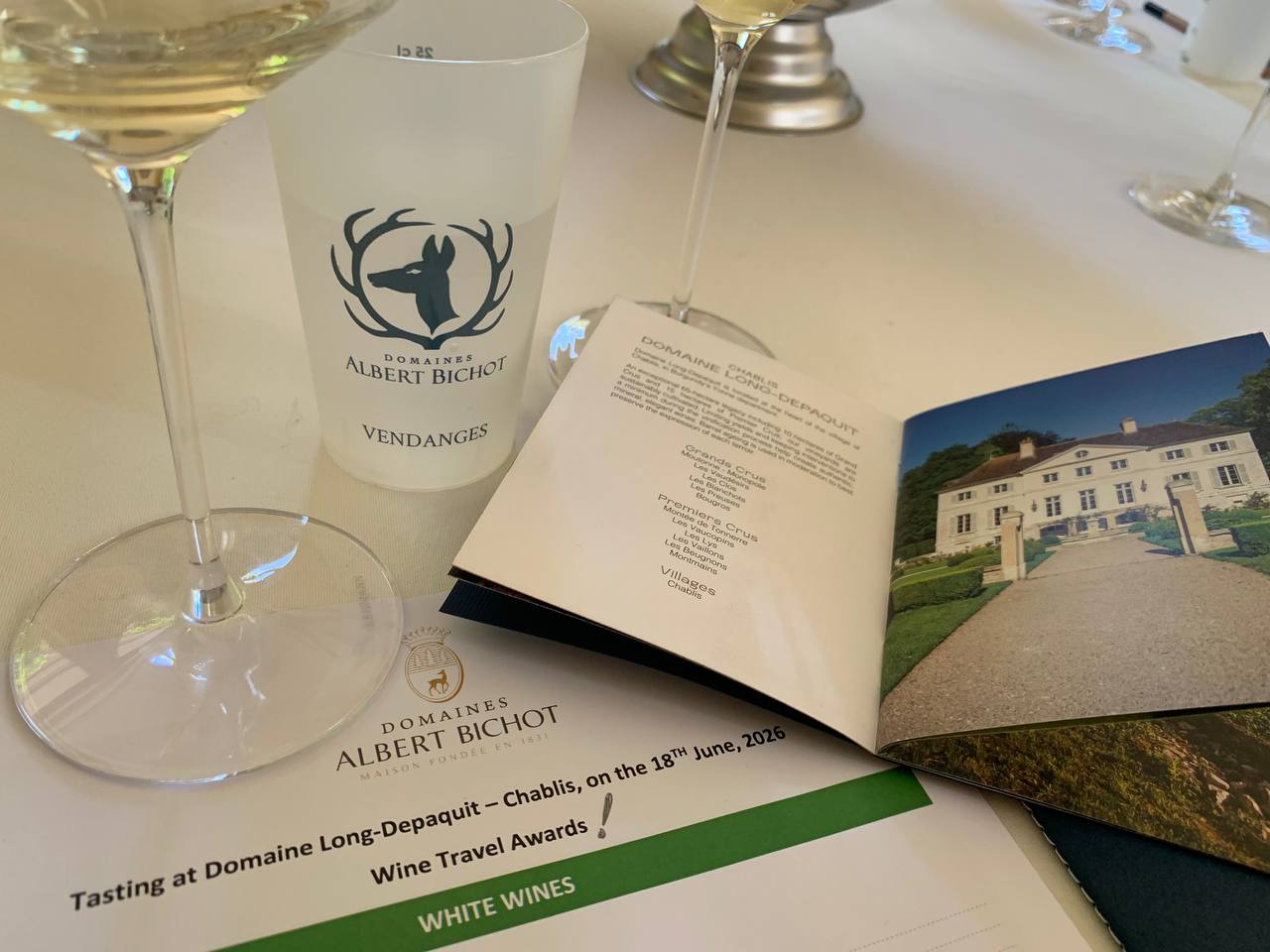
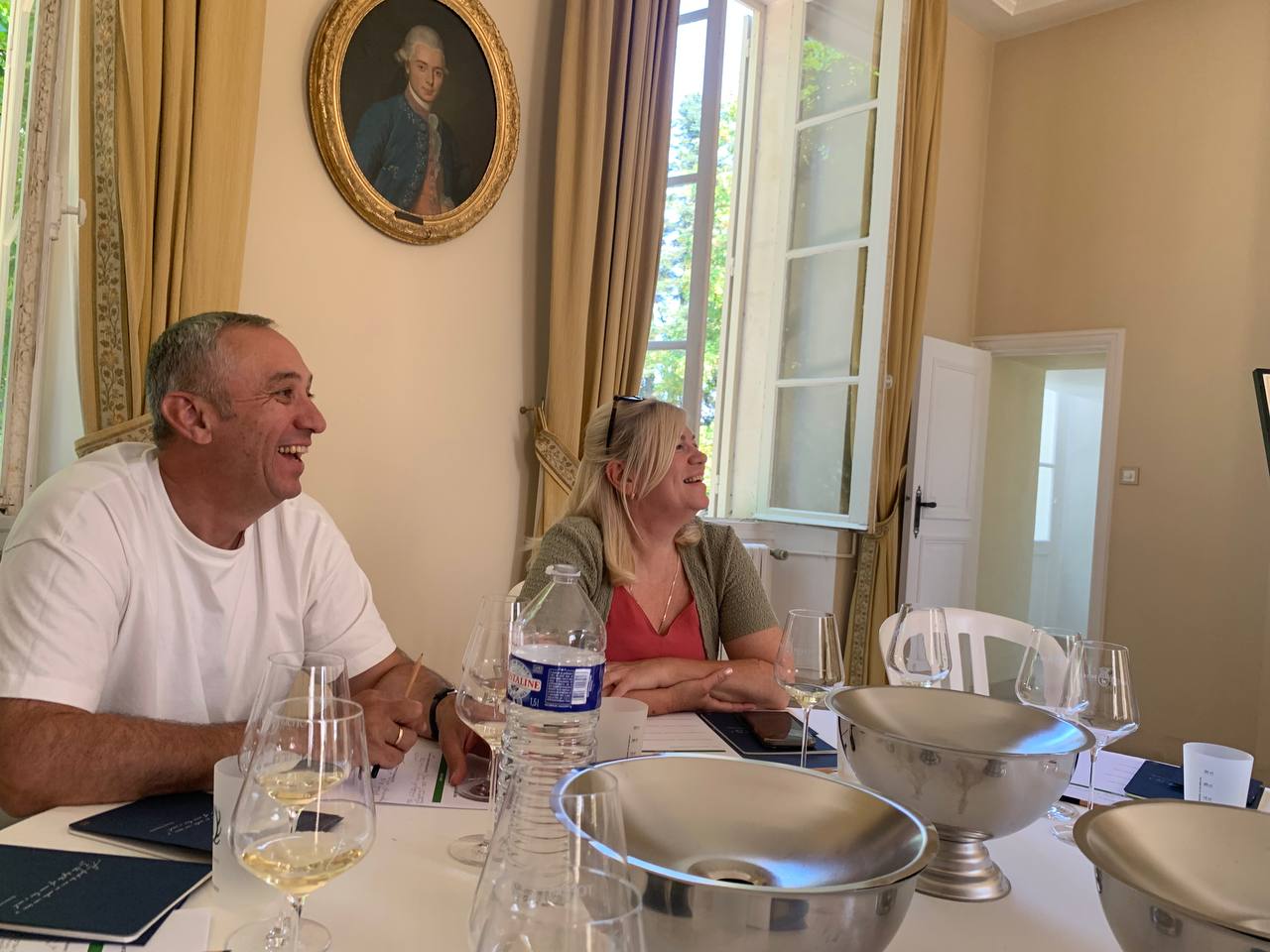
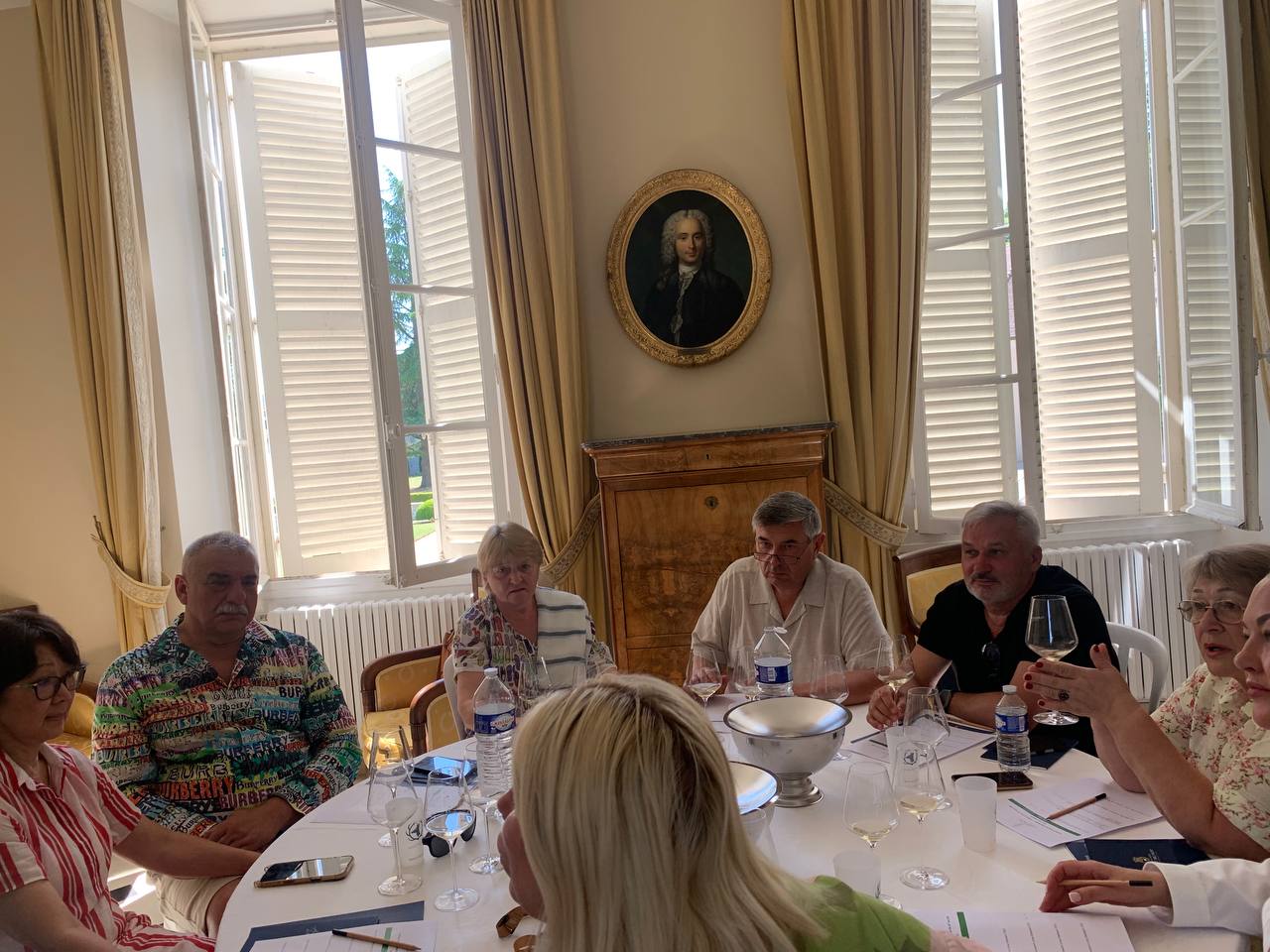
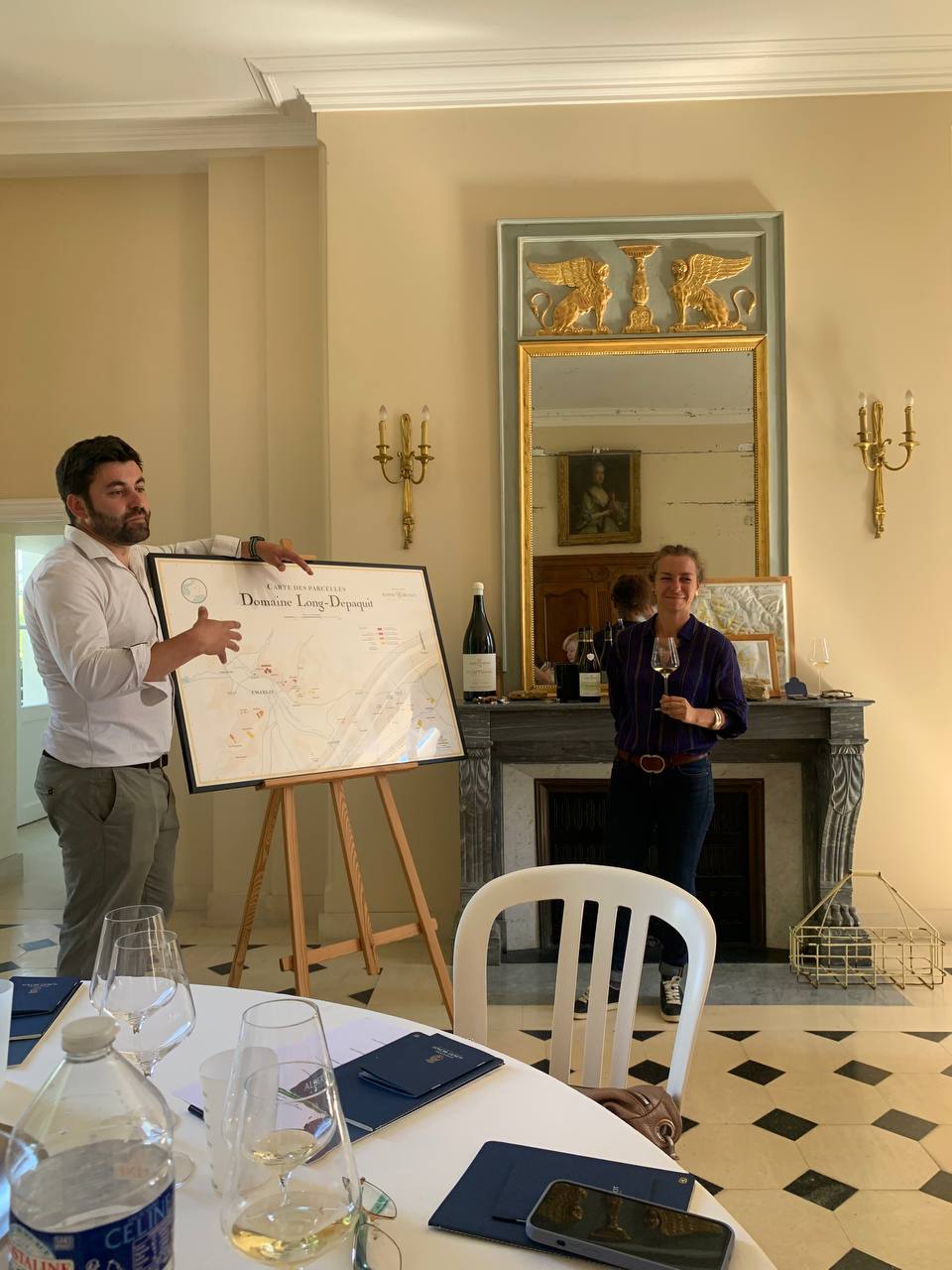
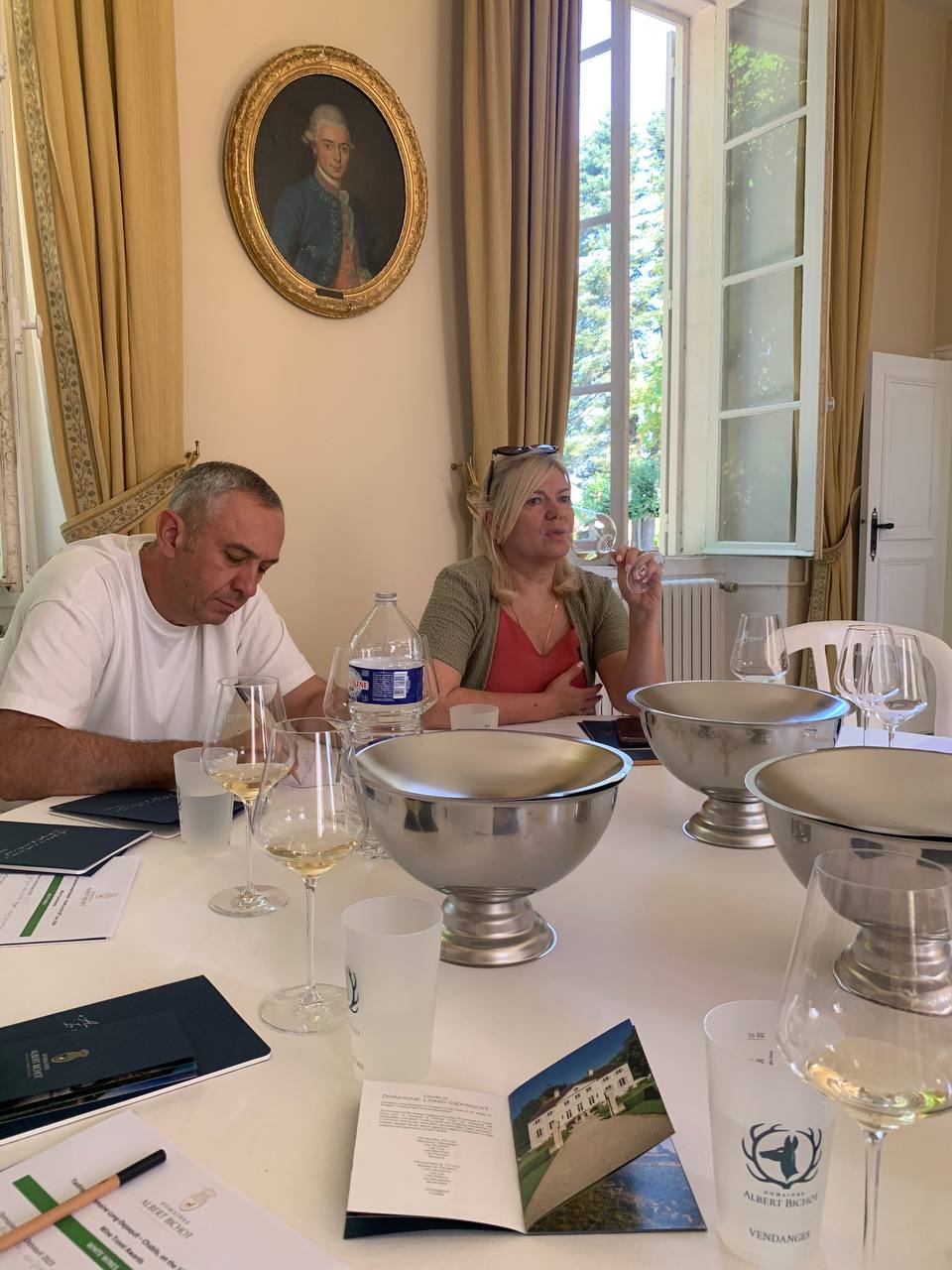
Our team was treated to an exceptional tasting in the VIP room, featuring a selection of wines chosen especially for our visit. The attention to detail was remarkable: even the tasting sheets were personalized with our name – Wine Travel Awards. And, of course, the experience was enhanced by the unmistakably aristocratic atmosphere of this historic house, bathed in the warm summer sunshine and surrounded by the fragrant gardens of Chablis.
Tasting Notes
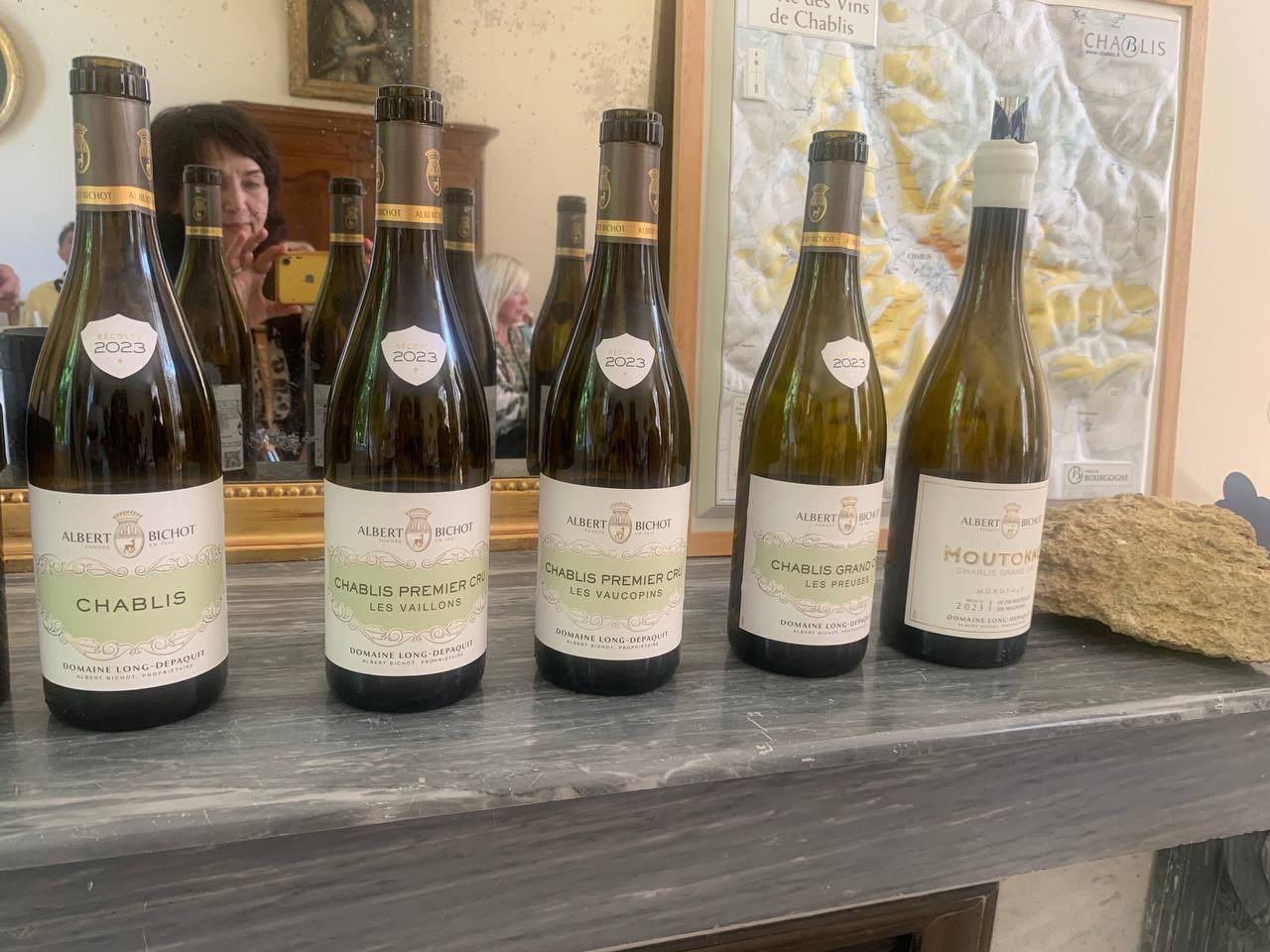
Chablis 2023 Domaine Long‑Depaquit
The vineyards cover 28 hectares and are divided into 34 plots planted on gentle slopes (5–20%) with varying exposures. As a result, the grapes come from a mosaic of distinct terroirs, the identity of each of which is preserved through separate vinification. The average age of the vines is 38 years. The wine is fermented in stainless-steel tanks and aged on fine lees in stainless steel for 10–11 months. This is a classic Chablis vintage with 12.5% alcohol.
The nose reveals aromas of citrus and candied lemon, complemented by delicate notes of white flowers. Elegant and vibrant on the palate, the wine finishes with pronounced minerality and subtle saline nuances.
Chablis 1er Cru Les Vaillons 2023 Domaine Long-Depaquit
This Premier Cru comes from the left bank of Chablis, where greater sun exposure produces a complex wine with 13% alcohol. It is made from grapes sourced from several climats on the Vaillons hillside, primarily the Épinottes climat, whose soils are predominantly clay.
The wine is fermented 90% in stainless-steel tanks and 10% in oak barrels (first- to fourth-fill). It is then aged on fine lees for 10 months, with 90% in stainless steel and 10% in the same oak barrels, followed by a further two months of maturation in stainless-steel tanks. The nose is complex and intense, revealing aromas of white flowers, citrus, and green apple. Beautifully balanced, with a long, elegant finish.
Chablis 1er Cru Les Vaucopins 2023 Domaine Long-Depaquit
Les Vaucopins is a 5.2-hectare Premier Cru vineyard located on the right bank of the Serein River. It stands apart within the Domaine Long-Depaquit portfolio thanks to a terroir that closely resembles that of the Chablis Grands Crus: a southern exposure, a steep slope, and abundant Kimmeridgian marl, which gives Chablis wines their distinctive minerality. Elegant and refined, Chablis Premier Cru Les Vaucopins offers ageing potential comparable to that of many Grand Cru Chablis wines.
The grapes are hand-harvested. Fermentation takes place primarily in stainless-steel tanks (85%), with the remaining 15% in first- to fourth-fill oak barrels. The wine is then aged on fine lees for 10 months in the same proportions, followed by a further two months of maturation in stainless-steel tanks.
With 13% alcohol, the wine is the embodiment of balance and minerality. It has a rich structure and concentrated flavours, combining ripe fruit with subtle smoky and flinty notes. The finish is exceptionally long.
Chablis Grand Cru Les Preuses 2023 Domaine Long-Depaquit
А tiny 0.25‑ha parcel of the Les Preuses climat, where the vines are planted at a high density of 8,500 vines per hectare. This encourages competition between the vines, resulting in smaller berries with greater concentration. The Kimmeridgian soil is rich in clay and strewn with numerous surface stones. The average age of the vines is 17 years.
Fermentation and then 10 months of ageing on fine lees takes place in 500-litre oak barrels (first- to fifth-fill). The wine then undergoes a further six months of maturation in stainless-steel tanks.
Chablis Grand Cru Moutonne Monopole 2023 Domaine Long-Depaquit
The La Moutonne Monopole is a 2.35-hectare site located in a natural amphitheatre in the heart of the Grand Cru vineyards, with 95% of the parcel in the Vaudésirs climat and 5% in Les Preuses. Its configuration and ideal location ensure maximum sun exposure, giving this Chablis remarkable aromatic and flavour persistence, as well as excellent ageing potential and elegance. The soil is calcareous clay over a subsoil of Kimmeridgian limestone marl. The average age of the vines is 40 years.
Fermentation takes place 75% in stainless-steel tanks and 25% in oak barrels (first- to fifth-fill). The wine is then aged on fine lees for 10 months, in the same proportions, followed by a further six months of maturation in stainless-steel tanks.
The nose is rich and complex, combining aromas of white and yellow fruits, including peach, nectarine, apple, and citrus, with delicate floral notes. Full and generous on the palate, it displays expressive minerality, freshness, and harmony, with a subtle touch of well-integrated oak. Balanced and elegant, the wine has an exceptionally long finish.
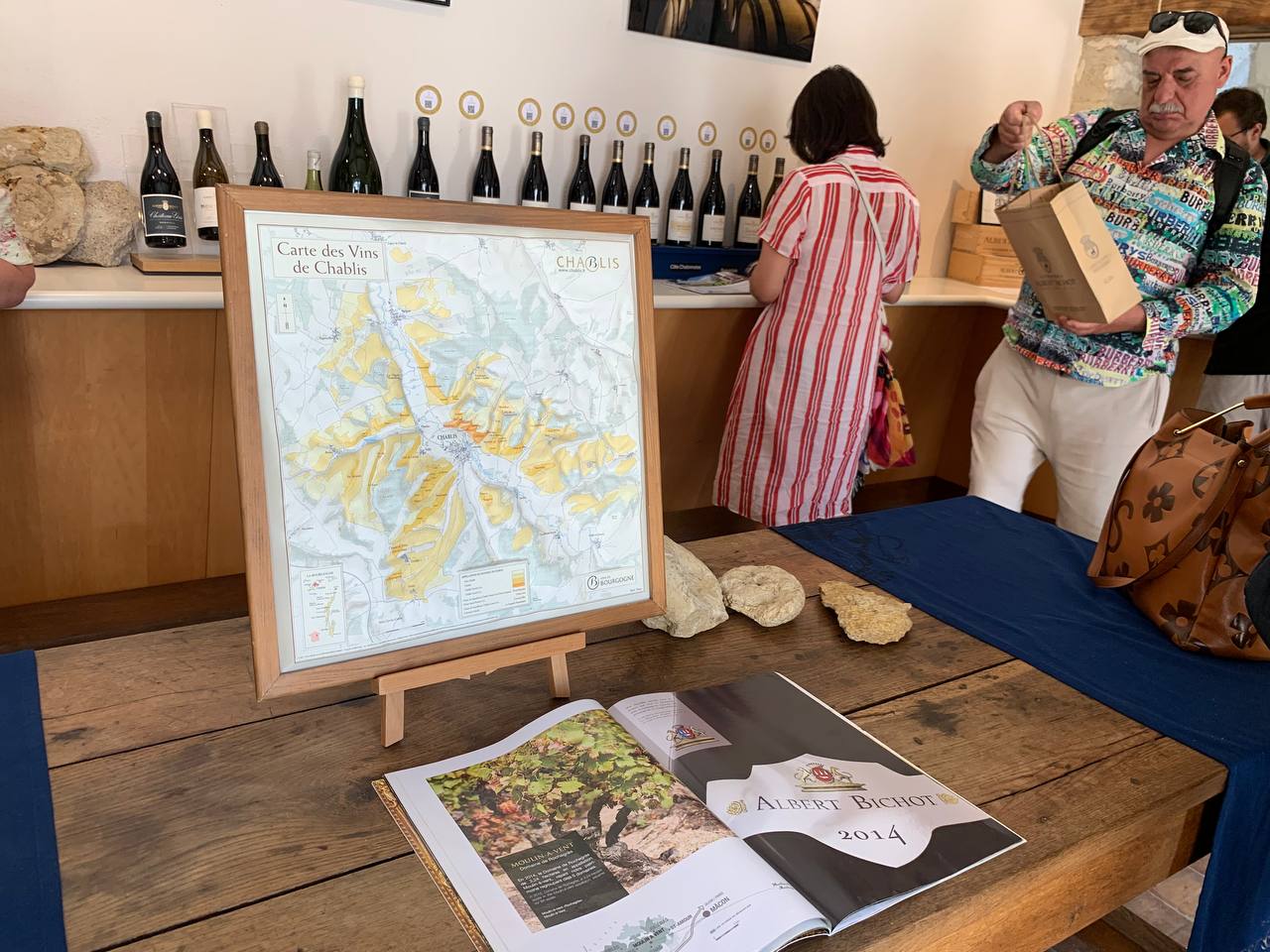
A note for travellers: all wines from Maison Albert Bichot, along with accessories, can be purchased at the estate shop.
A modern Burgundy icon
Maison Albert Bichot is one of Burgundy’s most successful producers, tactfully combining nearly two centuries of history, a wide geographical spread of vineyards, modern management, a strong commitment to sustainability and cutting‑edge technical expertise. This makes the House compelling for both professionals and wine lovers.
It is clear why Albert Bichot wines – vivid expressions of both modern and classical Burgundy – are so admired across continents.
Stay connected with Wine Travel Awards: