
MICHELIN GRAPES: From Restaurant “Stars” to “Bunches” for Wineries
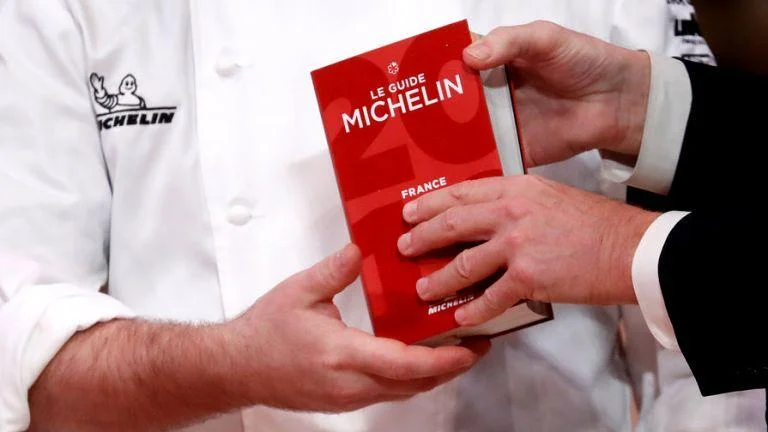
The recent announcement that the Michelin Guide will extend its influence into the vineyards of the world has sent ripples through the wine community. Three questions dominate the conversation:
- Will grape “bunches” become as coveted as restaurant “stars” or hotel “keys”?
- Could winemaking prove to be Michelin’s lifeline?
- And will Michelin Grapes challenge or even replace Parker’s iconic 100-point system?
Time will provide the answers, but for now, let’s explore the details behind this bold move.
Michelin’s Next Frontier: Wine
Rumors had been swirling for weeks, but now it’s official: the Michelin Guide, long synonymous with fine dining and luxury hospitality, is expanding once again—this time into the world of wine.
Wine has never been far from Michelin’s orbit. Initiatives such as Wine Access x MICHELIN and detailed reviews of wine lists at celebrated restaurants like New York’s Eleven Madison Park (3 Michelin stars, led by chef Daniel Hamm) hinted at a deeper ambition. Now, the final step has been taken.
Beginning in 2026, Michelin will introduce Michelin Grapes, a rating system for wineries awarded on a scale of 1 to 3 “bunches.” For the first time in its 125-year history, Michelin will evaluate wineries as independent entities—placing estates, winemakers, and their viticultural heritage on the same level as haute cuisine and luxury hotels.
A Bold Gamble
The timing is striking. The global wine industry faces declining consumption, anti-alcohol sentiment, overproduction, and economic turbulence. Unlike restaurateurs—often emotionally vulnerable to Michelin’s verdicts—the wine community is seen as more self-assured, less shaken by external judgment.
Skeptics argue this expansion may be Michelin’s attempt to escape its own crisis, as critics increasingly question the relevance of its restaurant ratings. Yet, shifting focus from dining rooms to vineyards could prove visionary. By introducing Grapes, Michelin positions itself to unify wine, gastronomy, and hospitality under one global standard.
The Evaluation Criteria
Michelin Grapes will be awarded based on five key vectors:
- Agronomic Excellence – Soil health, vineyard balance, biodiversity, and vine care, all tied to sustainability.
- Technicality – Precision and purity in winemaking, with wines that clearly express grape variety and terroir.
- Identity – Authenticity, cultural heritage, and a unique stylistic voice.
- Balance – Harmony of acidity, tannins, alcohol, sweetness, and oak.
- Consistency – Quality across vintages, even in challenging years.
The Rating Scale
- ⭐ 3 Bunches (Michelin Grapes) – Exceptional producers, whose wines inspire absolute confidence regardless of vintage.
- ⭐ 2 Bunches – Outstanding wineries, among the best in their region.
- ⭐ 1 Bunch – Very good producers, strong in top vintages, with distinctive character.
- ⭐ Selected – Reliable wineries offering consistently recognized quality, verified by inspectors.
The first regions to be evaluated will be Burgundy and Bordeaux, followed by Italy, Spain, the USA, Germany, Australia, and beyond.
A Clash of Systems?
One unresolved issue is the relationship between Michelin Grapes and The Wine Advocate, the prestigious magazine founded by Robert Parker and now owned by Michelin. Will Grapes complement Parker’s 100-point scale—or eventually replace it? The industry is watching closely, as this internal competition could reshape global wine benchmarking.
Wine Tourism in the Spotlight
As Michelin Grapes prepares to debut, another initiative celebrates its own milestone. The Wine Travel Awards 2025–2026, organized by Drinks+, enters its fifth year, uniting wine and food tourism leaders from 45 countries. Unlike Michelin’s competitive edge, the WTA emphasizes collaboration and shared goals.

And here’s a teaser: in 2026, WTA activities will also unfold in Burgundy—adding yet another layer of excitement to the region’s already vibrant wine scene.
✨ For wine lovers and professionals alike, the arrival of Michelin Grapes signals a new era. Whether embraced as a benchmark or debated as a disruption, it will undoubtedly reshape how wineries are valued, visited, and celebrated across the globe.
Stay connected with Wine Travel Awards: