


Austria’s 2026 Vintage: When Less on the Vine Means More in the Glass
As a long-standing member of the Wine Travel Awards community, Austria remains firmly within our editorial focus – and this year, more than ever, the region offers a compelling story. The 2026 vintage is shaping up to be one of the most distinctive of the decade, forged not by abundance, but by adversity.
The year proved a true test for Austria’s winegrowers: early budbreak, rapid flowering and a summer of relentless heat with barely any rainfall. Yields are significantly reduced, yet the small, concentrated and remarkably healthy berries promise wines of striking quality.
Drawing on insights from the Austrian Wine Marketing Board, Wine Travel Awards explores why these extreme conditions may deliver one of the country’s most aromatic vintages in recent memory.
Austria’s 2026 Wine Year: Less Yield, More Character
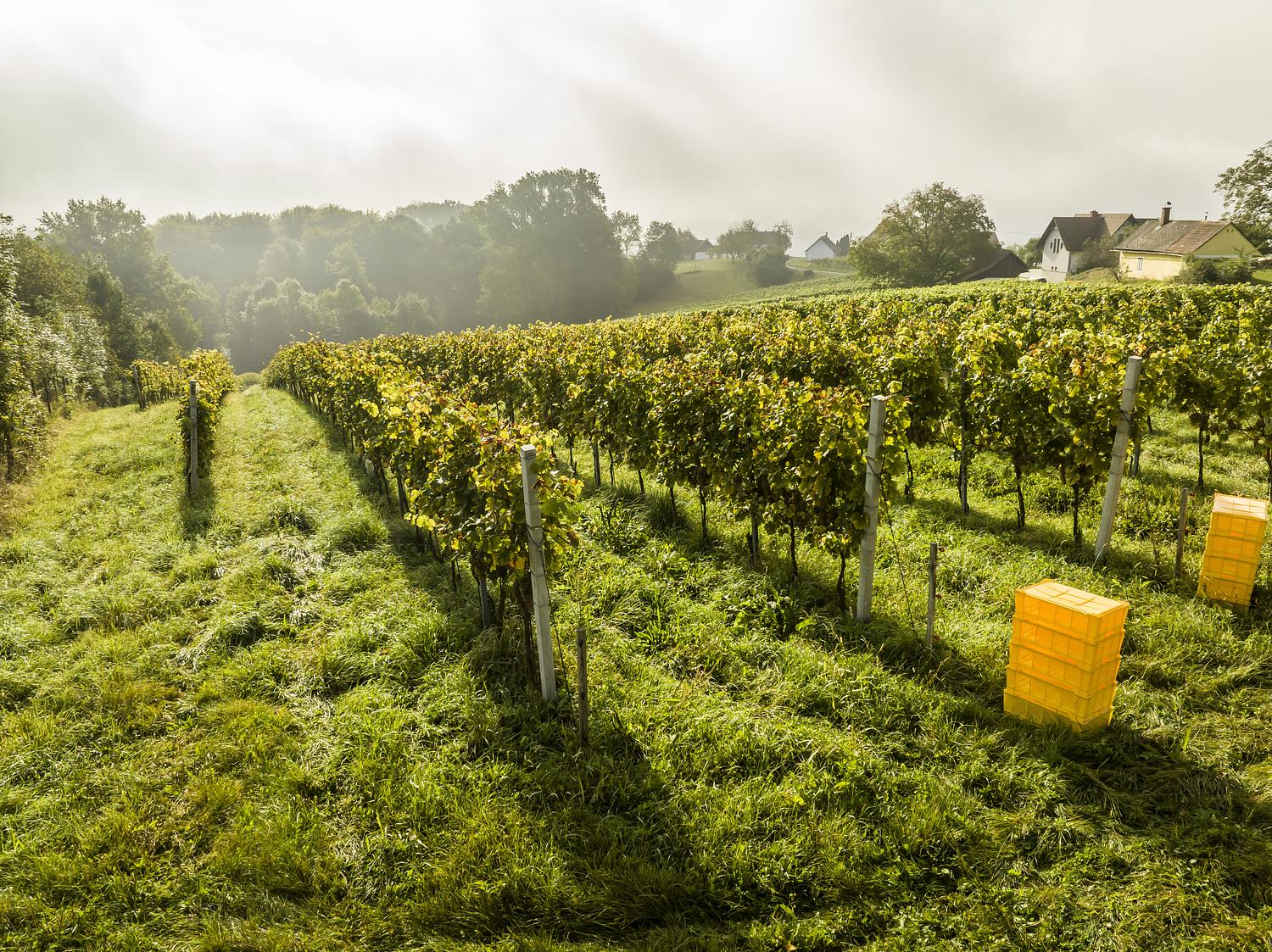
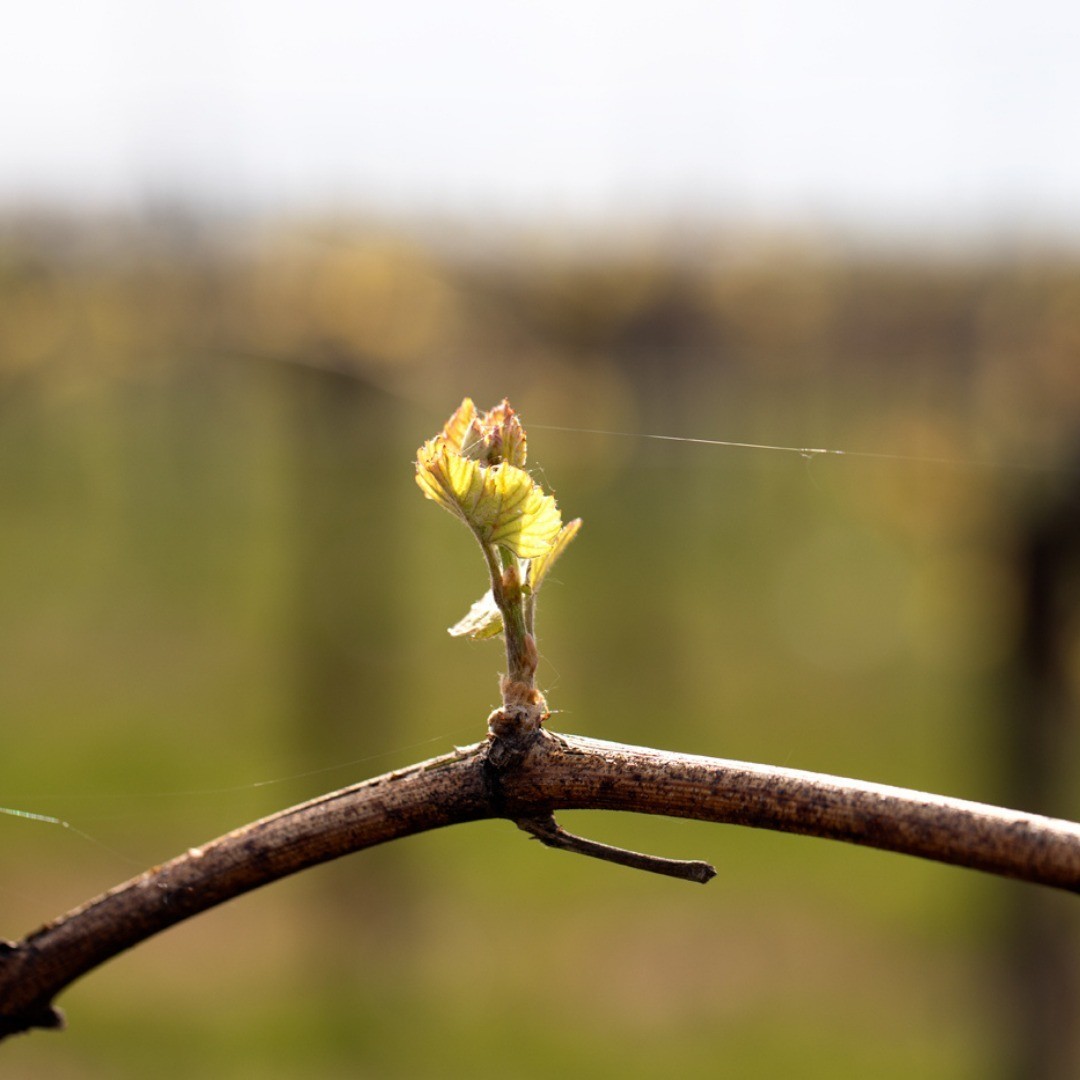
The 2026 harvest was shaped by an abrupt rise in temperatures from late April. Budbreak arrived early; flowering followed in late May and early June; and prolonged heat accelerated ripening. Picking began in early September and is nearly complete in Seewinkel (Burgenland).
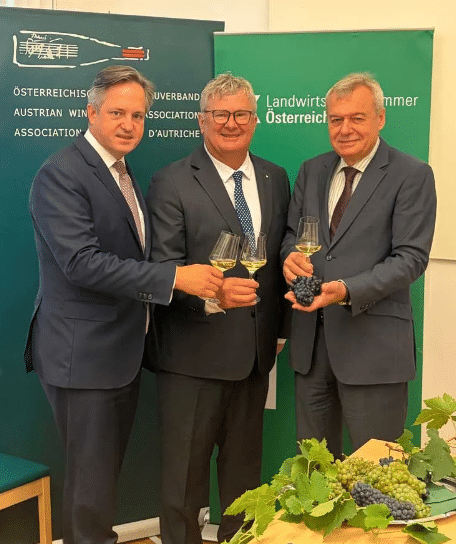
(from left to right): Johannes Schmuckenschlager, President of the Austrian Winegrowers’ Association; Chris York, Managing Director of Austrian Wine; and Josef Glatt, Director of the Austrian Winegrowers’ Association, at a press conference on the 2026 harvest.
Severe drought reduced yields to around 1.7 million hectolitres – more than 30% below the 2025 level. Johannes Schmuckenschlager, President of the Austrian Winegrowers’ Association, summarised the season succinctly: “In many respects, 2026 is an exceptional year: early ripening, small berries and low volumes. At the same time, growers are harvesting very healthy, fully ripe grapes. We expect an expressive and aromatic vintage.”
Small Berries, Concentrated Wines
Despite the reduced crop, fruit quality is impressive. Low disease pressure ensured consistently healthy grapes, and the small berry size has become the defining feature of the vintage. As Schmuckenschlager notes, “Small berries mean less juice but a higher concentration of valuable compounds. That’s why we anticipate particularly aromatic and expressive wines.”
Red wines, in particular, inspire optimism: small, dark, intensely flavoured berries suggest dense, structured and fully ripe styles.
Weather as the Architect of Style
The 2026 season illustrates how climatic challenges can shape a wine’s identity:
- a winter of precipitation and intermittent frost;
- almost summer-like temperatures from late April;
- flowering in late May;
- extended heat above 30°C;
- near-total absence of rainfall in Eastern Austria.
Even deep-rooted vines struggled. Young vineyards suffered most, and growers in some areas removed part of the crop to reduce stress on the plants. Damage varied according to soil structure, water-holding capacity and vineyard management during dry spells.
Quality as Austria’s Enduring Advantage
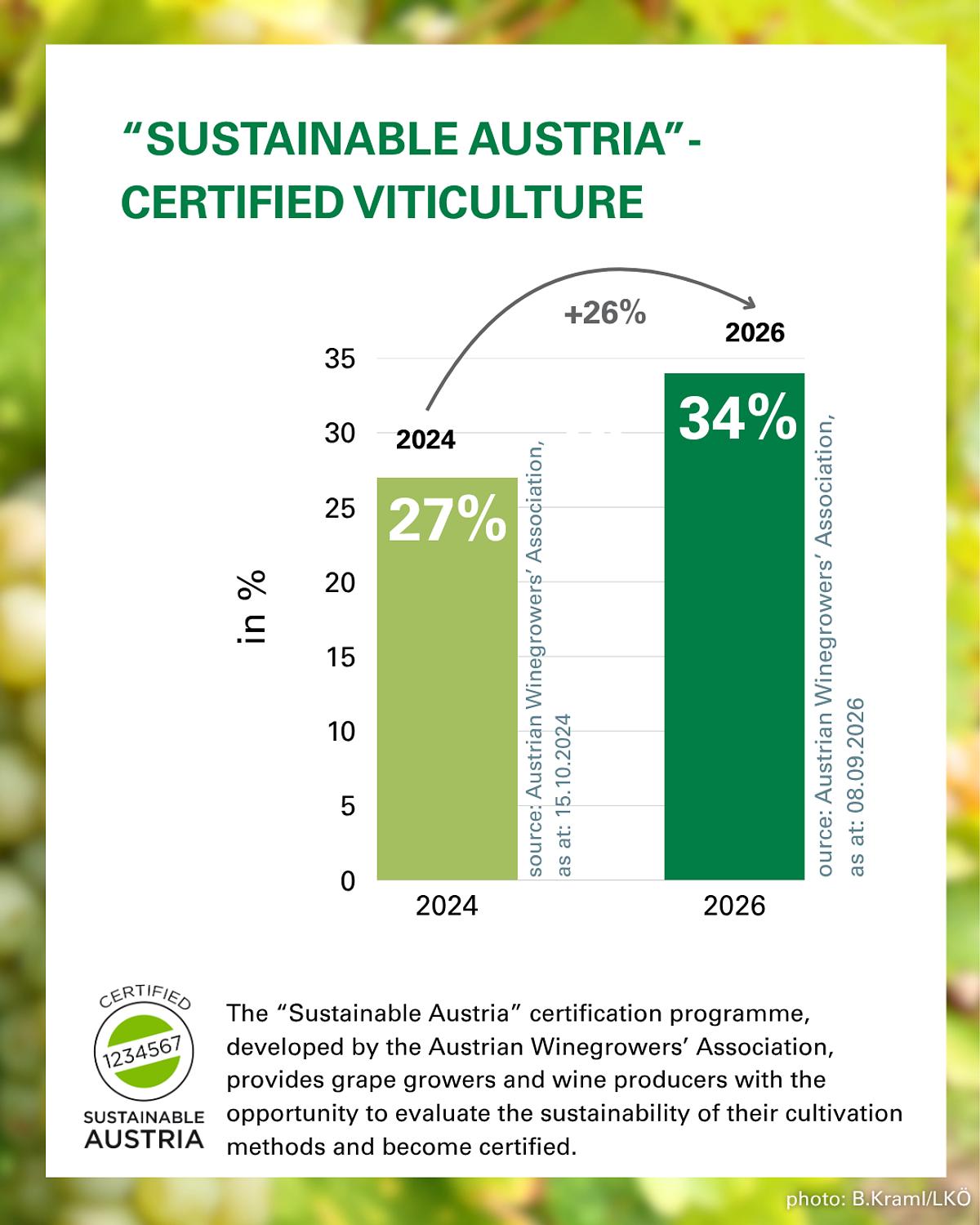
Austrian producers continue to face shifting consumer habits and strong price pressure. Yet their strategic strength remains unchanged: consistent quality, artisanal precision and environmental responsibility. These values allow Austria to remain competitive – and even expand its export presence – in challenging years.
If 2026 proves anything, it is that character often emerges most vividly when nature imposes restraint. And Austria, once again, seems ready to turn adversity into distinction.
Stay connected with Wine Travel Awards:
Photo: © Austrian Chamber of Agriculture / Siegl and © Austrian Wine / www.pov.at