
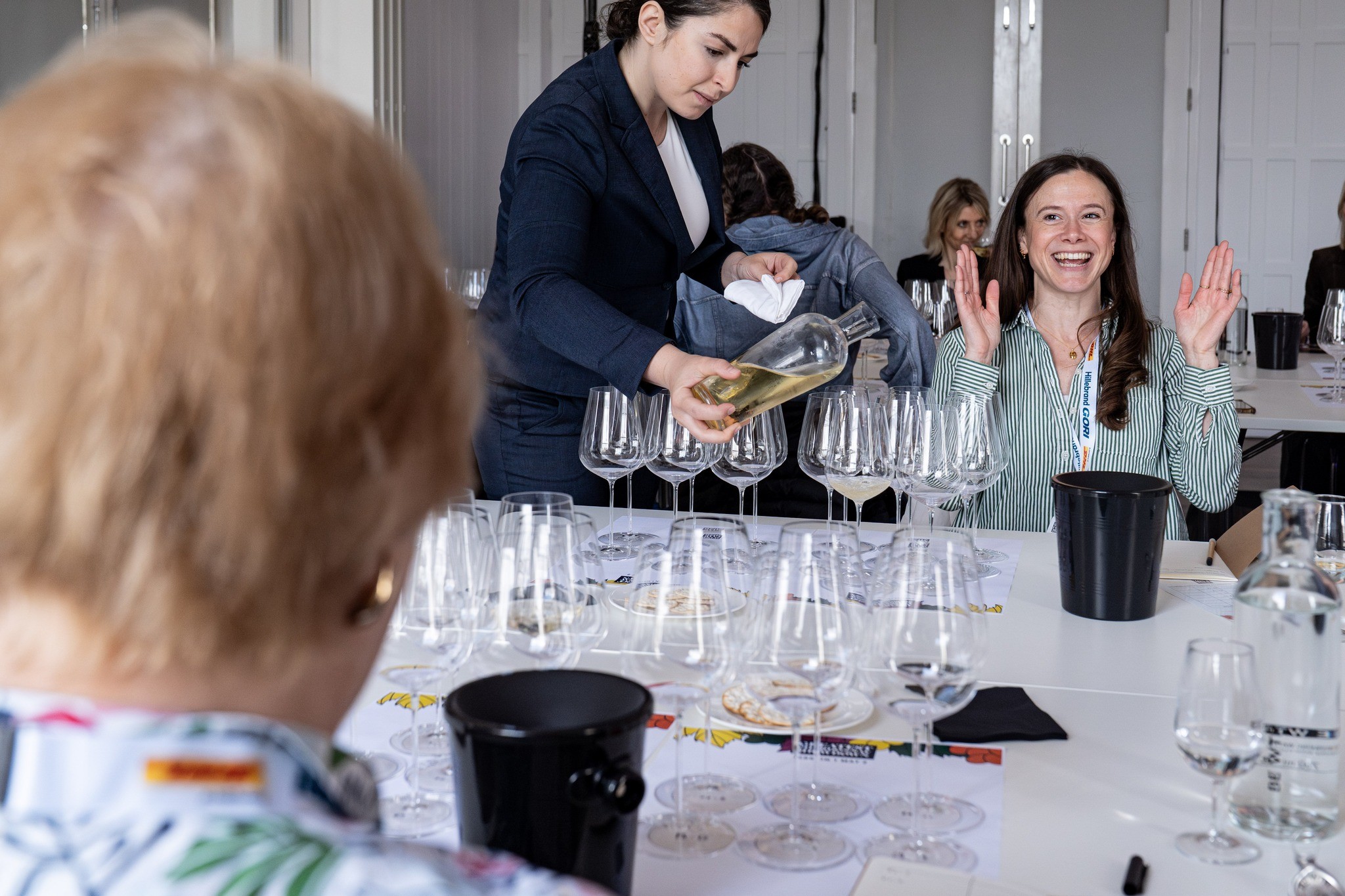
London Wine Fair 2026: The Year of the Debutants
A report from the 45th London Wine Fair. Lena Demme – exclusively for Drinks+.
Almost no one remembers it today, but Olympia, London’s exhibition centre in Kensington, stands on the site of a vineyard that grew here back in the 19th century. And that fact is a good key to the central message of London Wine Fair 2026. Because a vineyard that was once here and then vanished is a story about how the world’s wine map is never final. It is forever being crossed out and drawn again. This year, it was the newcomers holding the pen.
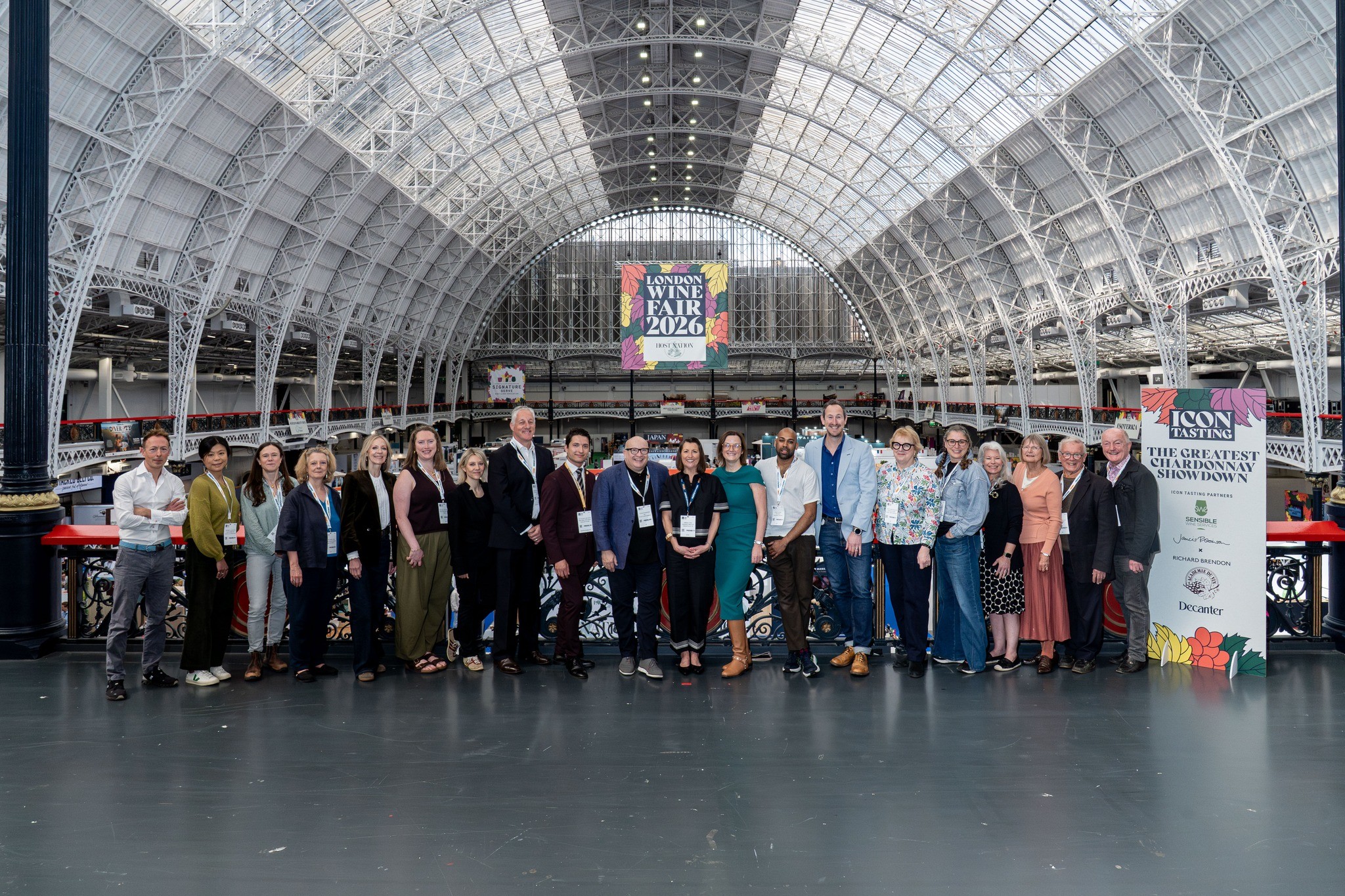
The fair’s 45th edition (18–20 May) was the first in six years to draw more than ten thousand visitors through Olympia’s doors – 10,539, to be exact, up 8.2% on last year. There were 475 exhibitors against 445 a year ago, and the catalogue ran to nearly four thousand products from more than forty countries. Numbers mean nothing in themselves until you see who the growth actually went to. And it went to the debutants – the ones no one just a few years ago expected to step onto the main stage.

New owners – the old team
This year the fair ran for the first time under a new company, Vindustrious. It sounds like the turning of an era – yet the role of the debutant was played by veterans. At the end of October, London Wine Fair passed from the Hemming Group to Vindustrious, founded by Hannah Tovey herself, the fair’s long-standing director. Her entire team stayed aboard as the ship set sail. The sale was an entirely friendly one: Tovey calls it not a divorce but a new chapter. And, judging by the results, the new chapter opened with confidence – once the change of ownership was announced, exhibitor applications rose markedly.
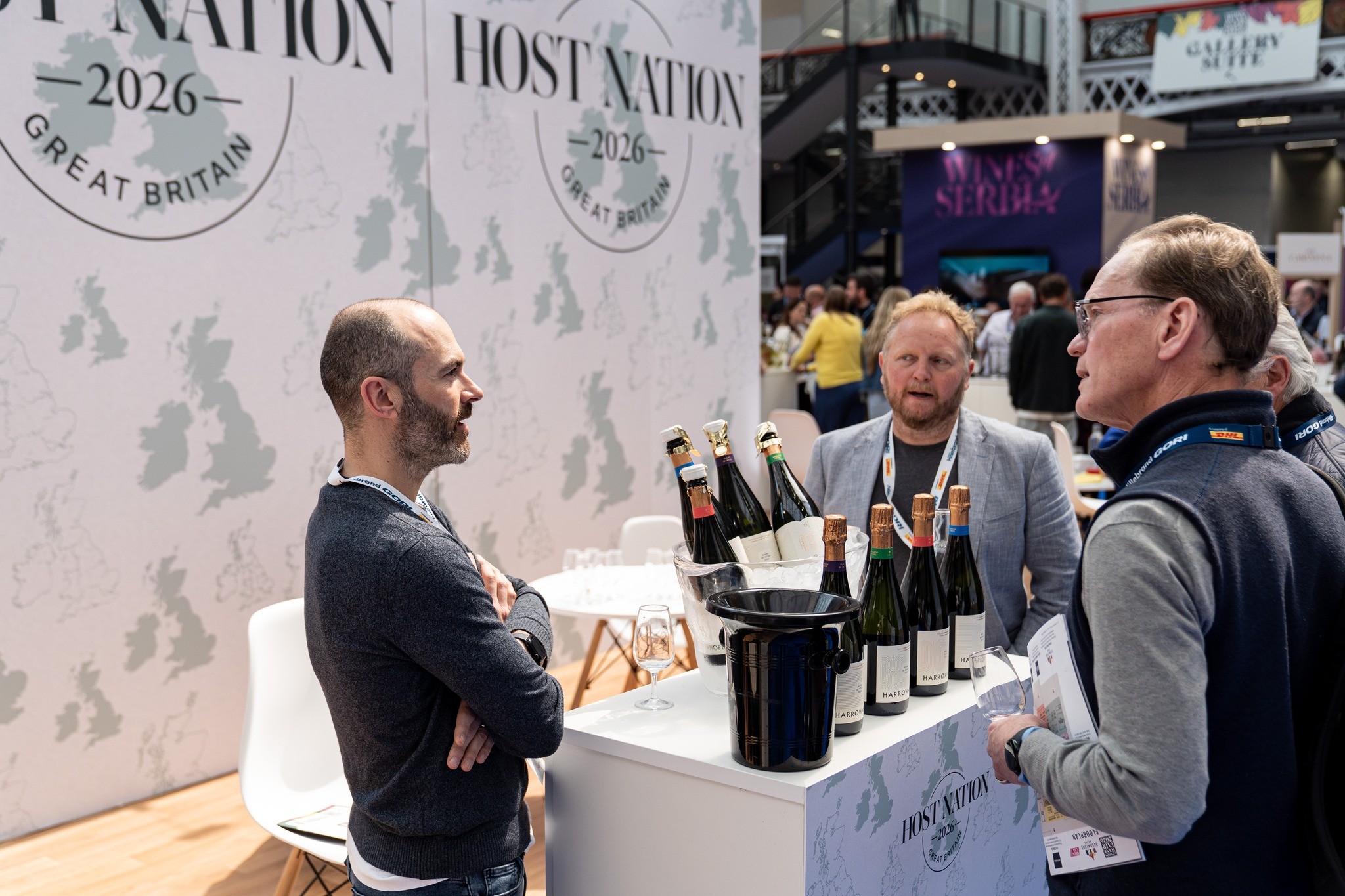
The new ownership also seems to have given the fair a chance to say more clearly what it is about. This year it had two big themes running through it. The first was sustainability, which Drinks+ has written about separately: the Sustainability Hub by Impact Focus, the move away from single-use glass bottles in partnership with BE WTR, a seminar with the telling title “No Water, No Wine.” Sustainability was the second most searched topic among visitors, and of more than a hundred educational sessions, a record twelve were devoted to it. The other central theme was the new Host Nation programme, under which the fair will each year make a single country or region its hero. Britain opened the series itself. And this is where it gets interesting.
The English triumph
I came to the fair with a plan of my own – to visit the Ukrainian wine stand, to see for myself, at last, how the British and international wine community receives our wine: what draws their interest, what impresses them. But as it happened, what impressed me most was English wine. Not because it had appeared out of nowhere – I knew it, I had tasted some of it before – but because it had appeared on such a scale, and announced itself with such confidence.
Until now, British producers had been a scattered presence at LWF – a few names, a few stands. This year the Host Nation programme delivered almost fivefold growth: over a hundred British producers against roughly twenty last year. The dedicated English Wine stand was fully booked before the doors opened and was doubled in size. Among the names were Chapel Down, Balfour, Bolney, Roebuck, Everflyht, Flint Vineyards, Sandridge Barton, Williams Family Wine, 1276 Wines. And the most telling line in the fair’s own figures was this: the five most enquired-about producers on the online platform were all English – Harrow & Hope, The Evolution Winery, Sandridge Barton, MDCV UK, and Everflyht.
Watching this English triumph, I kept carrying it home in my mind. One day I want to see this very scene – the spread of stands, the queue of buyers, the pride in a national wine brand – with Ukrainian wines too, even if only at home to begin with. England has shown, rather beautifully, that it can be done.
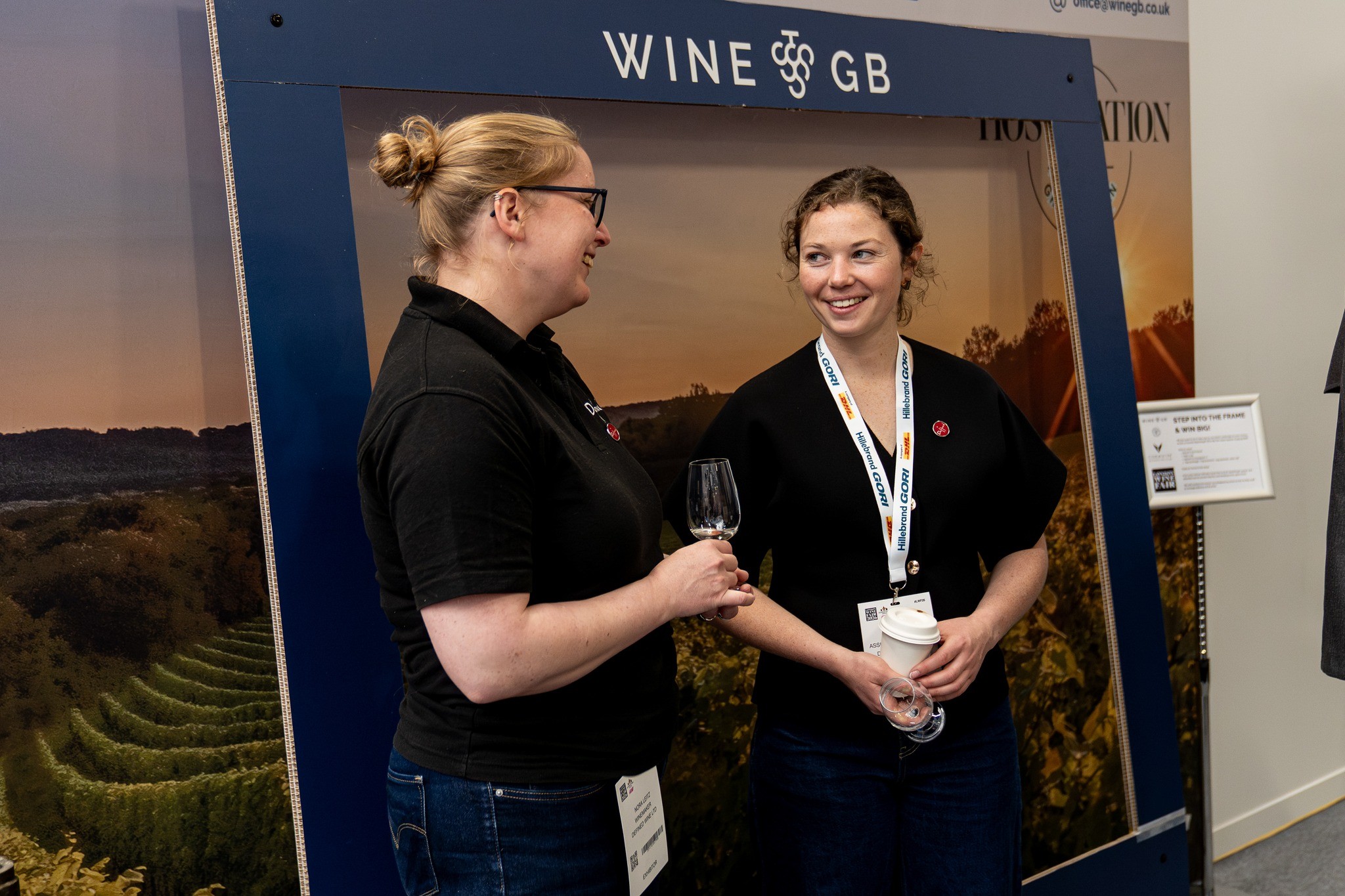
At the edges of the map: Serbia, Czechia, and Palestine
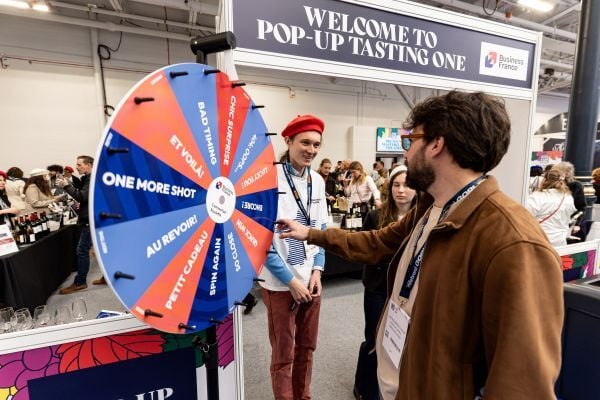
But while the host country held the centre with assurance, the most interesting things, as so often, were happening out at the edges. This year the organisers were especially proud of the sheer breadth of geography – nearly four thousand products from more than forty countries, from Argentina and the United States to Japan, South Korea, Serbia, and Peru. And it was at these outermost stands that it was easiest to catch the feeling that makes a fair worth going to at all: that the wine world is far larger and more varied than it looks from beside the supermarket shelf.
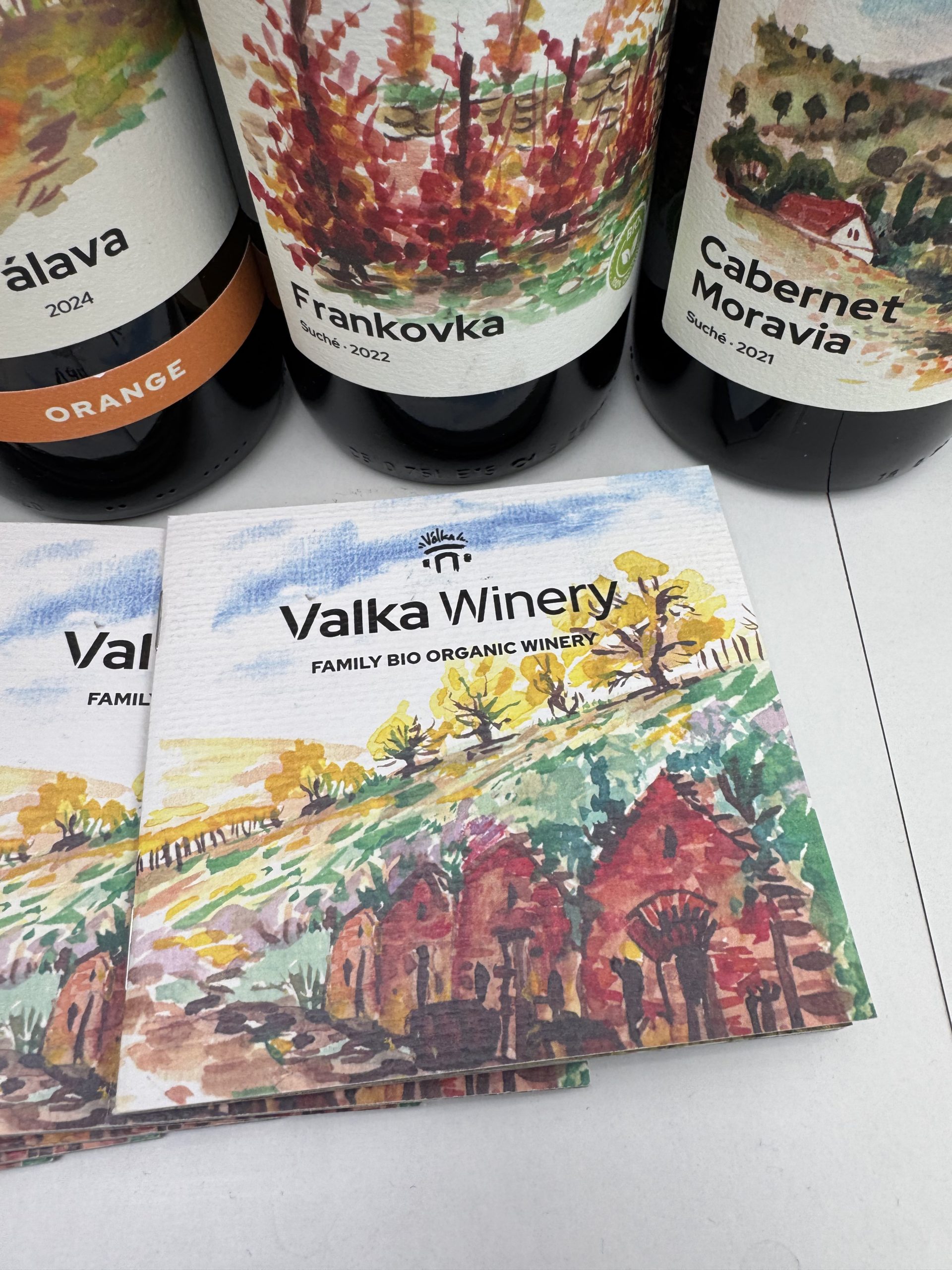
Eastern and South-Eastern Europe were more visible than ever this year: the stands of Serbia, Bulgaria, North Macedonia. Czech and other Central European producers were a reminder that the heart of Europe perhaps remains the last truly unexplored wine region – with an authentic history, native varieties, and wines in every conceivable style. The Georgian pavilion, meanwhile, was buzzing with buyers – and fittingly so: a decade of patient, determined marketing is finally bearing fruit, and British interest in Georgia is climbing fast.
And one discovery I never managed to make in person – which, perhaps, says the most of all about the scale of the fair. In the Esoterica section, as I learned only afterwards, Nabeeth Wine & Spirits was showing Palestinian wine. I didn’t get the chance to taste it; but the very fact that Palestinian wine exists, and that it was presented in London, was one more reminder that the map of the wine world is far wider than most drinkers know.
When Essex beat Burgundy
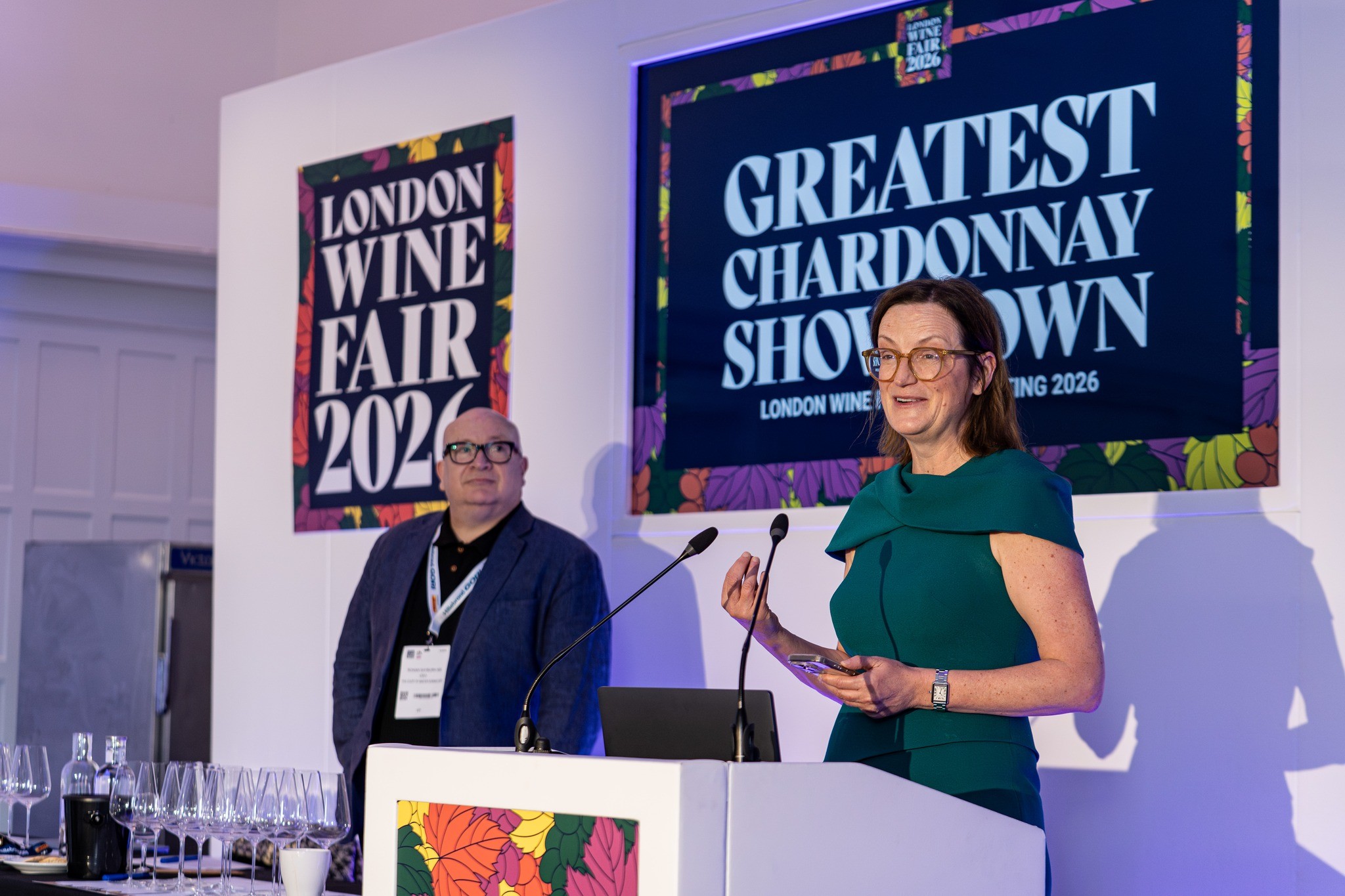
The fair’s main tasting event carried the same message. This year’s Icon Tasting bore the title The Greatest Chardonnay Showdown: thirty Chardonnays from around the world, tasted blind, chosen by Sarah Abbott MW and Ronan Sayburn MS, with the results announced on the eve of International Chardonnay Day. It was the third such large-scale tasting in the LWF tradition – after the “Judgement of London” in 2024 and the “Battle of the Bubbles” in 2025.
Australia won: first place to Tolpuddle Vineyard from Tasmania, second to Vasse Felix from Margaret River. Across the top ten, the votes split evenly between Europe and the rest of the world. But the thing that mattered most happened on the third step of the podium. There stood an English wine – Danbury Ridge Octagon Block Chardonnay 2023, from Essex. It had outdone names that until recently seemed unreachable benchmarks: California’s Kistler, Burgundy’s Coche-Dury.
An English Chardonnay, from a county associated with anything but great wine, beating a superstar Burgundy in a blind tasting. It turns out that a seat at the table of the greats is not granted for life – it can be earned, if the wine in the glass is worthy of it. And it is with that thought that we should move on to the Wine Travel Awards stand.
Wine Travel Awards doesn’t “create” stars – it just turns on the light
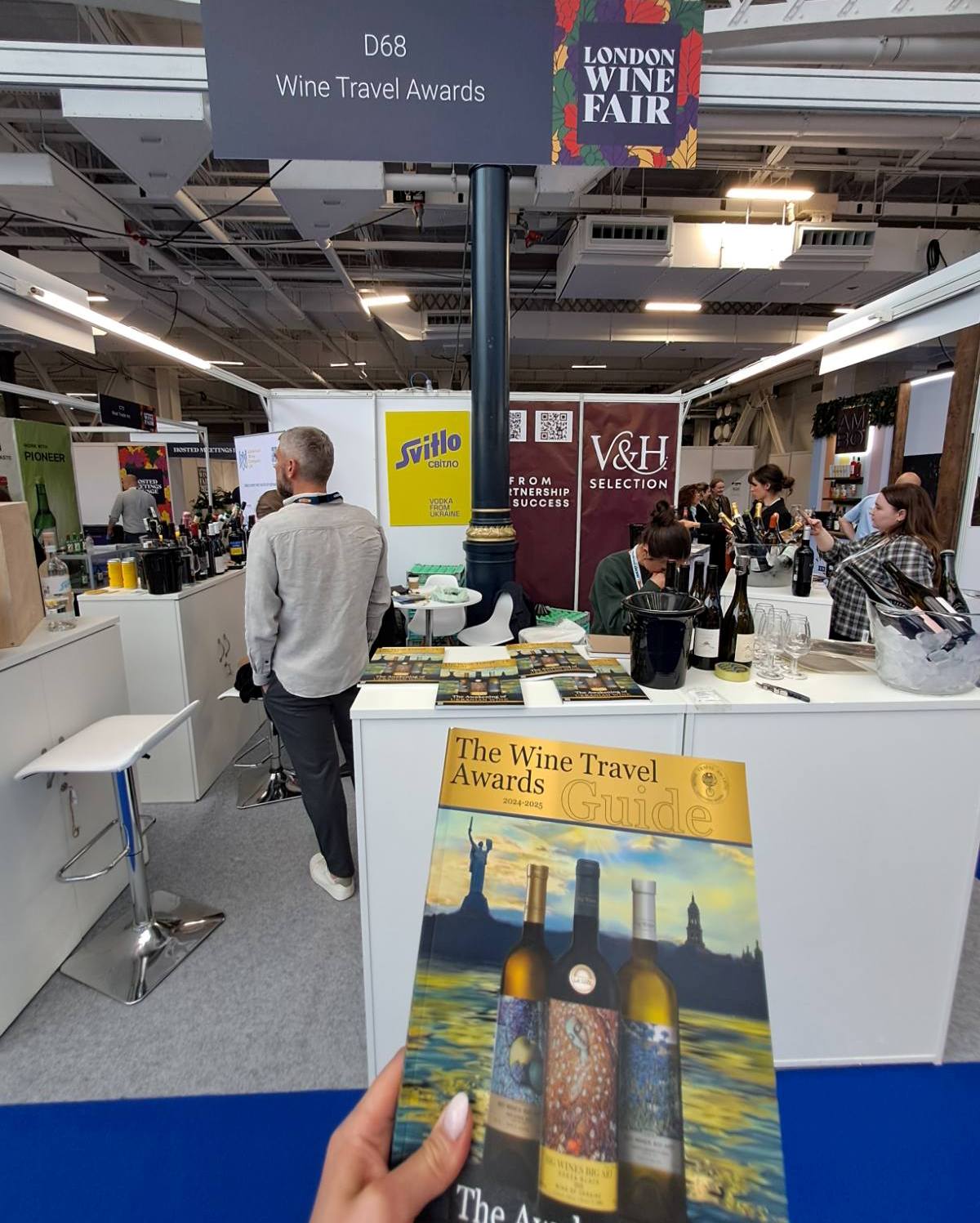
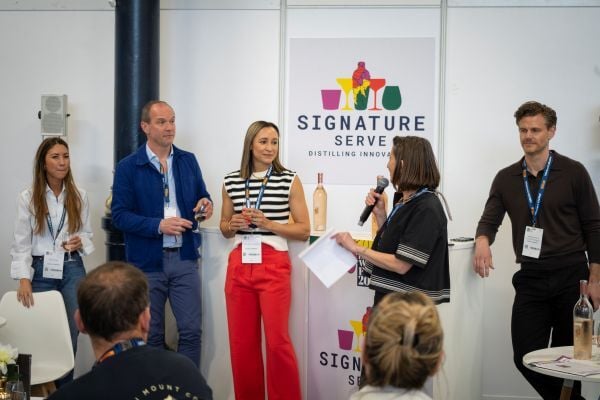
It was under this banner, at stand D68, that an international community of remarkable drinks producers – the nominees of the international award – gathered once again, as has become the tradition. And not by chance: WTA, a global initiative in support of wine tourism, developed from the very beginning by the Drinks+ Communication Media Group, has always been about bringing people together and opening them to the world. In that sense the Wine Travel Awards work like a well-tuned decanter: they don’t change the essence of a wine, but they release its aroma and let what is held inside it come through. The award doesn’t “create” stars – it simply turns on the light where they are already ready to shine.
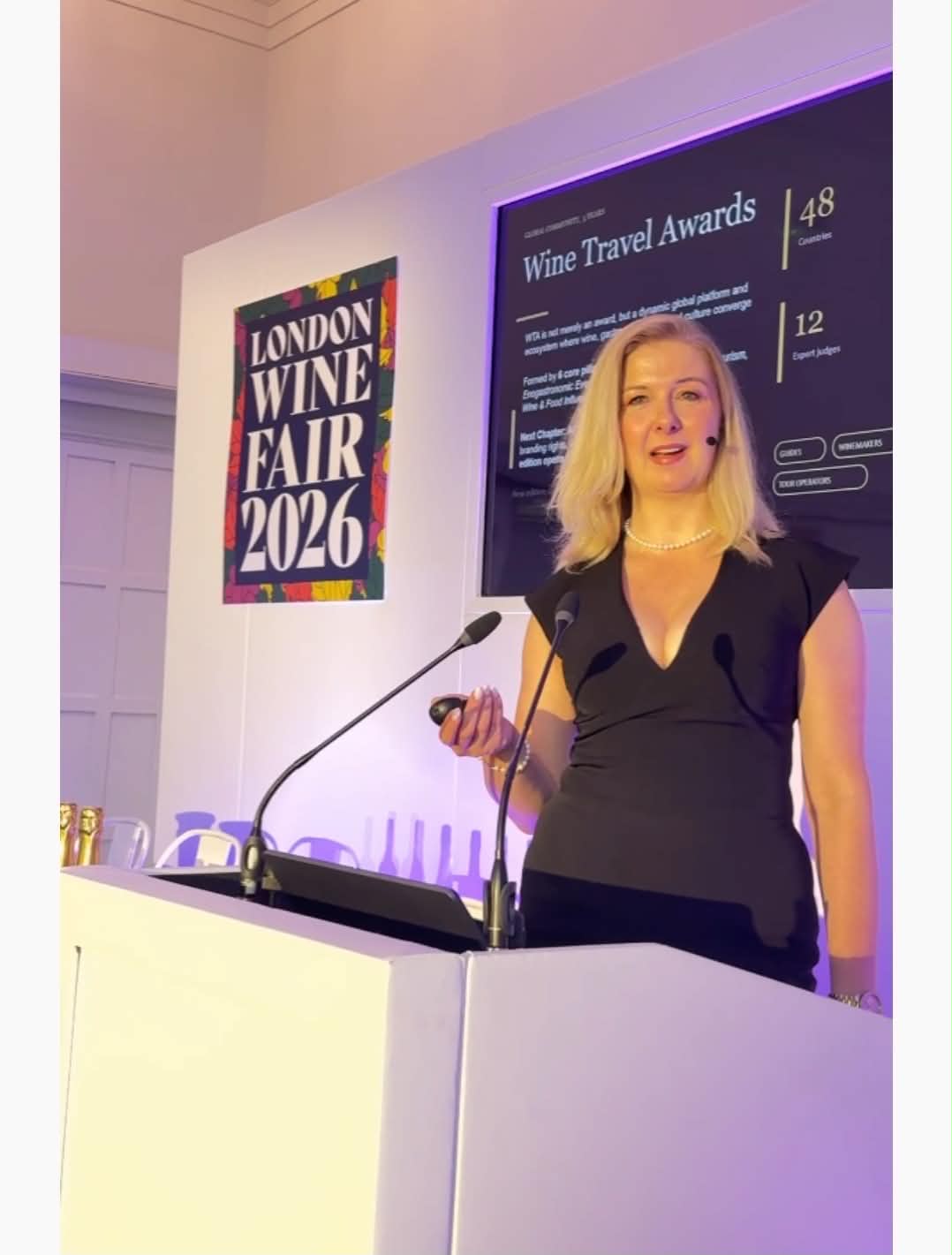
For the Wine Travel Awards this is the fifth, jubilee season, through which the project carries its nominees onto the international stage, drawing in global media such as Condé Nast Traveler and the American Forbes, and specialist fairs like London Wine Fair, ProWein, Wine Paris & Vinexpo Paris. Ricardo Núñez, a permanent member of the jury, put the project’s essence best: WTA is less an award than a platform – a meeting point where talent, culture, science, gastronomy, and travel converge. Hence the six “pyramids,” the nominations by which participants are honoured: The Visiting Card of the Country, Enogastronomic Events, Ambassador, Education in Enotourism, Wine & Food Influencer, and Wine Guide. Behind that dry list lies a simple idea: wine is not only what sits in the glass, but a reason to travel, to see, to understand a place and the people who made it.
Today the WTA community spans forty-eight countries, and the map grows wider every year. This season it was joined by Chile, Singapore, and even winemaking Norway – a country no one would have cast as the heroine of a wine story a few years ago. The same thought that had followed me around the whole fair: wine has no final borders; this world is changing – and that is a wonderful thing. London Wine Fair itself, as it happens, was the winner of the Wine Travel Awards 2025–2026 public vote in the “Event of the Year” category. A separate strand of the award is the WTA ceremony, at which the winners of the jubilee season are announced and the Judges’ Choice and Drinks+ Editor’s Choice laureates are recognised. This year, owing to certain unforeseen circumstances, the announcement was held online. But here is a spoiler: the Ukrainian laureates – and there were a good many this year – will be celebrated in Kyiv this autumn.
And on the London stand, the award’s nominees gathered from every corner of the world – which made it a microcosm of the whole fair.
The first to greet visitors here was Robert Joseph himself – the legendary wine critic, author of more than thirty books, and a permanent WTA judge. He was pouring his own wine: the Georgian Kavshiri, made in collaboration with Vladimer Kublashvili. The white Kavshiri, 2023 vintage, has just earned 91 points from Decanter. In that single fact is the whole philosophy of WTA: in this community there are no losers, no division into spectators and judges. There are winemakers and there are ambassadors of wine – a community in which a world-class critic stands behind the counter himself to present his own star wine.
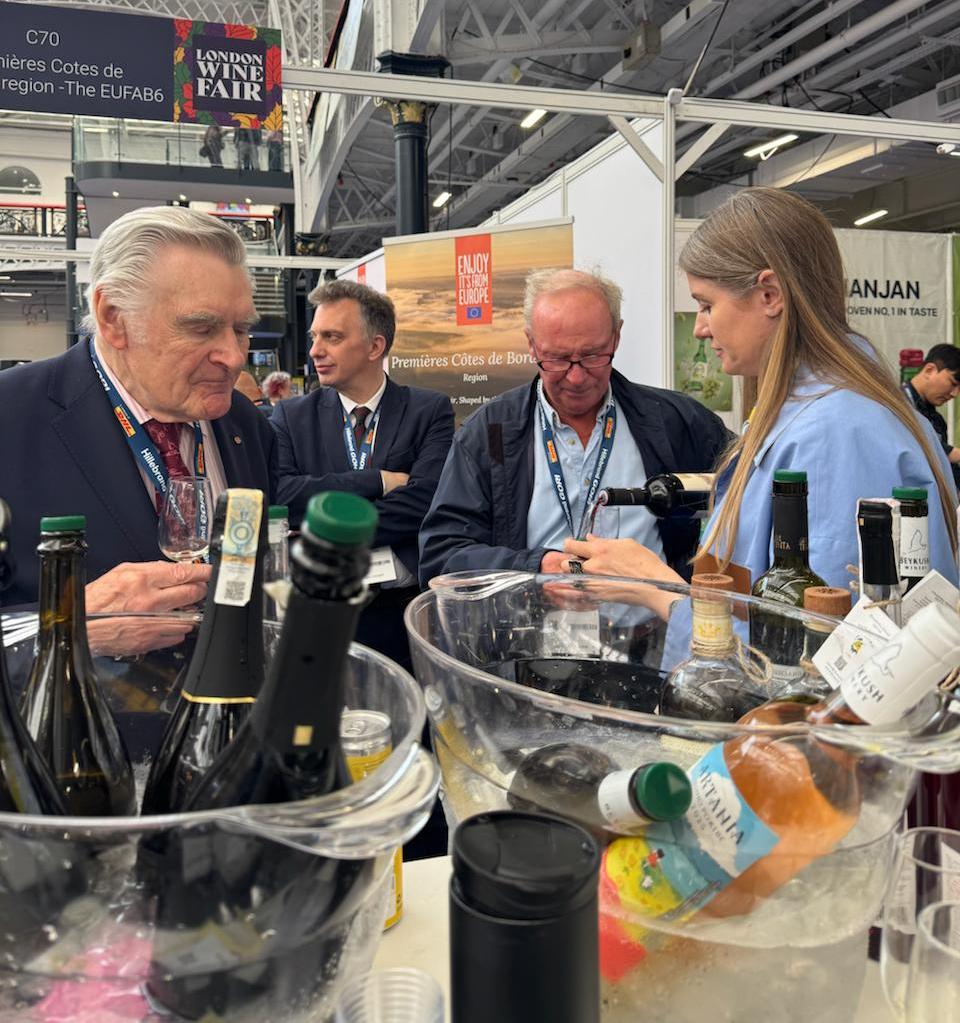
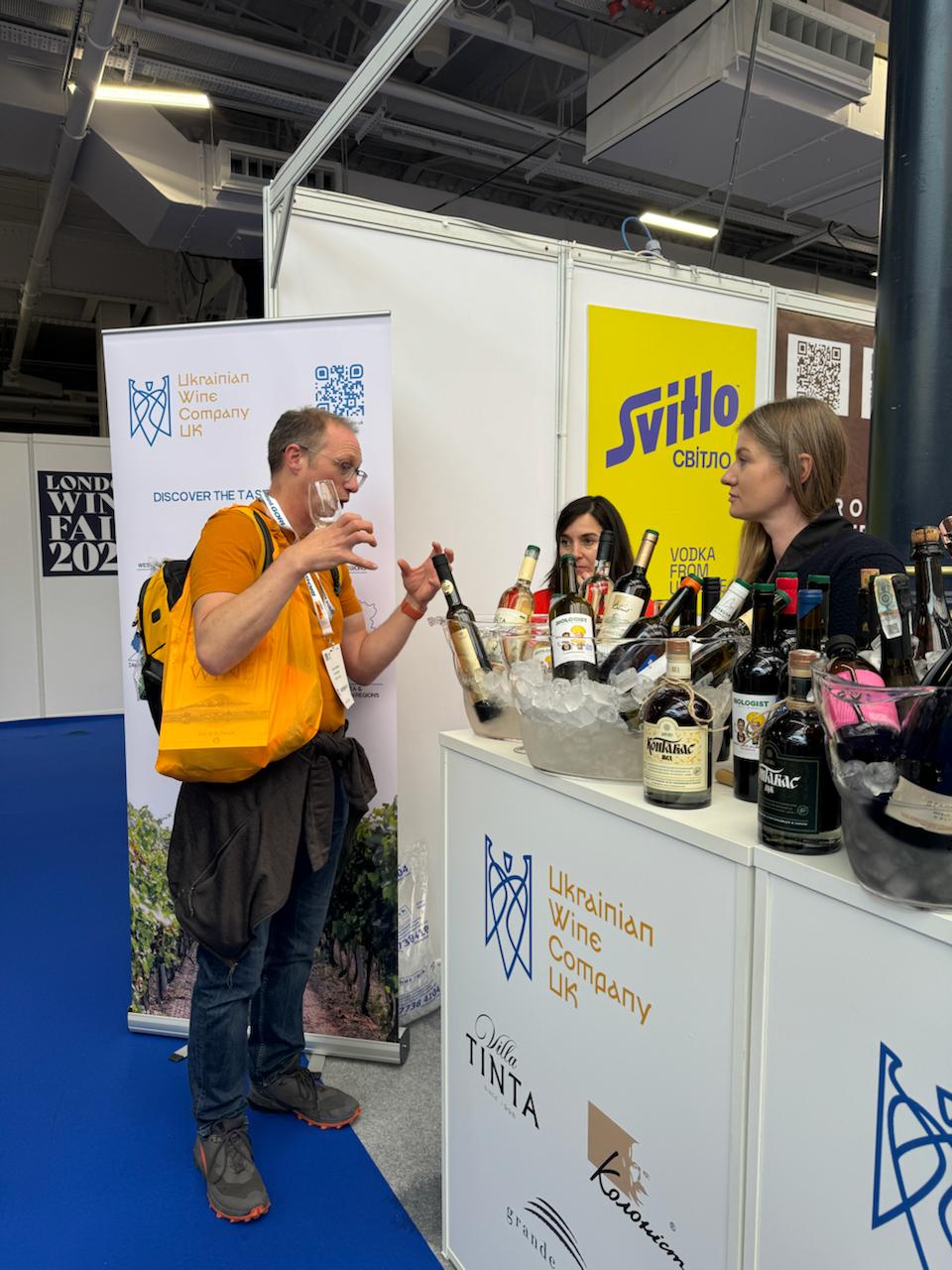
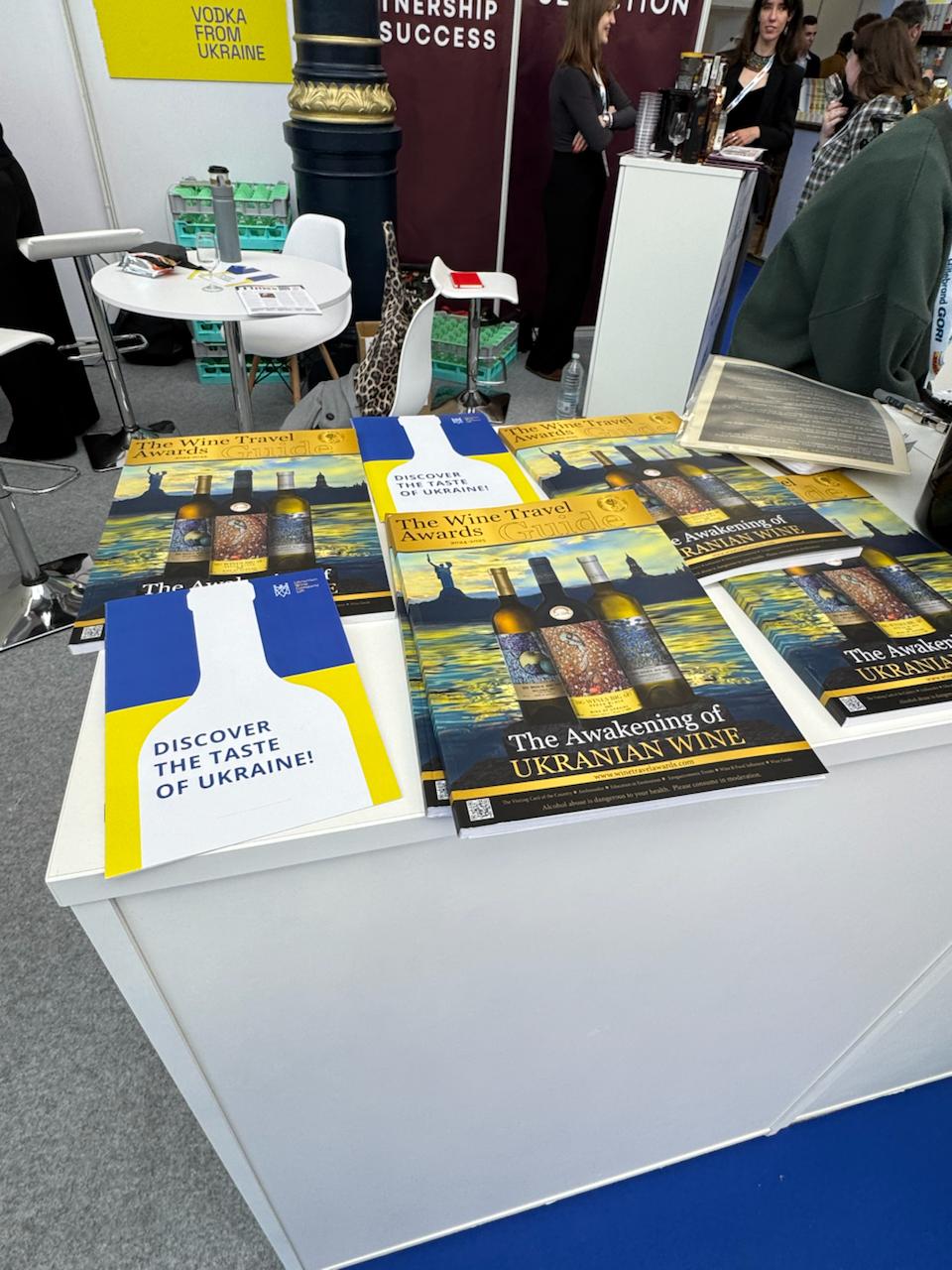
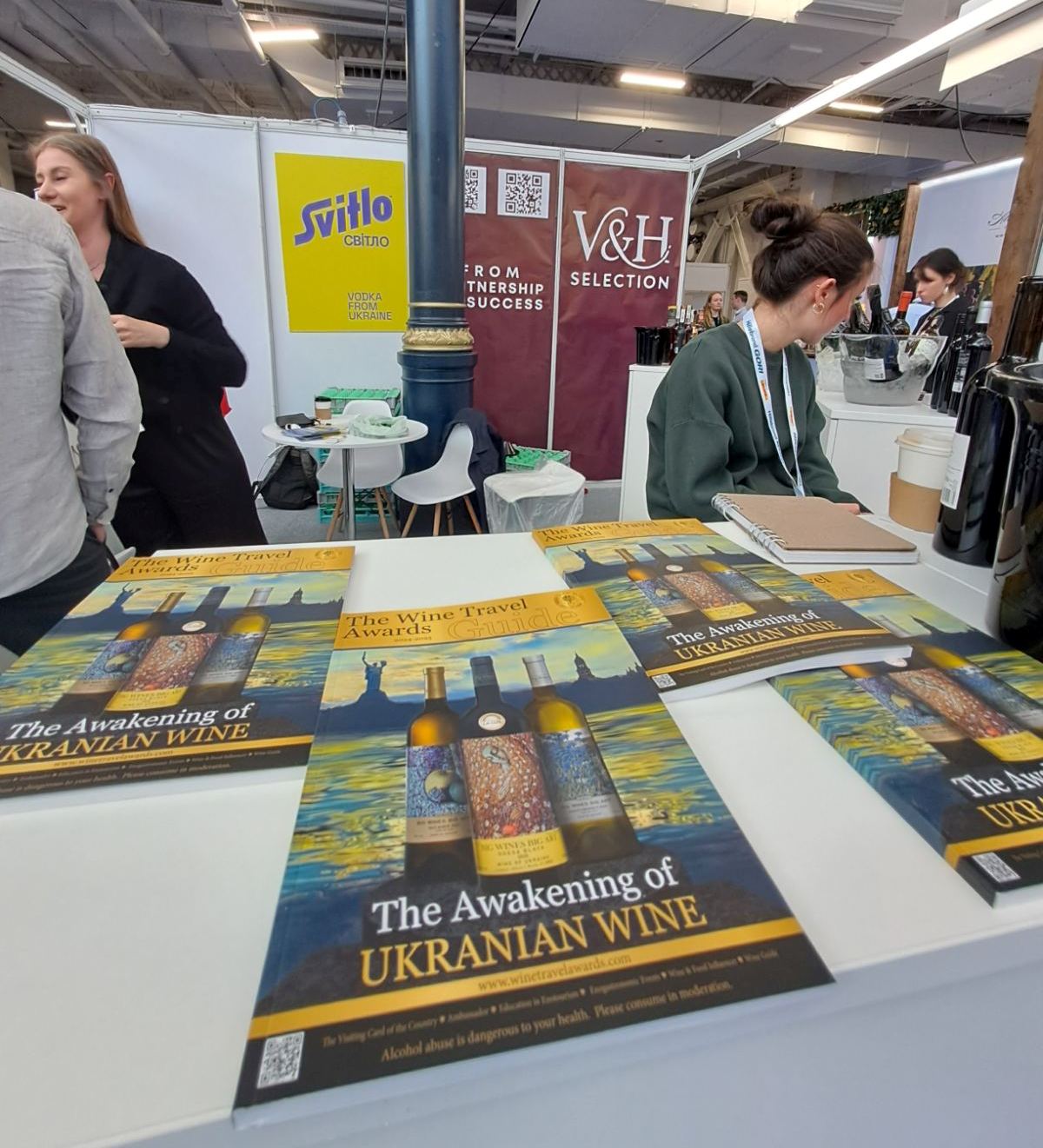
Given that the international Drinks+ media group has Ukrainian roots, it was only natural to find participants from Ukraine on the stand. The heart of the Ukrainian presence was a pool of drinks from Ukrainian Wine Company UK – an importer that has been bringing craft Ukrainian wines into Britain since 2023, and already works with restaurants, bars, and independent wine shops across the country. The team showed a whole line-up of our producers – Beykush, Biologist, Grande Vallée, Chateau Chizay, Kolonist, Villa Tinta – nominees of the Wine Travel Awards across various seasons. And let us congratulate this year’s winner of the “Brand – Visiting Card of the Country” category: Chateau Chizay! One would like, of course, to see more of our names in London – but even these were enough to hold the guests’ attention and turn the Wine Travel Awards stand into one of the liveliest corners of the hall.
The Ukrainian Wine Company UK portfolio held more than wine. A genuine hit was the Honey Badger brand – a family project from Yulia Kalenska and Artem Skubenko, who since 2015 have been reviving traditional Ukrainian liqueurs and infusions from old recipes, tending their own fruit orchards in the Zhytomyr region, and even making a Ukrainian gin. And here is the paradox: at a fair where superstar Chardonnays from four continents went head to head, a fair share of the experts’ and enthusiasts’ attention was captured by a cherry liqueur made to a recipe from a village in the Vinnytsia region.
Attention was drawn, too, by Svitlo (“Light”) vodka from the Cherkasy region, presented under the slogan “Vodka from Ukraine. Made in darkness.” The wordplay lands precisely: a vodka named “Light” is, quite literally, produced in darkness – in a country where Russian shelling has made blackouts a part of everyday life. And beside the classic bottle stood ready-made cocktails – a collaboration between Svitlo and the London bar tayer.
The neighbouring block of the stand was held by the agency VH Selection, with a full international portfolio in which our brands stood shoulder to shoulder with the rest of the world, as equals. The historic Champagne house C.Garnotel (founded in 1899) beside the renowned Ukrainian brandy AZNAURI, made in the Georgian tradition, and the Lviv craft distillery Maclev, which makes single malt whisky and gin in small batches. The German family estate Weingut Bergdolt-Reif & Nett, with its expressive Rieslings, beside Moldova’s NOVAK WINERY and the boutique Portuguese Secret Spot Wines from the Douro Valley.
All of them, gathered together on the Wine Travel Awards stand, embodied what I say again and again and see proved every time: the wine world is not about borders but about routes. Not about competition but about cooperation. Not about who shouts the loudest about themselves, but about who manages to hear the others.
I am often told that the wine world is too big to be united. I answer that it is human at its core to make that possible. Because when a single stand holds, side by side, a Georgian Kavshiri made by a British expert, a Ukrainian cherry liqueur, a German Riesling, a Portuguese wine from the Douro Valley, and a Champagne with more than a hundred years of history – that is not just geography. It is proof that the community exists not on paper but in life.
And to be frank, this is exactly where the real role of the Wine Travel Awards lies: not only to honour, but to unite. To give those who create the taste of their countries the chance to be heard far beyond their own borders. To build bridges between cultures, styles, and traditions. And, in the end, to remind us all that wine is perhaps the most delicate way of explaining to the world who we are.
So the next time someone tells me that globalisation erases differences, I’ll suggest they take a walk through the Wine Travel Awards stand. There it becomes plain: the world is more interesting when everyone has the chance to be themselves – and to be seen.
England and Ukraine: two contrasting stories of one road
All through London Wine Fair, I felt as though I were fitting together two seemingly unconnected stories – the English triumph and the Ukrainian presence at the Wine Travel Awards stand. At heart they are two scenes about the same thing: young wine nations fighting for visibility in a market where every niche seems long since taken. The weapon is the same for both – a story of one’s own, authenticity, the ability to explain why this wine, in particular, deserves attention. And this year each had its symbolic moment: England climbed to the third step of a world-class blind tasting, and Ukraine confirmed that its place at the fair has become a permanent one.
But it would be dishonest to pretend these are similar stories. They are almost opposites.
Behind England’s success stands a convergence of favourable things: a state promotion programme, marketing campaigns, and a changing climate that, paradoxically, works in the island’s favour more each year. And, beneath all that, half a century of a home market accustomed to drinking its own.
Ukraine comes onto that same stage with not one of these advantages. In place of a tailwind, a daily struggle: ruined warehouses, support programmes wound down, logistics that are a feat in themselves every single time. England steps before the public with a full orchestra behind it. Ukraine has no orchestra – only missile strikes and the blasts of enemy rockets. But it has native varieties no one else possesses. And it has an unbreakable spirit that no marketing budget can buy.
And perhaps the lesson of this year’s fair, for Ukrainian wine, lies right there. In a single decade, England proved that a seat at the table of the greats is won not by asking but by outstanding wine in the glass – and it simply sat down at that table with strong cards of its own. Ukraine’s road there will be longer and steeper. But London Wine Fair 2026 showed the essential thing: this table has no fixed seating plan. It is forever being redrawn – just like the wine map this story began with, on which, year after year, new names surface that were unthinkable only yesterday.
One day, among them, ours will shine brighter and brighter.
Viktoriia Palinkash, VH Selection
It was my first time attending the London Wine Fair, and I was pleasantly surprised by the scale of the exhibition – there were a great number of both visitors and exhibitors. At the same time, I noticed one particular feature: in London, people rarely approach stands they are not familiar with. Most attendees follow their pre-arranged schedules and are not particularly inclined toward spontaneous networking. By comparison, the atmosphere in Asia is much more relaxed, and it is easy to engage a random visitor in conversation who may turn out to be a buyer or distributor.
On a less positive note, a public transport strike began on the second day of the exhibition, and visitor numbers dropped significantly over the following two days. We were presenting Champagne Garnotel, Novak wines from Moldova, and Ukrainian spirits Aznauri and Maclev. The British responded rather coolly to the Champagne, while the Moldovan wines and our Ukrainian spirits generated genuine enthusiasm. Visitors from across the exhibition brought their friends to our stand to give them the opportunity to taste the Moldovan wines and Ukrainian spirits. We sincerely hope that the products presented by our company, VH Selection, will not only resonate with British wine professionals but also find their place on supermarket shelves and restaurant wine lists throughout the United Kingdom.
________________
Svitlana Tsybak, Chair of the Craft Winemakers Association of Ukraine, CEO of Beykush Winery, and Wines of Ukraine Ambassador
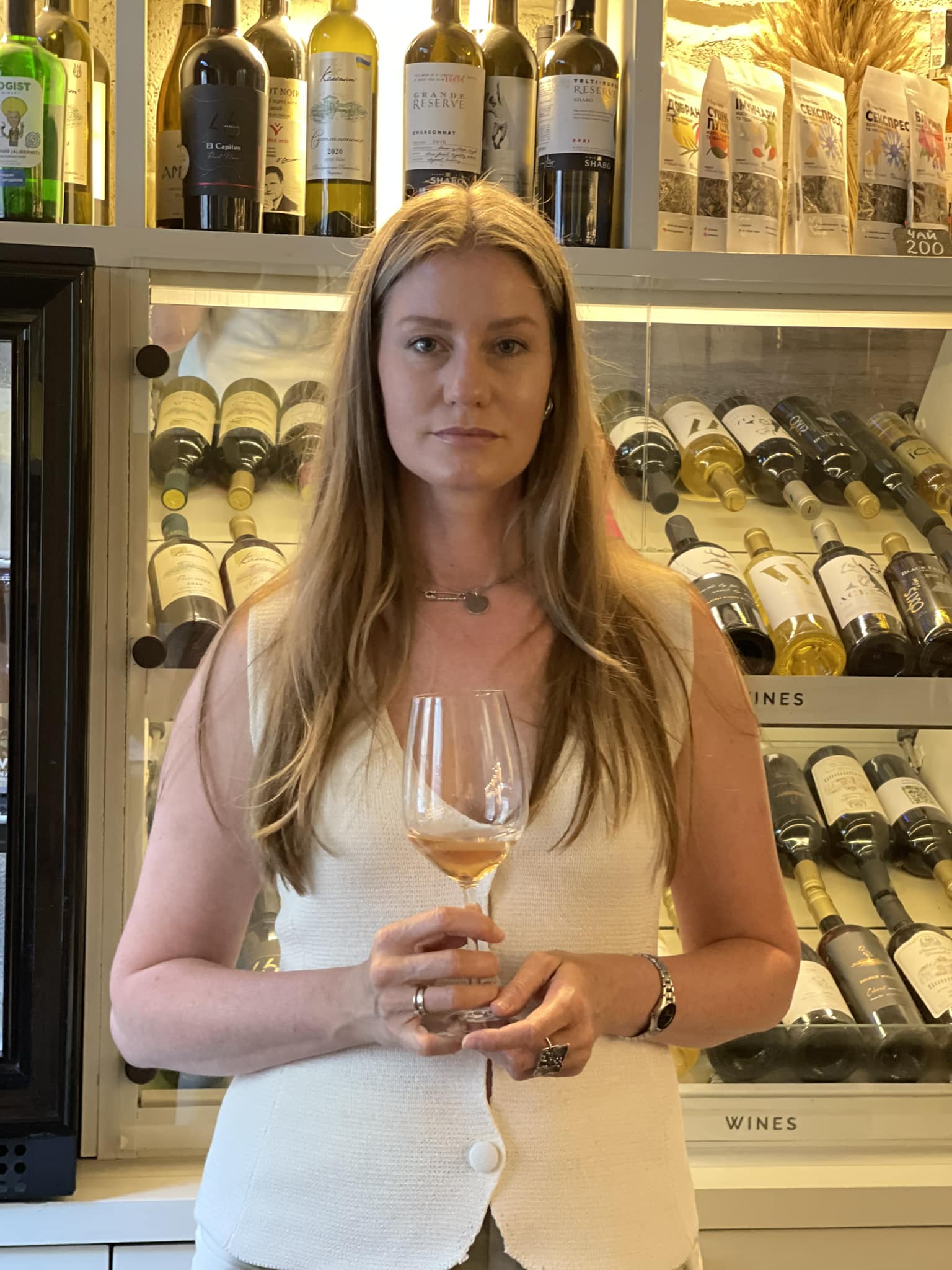
We have been participating in the London Wine Fair for four years, and I can say with confidence that today this exhibition is primarily focused on the domestic UK market. I kept telling everyone that if someone is looking to access other markets here, this event is not really about that. In the past, the exhibition was more international, whereas now it is mainly geared toward the British market. The exhibition itself was good. In fact, there were slightly fewer visitors than we had expected; attendance was higher last year. However, the audience was of high quality: good buyers, representatives of strong retail chains and companies, so from that perspective everything went well. The exhibition lasted three days, and overall we are satisfied.
Looking at the global situation, including ProWein and other major trade fairs, it seems that this format is currently undergoing a certain transformation. I do not know how this category of events will develop in the future. Right now, Wine Paris is gaining momentum very rapidly. It is a relatively new exhibition, and perhaps that is part of its appeal. People say there were a great many visitors there, so we plan to attend next year and see for ourselves. As for the exhibitions we have become accustomed to – ProWein and the London Wine Fair – I can say that interest in them is gradually declining.
It seems to me that organizers should be looking for new and engaging formats, although that is, of course, only my personal opinion. For buyers, importers, and distributors, participation in traditional trade fairs is becoming less of a priority. When we invited our existing and potential partners to meetings, around 70% replied that they were not planning to attend the exhibition, even if they lived and worked in London. Nevertheless, there were important buyers and major distributors whom I know well and can confirm are truly significant market players. So, for some participants, it was a good opportunity to meet with them and potentially discuss cooperation.
As a company already established in the market, we are not looking for importers here; rather, we are looking directly for buyers and sales channels, so our objectives were somewhat different.
Thank you for the stand and for this opportunity. Everything turned out very well.
Stay connected with Wine Travel Awards:
Photo: London Wine Fair, Victoria Palinkash, Lena Demme