
Pioneers of the journey: The Wine Travel Awards, wine tourism, and the awakening of Ukrainian wine
Author: Dr. Ricardo F. Nuñez
Pioneers: arriving earlier, seeing earlier
Some words wear out through overuse and yet never lose their function. “Pioneers” is one of them. In its strict – and useful – sense, it describes those who are among the first to introduce, develop, or implement ideas, products, technologies, or business models capable of opening markets or transforming industries. It is not about speed; it is about direction. A pioneer does not merely move; they orient. They anticipate change, create a language to name it, and leave an impact that remains when the initial excitement has already faded.
In the world of wine, a pioneer is not necessarily the person who “invents” something from scratch. It is the one who dares to reinterpret a millenary tradition without breaking it; the one who understands that innovation does not consist in denying the past, but in turning it into a platform. That nuance matters, because wine is one of the rare cultural products that has accompanied humankind for thousands of years and, at the same time, continues to change. In that tension – memory and future – contemporary wine tourism is born: a journey that does not begin at the airport or on the road, but in the decision to understand what lies behind a glass. And that is what THE WINE TRAVEL AWARDS show us.
The journey into the world of wine
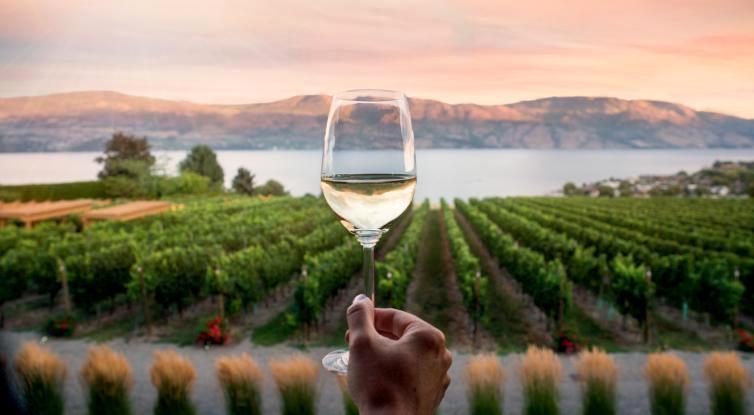
For decades, wine tourism was a specialized chapter within the industry. Today, it is, unmistakably, a strategic branch of cultural, rural, and gastronomic tourism. Millions of travelers set out to visit vineyards, tour wineries, attend harvests, sleep among the vines, converse with winemakers, join food-pairing experiences, and above all experience something a wine shop may suggest but cannot deliver: the intimate relationship between landscape, craft, and time.The expansion of wine tourism is not explained only by consumption or by the growing sophistication of travelers. It is explained by a more powerful idea: in a world saturated with information, people seek experiences with meaning. And wine – when visited in its place of origin – offers direct access to a territory’s identity.
The formats keep multiplying. Alongside the classic guided tour, we now see thematic routes, architecture and heritage, wine museums, sensory experiences, local gastronomy, hiking and cycling through vineyards, wellness (yoga or spa experiences linked to the viticultural landscape), open-air tastings, premium formats, and family-friendly experiences. Digitalization adds a new layer: online bookings, immersive storytelling, augmented reality, personalized content, and a permanent conversation on social media that turns each visit into a narrative. In other words, the journey continues after the journey.
And that world is made up of many activities that surround it and integrate it. The most recent data from an international research effort coordinated by Hochschule Geisenheim University, in collaboration with UN Tourism and the OIV, reinforce the magnitude of the phenomenon: wine tourism is consolidating as an economically relevant sector and, according to a summary of findings from the Global Wine Tourism Report
2025, represents on average around 25% of total revenues in the participating wineries. In addition, more than half of wineries with tourism activity report an intention to continue investing in wine tourism. The message is clear: it is not a decorative “extra”, but a driver of business and reputation.
The irreversible shift
When wine tourism becomes significant, it leaves a trace in numbers and in public policy. The OIV (International Organisation of Vine and Wine) reports 80 countries that produce wine worldwide. In 40 of them, wine tourism activities take place, generating an impressive base of visitable infrastructure, with thousands of wineries open to the public, as well as a large- scale economic impact.
Even in the face of those magnitudes, we can say we have only traveled part of the road. If wine tourism used to be a “complement”, today it is a sector in its own right, capable of moving investment, employment, infrastructure, and brand narrative. And countries still need to be added that, like China – already a member of the OIV since 2025 – are building thematic wine cities as tourism destinations.
The cultural consequence is just as relevant. Wine tourism turns wine into a shared language between producers and travelers. And, at the same time, it forces the sector to professionalize hospitality: it is not enough to make good wine; you must know how to explain it, show it, host people, translate it, and turn it into an experience. And those who make all of that happen are in these pages.
The Wine Travel Awards: a pioneering instrument for a world in motion
In that scenario, THE WINE TRAVEL AWARDS appears for what it is in its essence: a pioneering construction for an ecosystem that needed order, visibility, and a common language. Rather than viewing the wine world through a single doorway, it organizes it as a universe of complementary actors. Its architecture – six “pyramids” and sixteen categories – works as a navigation map: hospitality, brands, sustainability, art and history, regions; communicators and influencers; guides and operators; ambassadors and creative strategies; wine-and- gastronomy events; and wine tourism education.
That design has a virtue: it does not reduce wine tourism to the winery. It recognizes that the journey into the world of wine includes hotels, restaurants, routes, museums, content, festivals, institutions, operators, schools, and, of course, entire regions that become “destinations” because they manage to articulate experience, storytelling, and quality.
If the 21st century is the era of connectivity – physical or virtual – THE WINE TRAVEL AWARDS operates as a platform of selective connection: it brings the best to the surface, enables comparison, exposes them to the judgment of the global market, and at the same time offers them a mirror: “this is what your region looks like; this is how your proposal reads; this is how your hospitality is understood.” In that sense, it is pioneering by method: it transforms dispersion into a system.
Technology: the new invisible landscape of wine tourism
It would be naive to speak about contemporary wine tourism without admitting that the trip begins before traveling. In a visitor’s phone fit maps, bookings, comments, recommendations, virtual tastings, real-time translation, payments, itineraries, and memories. Technology does not replace wine; it frames it. It makes an experience more accessible, more customizable, and, at times, more “memorable” for audiences that demand immediacy without renouncing authenticity.
The paradox is compelling: in the full algorithmic era – when this text may have been written by a system that fits on the head of a pin, while its “author” is enjoying his favorite wines and reading about the wine world – wine tourism grows precisely because it offers the opposite: slow time, conversation, landscape, craft, fermentation, cellar silence, history, and human attention. Technology pushes, but the differentiator of the outcome is genuinely moving: a glass poured in front of the vineyard, with someone capable of explaining why that wine can only exist there.
That demands pioneering in a practical sense: today’s leading destinations and wineries are not only those with the best terroir; they are those that translate their identity into a contemporary experience without trivializing it. Those that integrate real sustainability, professional hospitality, training, accessibility, and storytelling. And the platform that brings its protagonists together is THE WINE TRAVEL AWARDS.
Ukraine: pioneers for having awakened a wine culture in times of war
Here it is worth turning our gaze to Ukraine, not as a “case” of wine tourism, but as a contemporary example of national pioneering. Because the pioneering act does not always consist in creating something new; sometimes it consists in reactivating a country’s own language when the context makes it improbable.
Ukraine has endured years of relentless and ruthless fire. And yet, in that same time, the wine sector – production, winemaking, and related activities – has shown a resilience that surprises: it has grown inside and outside the country, driven by an army of new producers who understood the message of a few who, 25 years ago, dared to reinstall the word “quality” in local wine. Among those milestones is even the creation of a wine cultural center in the Shabo region, a work that symbolizes institutional ambition on a map that should be populated with similar places across the country.
Examples of pioneering speak for themselves. At a winery in Bessarabia, an entry in the guest book proposes setting one day each year to celebrate the International Odesa Black Day, a variety created between 1948 and 1950 by the Tairov Institute in the Odesa region. This is not technical trivia: it is a sign of identity. That variety became vineyard and wine in the 2000s in the hands of very few producers, and one of them had already been earning recognition in demanding international competitions.
It is pioneering of continuity: taking a local creation, believing in it, carrying it to the international level and, by doing so, educating both the country itself and the external market.
History then fixed the narrative. In a painful yet memorable book – INVASION – a U.S. based correspondent for The Guardian recounts that, while in Kyiv and on his way to a dinner at friends’ home on February 22, 2022, he entered a beverage shop to buy a bottle of wine as a gift. He walked out toward his destination carrying a bottle of Kolonist.
From that home he would write through the night that the full- scale invasion had begun. Without intending it, he left behind a cultural snapshot that also contained a premonition: Ukrainian wine was there too, on the threshold of a dark time, but as the base of a resilient national industry that would grow impressively in the following years in the hands of hundreds of producers competing inside and outside the country.
In the midst of the war, new associations have been formed that represent Ukraine as an integrated wine-producing whole, both domestically and internationally. “Wines of Ukraine,” the slogan of the Association of Craft Winemakers, is present at every international trade fair. Others, such as Ukrsadvinprom, have brought together wine-grape producers alongside fruit and berries growers, as well as makers whose membership represents up to 80% of each of these activities. The impressive region of Zakarpattia is growing through new associations and events; other organizations have remained active for many years; and, because being a pioneer is ultimately a way of living, in 2025 a new association was created – UVWA – with the vocation of serving as the scientific and institutional platform for Ukrainian wine, through its own actions and by supporting the initiatives of the country’s other associations. Unity makes strength. And so much so that all of them are partners of the ministries that are defining every step of the industry of the future.
Being on sale a few years ago in wine shops, restaurants, and places where people drink wine was almost a privilege earned by a few for a Ukrainian wine. Today they are everywhere. They have brands, and behind them are women and men – pioneers for the era they live in. I know almost all of them. And two brands among them – Big Wines and 46 Parallel – are like two torrents of wine that make my most beloved Ukrainians.
In that same country and in that same time, the Drinks+ media group – born many years ago in Ukraine – launched a global instrument such as THE WINE TRAVEL AWARDS. That is the pioneering dimension worth recording: to unite, connect, and reward the wine world across the planet from a territory that will endure in order to live the life of wine in freedom.
It is not only entrepreneurial or editorial initiative; it is a cultural affirmation. A way of saying that wine remains a civilizational language even when violence tries to impose silence.
That is why, when these lines speak of PIONEERS, they do not pay tribute only to those who innovate with technology, marketing, or infrastructure. They pay tribute to those who sustain wine and create the future in countries that operate under normal conditions, and also – and perhaps above all – to those who create all of that when conditions should not allow it.
The images of Ivan Marchuk – the Ukrainian genius of the 20th and 21st centuries – on the cover, telling us “Awakening”, apply to all Ukrainian wines, whether to those that began the awakening process more than 20 years ago or to those who have continued it against “winds of attacks and a tide of drones”.
In times when it becomes necessary to defend, intelligently, responsible consumption and the cultural dignity of wine, pioneering is no longer a romantic category: it is a necessity. The journey into the world of wine – living to develop or enjoy one of those 16 categories created by THE WINE TRAVEL AWARDS – is today one of the most effective and beautiful ways to keep it alive.
______
Dr. Ricardo F. Nuñez, wine entrepreneur, Founder of the “Vinos de La Luz Wine Group” and the “Vinos de la Luz Scientific International Center”. Foreign investor in Ukrainian wine production after the start of the full-scale invasion. Writer. Patron. OIV Merit Award 2025 (International Organisation of Vine and Wine).
Stay connected with Wine Travel Awards:
- Facebook: https://www.facebook.com/WineTravelAwards/
- Instagram: https://www.instagram.com/winetravelawards
- LinkedIn: https://www.linkedin.com/company/winetravelawards/